Best Books About Character by C. S. Lewis

There is a writer who made the case for character with a clarity that has never been surpassed, and his name is C. S. Lewis. Mere Christianity - his defense of the Christian faith - contains one of the clearest modern accounts of virtue and the moral law, and his wider work is a sustained meditation on the inner life that character is built from. He is read as much by secular readers as by believers, because his account of character rests on grounds that everyone can examine.
This guide collects the books that belong on the Lewis shelf: the essential titles by Lewis himself, the books that share his focus on virtue and the inner life, and the deeper works that extend his ideas into gratitude and resilience. Whether you are new to his thinking or returning to it, the reading path below will take you from the argument to the life.
What Lewis Is Really Teaching
Before the recommendations, it is worth being precise about what Lewis actually argued, because his work is often read as apologetics when it is also something more. Lewis’s central account of character is that the virtues are habits - that a person becomes brave by doing brave acts, honest by doing honest acts, just as Aristotle taught - and that the inner life is the source of the outer actions. His famous image: the difference between doing the right thing and being the kind of person who does the right thing naturally is the difference between the beginner and the expert, and the expert is built by practice.
That is why his work has lasted. Lewis is not telling you what to believe; he is describing how character is formed, and the description is the same one that runs from Aristotle through the whole moral tradition. The reader finishes the book with a theory of the inner life, and the theory is the map of the practice.
The Essential C. S. Lewis
Mere Christianity by C. S. Lewis
This is the book that made Lewis’s name, and it remains the essential title on this shelf. Mere Christianity is the account of the Christian faith that Lewis built from his wartime radio talks, and its middle section - on the cardinal virtues of prudence, temperance, justice and fortitude - is one of the clearest modern accounts of character ever written. It is the book for readers who want the virtue tradition made vivid.
The book’s greatest strength is its clarity. Lewis writes like a man explaining something he has thought about for decades, and the reader finishes the book with the moral law and the virtues in focus.
Content notes: A classic of Christian apologetics, accessible and suitable for a wide range of readers.
The Screwtape Letters by C. S. Lewis
For readers who want the inner life from the inside, The Screwtape Letters is the essential book. Lewis’s masterpiece of imagination - the letters of a senior demon instructing a junior demon on how to corrupt a human soul - is the inner life examined from the negative: the small temptations, the quiet corruptions, the daily choices that build or destroy character. It is the book for readers who want to see the machinery of character formation from the other side.
The book is both hilarious and profound, and it is the essential companion to Mere Christianity.
Content notes: A satirical classic, accessible and suitable for a wide range of readers.
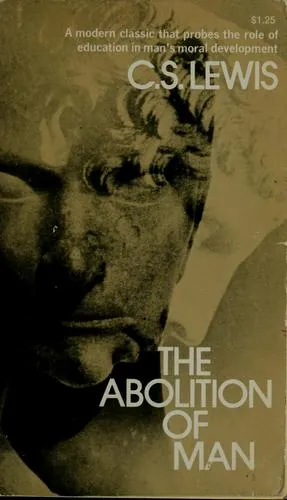
The Abolition of Man by C. S. Lewis
For readers who want the philosophical foundation, The Abolition of Man is the essential book. Lewis’s short, dense work argues that the moral law - the Tao, the shared moral inheritance of humanity - is the foundation of all value, and that the attempt to stand outside it leads not to freedom but to abolition: the loss of what makes us human. It is the book for readers who want the deepest statement of the moral ground.
The book is demanding and important, and it is the essential book for readers who want the philosophy underneath the character teaching.
Content notes: A dense philosophical work, suitable for serious readers.
The Books That Share His Approach
Lewis’s Idea of the Inner Life
The concept at the center of Lewis’s account of character is the inner life, and it is worth dwelling on because it is his deepest contribution. Lewis argues that the outer actions flow from the inner state - that the person who is kind in the moment of crisis is the person who has been practicing kindness in the unobserved hours, and that the character is built in the secret places where no one is watching. His image of the moral life as a set of habits, built by practice, is the same as Aristotle’s - but Lewis adds the psychological depth: the inner life is where the habits are formed, and the outer life is their expression.
That is why his work belongs at the heart of the character shelf. The modern culture is obsessed with the outer - the image, the performance, the reputation - and Lewis is the great counter-voice: the character is the inner state, and the inner state is built in the daily practice of the unobserved choices. The reader who takes the teaching in stops trying to manage the image and starts building the substance, which is exactly the point.
The Screwtape Letters and the Daily Battle
One of the most instructive things about The Screwtape Letters is its insistence that character is decided in the small things. The demons in the book do not tempt the man to grand crimes; they tempt him to the small corruptions - the petty resentment, the comfortable self-deception, the unexamined habit - because they know that the small things build the character that will later produce the grand crimes. The book is a manual of the inner life read backwards: to see how character is built, watch what the demons work on.
That is why the book is so valuable on the character shelf. It shows the mechanism that the virtue books describe from the positive side: the daily choices, the small habits, the unobserved decisions that compound into the character. The reader who understands the mechanism understands why the daily practice matters, and the understanding is the beginning of the practice.
The Deeper Shelf: Virtue and Gratitude
There is a point where the character books meet the gratitude shelf, and Lewis is a good bridge. His account of the moral life is grounded in gratitude - the recognition of the gift that the whole of existence is, and the response of the thankful life.
Lewis and the Grateful Life
One of the most important threads in Lewis’s work is the connection between gratitude and character. Lewis wrote that gratitude is the soil of the other virtues - that the person who recognizes the gift is the person who can be generous, humble and faithful, and that ingratitude is the root of the corruption of the inner life. His account of the moral law begins in the recognition of what has been given, and the recognition is the gratitude. The character is built on the gratitude, and the gratitude is the foundation.
That is why the character shelf and the gratitude shelf belong together. Our thoughtful guide to gratitude explores that territory, and it pairs naturally with this reading - because the inner life that Lewis describes is, at its root, the grateful life.
The Practice of the Unobserved Choice
One of the most practical - and most challenging - parts of Lewis’s account of character is his insistence on the unobserved choice, and it is worth dwelling on because it is where the theory becomes the practice. Lewis argues that character is not built in the dramatic moments, where everyone is watching and the right choice is visible; it is built in the unobserved hours, where no one is watching and the right choice is invisible. The person who is honest in the small matter, when honesty costs something and no one will know; the person who is kind in the unobserved moment, when kindness has no audience; the person who does the work when the work could be skipped without detection - these are the choices that build the character, and they are the choices that the inner life is made of.
That is why the inner life and the outer character are inseparable in Lewis’s account. The outer actions are the expression of the inner state, and the inner state is built by the unobserved practice. The person who wants to be brave in the crisis cannot start practicing in the crisis; they must have been practicing in the unobserved hours, where the small choices were forming the state that the crisis will draw on. The practice is the building, and the building is invisible - which is why it is so easy to skip and so essential to keep.
There is also a specific comfort in this teaching for the reader who feels that their efforts are unseen. The unobserved choice is not wasted; it is the very stuff of the character. The person who keeps the small practice when no one is watching is not doing nothing; they are building the self that the watched moments will reveal. Lewis’s teaching is that the hidden building is the real building, and the reader who keeps the practice has understood the deepest thing his whole work is saying.
How to Build Your Reading Path
There is no wrong order on this shelf, but there is a sensible one. Start with Mere Christianity for the account of the virtues. Add The Screwtape Letters for the inner life from the inside, and The Abolition of Man for the philosophical foundation. Then extend outward into the gratitude and resilience shelves that the character requires.
The path moves from the argument to the life, and that is the right direction. Our thoughtful guide to resilience gathers the wider shelf these titles belong to, and it is the natural next stop after you have worked through this one.
The Resilience Shelf
There is a quiet but important connection between the character shelf and the resilience shelf, and it is worth naming one more time: the cardinal virtue of fortitude, which Lewis treats as one of the four foundations of the moral life, is the resilience in its classic form - the capacity to endure the difficulty without being turned from the good. And like every virtue in Lewis’s account, it is built by practice: the small endurance kept in the unobserved hours, the difficulty met and not fled, the habit formed by the keeping. The resilience and the character are one capacity, and the books on this shelf are the portrait of it.
The Resilience Shelf
There is a quiet but important connection between the character shelf and the resilience shelf, and it is worth making explicit. The fortitude that Lewis names as one of the cardinal virtues - the capacity to endure difficulty without being broken - is the ancient name for resilience, and his account of it is the same as the modern one: the endurance is built by practice, and the practice is the daily meeting of difficulty. The character and the resilience are the same capacity: the formed state and the state in action.
Our thoughtful guide to resilience collects the titles that explore that territory most deeply. Read them alongside the Lewis shelf and you get the complete picture: the foundation of the virtues, and the resilience that the virtues make possible. Together they form part of the growth section of our library, where the whole shelf of character and endurance is gathered.
Conclusion
C. S. Lewis’s contribution to character is a clarity: the account of the virtues as habits, the inner life as the source of the outer actions, and the gratitude as the soil of the whole. His books have been read by believers and skeptics alike, because his account of the moral life rests on grounds everyone can examine. The books on this shelf take you from the argument to the life, and from the virtues to the gratitude and resilience they require.
Start with Mere Christianity, work outward through the imagination and the philosophy, and end with the gratitude and resilience that the character requires. The character is built in the secret places; the practice is daily; and the inner life, as Lewis showed, is the source of everything.
Frequently Asked Questions
What is the best book by C. S. Lewis for character?
What is the main idea of Mere Christianity?
What does Lewis say about the virtues?
What other books by C. S. Lewis are worth reading?
Is Lewis's account of character suitable for non-religious readers?
How does Lewis connect character to the inner life?
Featured Recommendations

Raining Book Editorial Team
The Raining Book editorial team curates the best book recommendations and reading guides for every type of reader.