Best Books About Gratitude by Brené Brown

There is a researcher who has shown that gratitude is not the softest of the virtues but the foundation of the strongest one - and her name is Brené Brown. Her books, led by The Gifts of Imperfection, have introduced millions of readers to a finding that changed how they think about joy: that gratitude and joy are inseparable, that the practice of gratitude is the way joy is cultivated, and that the people who experience joy most deeply are the ones who practice gratitude deliberately.
This guide collects the books that belong on the Brené Brown gratitude shelf: the essential titles by Brown herself, the books that share her research-based approach to joy and connection, and the deeper works that extend her ideas into courage and daily practice. Whether you are new to her thinking or returning to it, the reading path below will take you from the research to the life.
What Brené Brown Is Really Teaching
Before the recommendations, it is worth being precise about what Brown actually argues, because her work is often reduced to a mood. Brown’s central finding is that joy is not something that happens to us but something we cultivate - and that the cultivation is gratitude. Her research interviews consistently showed that the people who reported the deepest experiences of joy were also the people who practiced gratitude as a discipline: the journal, the nightly counting, the deliberate noticing. Joy without gratitude, she found, is fragile; gratitude is the ground that makes joy durable.
That is why her work has lasted. Brown is not selling happiness; she is reporting the structure of it - the relationship between gratitude and joy that her research revealed, and the practices that make the relationship real. The reader finishes the book with a map of the inner life, and the map has gratitude at the center.
The Essential Brené Brown
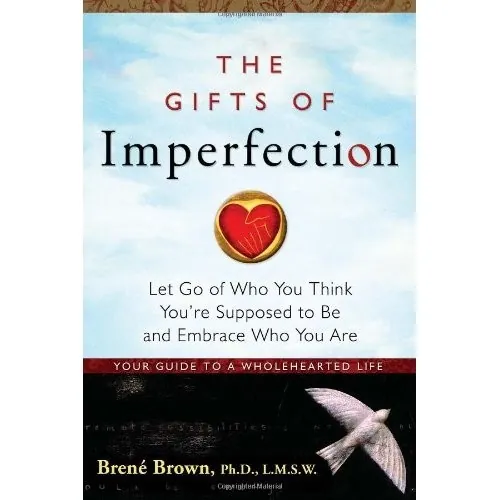
The Gifts of Imperfection by Brené Brown
This is the book that made Brown’s name, and it remains the essential title on this shelf. The Gifts of Imperfection is the guide to what Brown calls wholehearted living - the courage to be imperfect, the compassion to be kind to yourself, the connection that comes from being seen - and gratitude runs through it as the foundation of joy. It is the book that introduced her research to the general reader.
The book’s greatest strength is its combination of research and practice. Every chapter is grounded in her data and ends with practical tools, and the gratitude practices - the journal, the counting, the deliberate noticing - are among the most-used tools in the whole of her work.
Content notes: Research-based and accessible, with stories and practical tools, suitable for a wide range of readers.
Daring Greatly by Brené Brown
For readers who want the courage side of the research, Daring Greatly is the essential book. Brown’s argument that vulnerability is the birthplace of courage, connection and belonging is the companion to The Gifts of Imperfection - the two books are the two halves of her wholehearted living research. Where The Gifts of Imperfection gives the daily practice, Daring Greatly gives the daring.
The book is the natural companion to the gratitude shelf, and it is the book for readers who want the full picture of her research.
Content notes: Research-based and accessible, with stories of struggle and growth, suitable for a wide range of readers.
Atlas of the Heart by Brené Brown
For readers who want the language of the emotions, Atlas of the Heart is the essential book. Brown’s later work maps the emotional landscape - the eighty-seven emotions and experiences that shape our lives, including joy and gratitude - and gives the reader the vocabulary to name what they feel. It is the book for readers who want to understand the emotions underneath the practices.
The book is the most complete statement of her research, and it is the essential companion for serious readers.
Content notes: A substantial research-based book, accessible and illuminating, suitable for a wide range of readers.
The Books That Share Her Approach
Brown’s Finding on Joy and Gratitude
The finding at the center of Brown’s gratitude work is worth dwelling on because it is counterintuitive. One might expect that joy produces gratitude - that we are grateful because we are happy. Brown’s research suggests the relationship runs the other way: gratitude produces joy, and the practice of gratitude is the cultivation of joy. The people who experienced joy most deeply were not the ones with the easiest lives; they were the ones who practiced gratitude deliberately - who counted their blessings on purpose, who journaled, who refused to let the good go unnoticed. Joy, in her account, is not a passive gift but an active practice.
That is why her work has connected with so many readers. The culture treats joy as something that happens to the lucky; Brown shows that it is something the deliberate can cultivate. And the cultivation is available to everyone, whatever their circumstances - the practice of gratitude does not require an easy life, only the attention to notice the good in the life that is actually being lived.
The Book of Joy by the Dalai Lama and Desmond Tutu
For readers who want the gratitude and joy tradition at its deepest, The Book of Joy is the essential book. The Dalai Lama and Archbishop Desmond Tutu - two of the most joyful people on earth, both of whom lived through profound suffering - spent a week in conversation about the sources of joy, and the book is the record. Gratitude is one of the pillars of their account.
The book complements Brown perfectly: Brown gives you the research; the Dalai Lama and Tutu give you the lived example. Together they cover the science and the testimony.
Content notes: A warm, profound conversation between two spiritual leaders, suitable for a wide range of readers.
Thanks! by Robert Emmons
For readers who want the gratitude science in full, Thanks! is the essential book. Emmons - the leading researcher on gratitude - makes the scientific case for the practice and its effects on health, happiness and relationships. It is the evidence base that Brown’s finding rests on.
The two books work beautifully together: Brown shows the place of gratitude in the emotional life; Emmons shows the measurable effects of the practice. Together they give the reader both the map and the evidence.
Content notes: A research-based book, accessible and practical, suitable for a wide range of readers.
The Deeper Shelf: Gratitude and Courage
There is a point where the gratitude books meet the courage shelf, and Brown is the hinge - appropriately, since courage and gratitude are the two pillars of her research. The practice of gratitude requires the courage to be vulnerable, and the courage to be vulnerable is sustained by gratitude. The books below explore that connection.
Brown and the Courage of Gratitude
One of the most important threads in Brown’s work is the relationship between gratitude and courage. Her research on vulnerability showed that the people who practiced gratitude were also the people who could be vulnerable - and the connection is not accidental. Gratitude requires the courage to see what is good, even when what is wrong is louder; it requires the vulnerability to receive, to be moved, to let the good in. The person who journals gratitude is practicing a quiet courage every night: the courage of the open hand, the willingness to receive.
That is why the gratitude shelf and the courage shelf belong together in a reading path. The practice of gratitude builds the strength to be vulnerable, and the courage to be vulnerable makes the gratitude possible. The two qualities are one capacity, and Brown’s research is the map of it.
The Practice of the Three Good Things
One of the most practical - and most widely used - gratitude practices to come out of the research tradition Brown draws on is the three good things exercise, and it is worth being concrete about it because it is the perfect daily form of everything her books teach. Each evening, the practitioner writes down three things that went well that day and why they went well. The practice is tiny - five minutes, three lines - and it is also profound, because it trains the attention in exactly the direction Brown’s research points: toward the good, deliberately, at the end of every day. The person who does the exercise for even a few weeks finds that the noticing begins to happen during the day, not just after it - the mind starts collecting the good as it happens, because it knows the evening will ask for it.
That is why the practice belongs at the center of the Brown shelf. It is gratitude made into a discipline - not a feeling that comes and goes, but a trained habit of attention, and the training is the whole of her teaching in miniature. The three good things are also honest: the exercise does not require pretending the day was good when it was not; it requires finding the good that was actually there, however small, and the finding is the practice. On the hard days the good things are harder to find, and the finding matters most.
There is a specific connection to Brown’s research that makes the exercise more than a pleasant habit. Her data shows that the people who practice gratitude deliberately are the people who experience joy most deeply, and the mechanism is the attention: the practice of noticing the good trains the capacity to experience the good. The three good things are the gym where that capacity is built, and the reader who starts the exercise is not adding a task to their evening; they are building the foundation of the wholehearted life her books describe.
How to Build Your Reading Path
There is no wrong order on this shelf, but there is a sensible one. Start with The Gifts of Imperfection for the practice. Add Daring Greatly for the courage side, and Atlas of the Heart for the full emotional map. Then extend outward: The Book of Joy for the lived testimony, and Thanks! for the science. End with the courage shelf that the whole project requires.
The path moves from the practice to the science and back to the practice, and that is the right direction. Our thoughtful guide to courage gathers the wider shelf these titles belong to, and it is the natural next stop after you have worked through this one.
The Gratitude Shelf
The Brown shelf is part of a larger gratitude tradition, and it is worth naming where the wider shelf lives. Gratitude has been practiced for millennia - in the wisdom traditions, in the spiritual life, in the daily discipline of ordinary people - and Brown’s research has confirmed what the traditions always taught: that the grateful life is the fuller life. Our thoughtful guide to gratitude collects the titles that explore the practice across the whole tradition, from the science to the memoir to the spiritual.
Read the Brown shelf first for the research, then range outward into the wider gratitude shelf for the lived experience. Together they form part of the growth section of our library, where the whole shelf of joy and becoming is gathered.
Conclusion
Brené Brown’s contribution to gratitude is a finding: gratitude and joy are inseparable, and the practice of gratitude is the cultivation of joy. Her research has shown that joy is not a passive gift but an active practice, and her books have given readers the tools to practice it. The books on this shelf take you from the research to the life, and from the gratitude to the courage it requires.
Start with The Gifts of Imperfection, work outward through the science and the testimony, and end with the courage that the whole project requires. The practice is the path; the gratitude is the ground; and the joy, as Brown has shown, is the harvest.
Frequently Asked Questions
What is the best book by Brené Brown for gratitude?
What is the main idea of The Gifts of Imperfection?
What does Brené Brown say about gratitude and joy?
What other books by Brené Brown are worth reading?
Is The Gifts of Imperfection based on research?
Is The Gifts of Imperfection suitable for all readers?
Featured Recommendations


Raining Book Editorial Team
The Raining Book editorial team curates the best book recommendations and reading guides for every type of reader.