Best Character to Read
There is a phrase you hear from people who have lived long enough to know: character is what you do when no one is watching. It is a good phrase, and a true one, but it hides a more useful secret. Character is not only revealed in those moments; it is built there. Every unobserved choice - the honest report, the kept promise, the patient response, the apology that costs something - is a small deposit into the person you are becoming. And like any serious building project, character benefits from good instruction.
This guide collects the best character books to read: the titles that explain how integrity, honesty and self-command are actually built, from the philosophers who started the conversation to the researchers who have studied it for decades.
What Character Is, and Why It Matters
Before recommending books, it helps to be precise. Character is the set of moral qualities - honesty, integrity, courage, patience, responsibility, kindness - that you express through your habits and choices. It is distinct from personality, which is the collection of temperamental traits you are born with. Personality is your starting equipment; character is what you build with it.
Psychologists and philosophers agree on the stakes. Character predicts trustworthiness, and trustworthiness is the currency of every relationship - at home, at work, in community. A person of character is someone whose word means something, and that reliability is worth more than talent, charm or intelligence in the long run. This is why character is not a private virtue. It is the foundation of every healthy relationship, and our guide to healthy relationships shows how character traits like honesty and reliability play out in the closest connections of your life.
The Philosophical Foundation
Nicomachean Ethics by Aristotle
If character has a founding document, it is Aristotle’s Nicomachean Ethics, written in the fourth century BCE. Aristotle’s central claim is that character is not given; it is habituated. We become just by doing just acts, brave by doing brave acts, temperate by doing temperate acts. Virtue, in his account, is a disposition to choose the mean between extremes - courage, for example, is the mean between cowardice and recklessness - and that disposition is built by practice, exactly as a musician becomes a musician by playing.
The book is dense, and few readers finish it on the first attempt. But its core insight is worth carrying into everything else you read: character is built by action, not intention. You do not think your way into integrity; you act your way into it, one choice at a time.
The Nicomachean Ethics and Modern Readers
For readers who want Aristotle’s ideas without the full academic apparatus, Mortimer Adler’s How to Read a Book includes a patient walkthrough of the classics, and many modern character books are essentially Aristotle in contemporary clothing. The Daily Stoic by Ryan Holiday and Stephen Hanselman offers a related tradition - Stoicism - in daily doses, built on the same premise that character is a practice. Reading these alongside Aristotle gives you the theory and the daily application in one system.
The Modern Science of Character
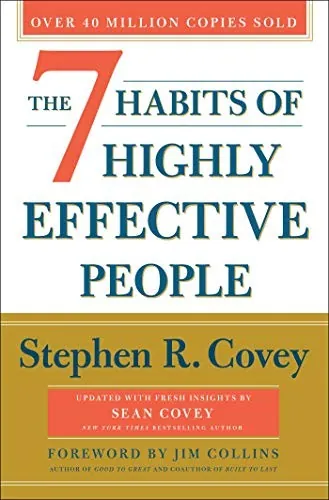
The 7 Habits of Highly Effective People by Stephen R. Covey
Covey’s classic, published in 1989, is the bridge between the ancient tradition and modern life. His argument is that effectiveness - in work and life - grows outward from character, not technique. The seven habits are arranged in a deliberate order: private victories first (be proactive, begin with the end in mind, put first things first), then public victories (think win-win, seek first to understand, synergize), and finally renewal (sharpen the saw).
The book’s enduring power is that it refuses the shortcut. Covey insists that you cannot fake your way to trustworthiness; you can only become trustworthy. That is a character claim, and it is why the book has outlived every productivity fad published alongside it.
The Road to Character by David Brooks
Brooks, a journalist, wrote The Road to Character (2015) after noticing that the culture’s definition of success - resume virtues - was producing accomplished people who were not necessarily good ones. His book contrasts resume virtues (skills, achievements, the things you list on a CV) with eulogy virtues (the things people say about you at your funeral: kind, honest, brave, faithful).
The book is built on case studies of people who developed deep character - often through suffering, self-doubt and moral struggle - and it is a corrective to the self-improvement industry’s obsession with performance. Brooks’s central question is the one every character book eventually asks: what are you for? Not what do you want, but what is your life in service of?
Grit by Angela Duckworth
Duckworth’s research on grit - passion and perseverance for long-term goals - is character science in the modern sense. Her finding, replicated across contexts, is that sustained effort predicts achievement at least as well as talent. The book explains how grit develops: through interest, practice, purpose and hope.
Grit is often read as a discipline book, and it is - but it is also a character book, because perseverance is one of the classical virtues, and Duckworth shows how it is built rather than inherited. It pairs well with the courage titles on this list, because grit is courage applied over time.
Character in Literature
Some of the most powerful character education happens in fiction, where you watch virtues and vices play out with consequences over hundreds of pages. Three novels belong on any character reading list.
To Kill a Mockingbird by Harper Lee is the essential moral novel - a child’s education in integrity, taught by a father who does the right thing when it is costly. Atticus Finch’s character is not preached; it is demonstrated, and the reader absorbs the lesson the way Scout does: by watching someone live it.
The Count of Monte Cristo by Alexandre Dumas is the counter-example - a study in what happens when character is corroded by vengeance, and the slow recovery of mercy. It is long, and worth every page.
Little Women by Louisa May Alcott is character formation as a family project - four sisters learning very different lessons about honesty, temper, generosity and ambition. It is the rare novel that makes virtue feel both difficult and desirable.
Choosing Where to Start
The best character book for you depends on where you are. If you want a complete practical system connecting character to daily life: The 7 Habits. If you want the philosophical foundation: Nicomachean Ethics, read slowly, or The Daily Stoic for the daily practice. If you want to question what the culture means by success: The Road to Character. If you want the research on perseverance: Grit. If you want character demonstrated in story: To Kill a Mockingbird.
There is no wrong starting point, but there is a wrong way to read these books: as theory to agree with rather than practice to attempt. Character books are instruction manuals for a craft you can only learn by doing. Read one, extract one principle, and test it in your life for a month before picking up the next. That rhythm - read, extract, test - is itself a character practice.
The Discipline Connection
You will notice that the character books keep circling the same ground as the discipline books, and that is not an accident. Self-discipline is the mechanism by which character is built. Honesty is a discipline under pressure. Patience is a discipline under provocation. Courage is a discipline under fear. You cannot have the virtues without the capacity to act on your intentions when you do not feel like it.
This is why the best character reading lists and the best self-discipline reading lists overlap so heavily. If you have already read the discipline titles, you have the engine; the character books supply the destination. If you are new to both, the courage books on our courage reading list are a good bridge - courage is the virtue where discipline and character are most visibly the same thing. And courage, in turn, is where character first gets tested: the honest answer, the hard conversation, the refusal to go along. Our list of the best courage books collects the strongest titles on that virtue.
Common Mistakes When Reading Character Books
A list of the best books should also include a warning about the ways readers routinely misuse them, because the character genre has a specific hazard: it is easy to read about virtue and feel virtuous, without becoming more virtuous. The first mistake is reading for agreement instead of application. You finish the chapter on honesty and agree with every word - and then nothing changes, because agreement is not practice. The fix is to extract one principle from each chapter and test it in your life for two weeks before moving on. The book is a manual, not a mirror.
The second mistake is reading the character books as a replacement for the discipline books. Character and self-discipline are not rivals; they are the same project. The virtues are built by the same mechanism - repeated action - that builds habits, and the reader who skips the discipline side is reading about a building without studying the construction. The best approach is to read them together: the discipline books supply the mechanism, the character books supply the destination.
The third mistake is treating character as a performance. The point is not to appear honest, patient or brave; it is to become those things. This is the inner-outer distinction that David Brooks makes central, and it protects against the quiet self-deception of reading virtue books to feel virtuous. The honest test is behavioral: did you do the honest thing this week when it was costly? Not did you read a book about it.
The fourth mistake is reading too many books and applying none. The character shelf rewards depth, not breadth. One book, one principle, one month of testing beats ten books read in a weekend. The genre’s most honest advice is the least commercial: read fewer of these books, and practice more of what you read.
A Realistic Reading Plan
Character is built slowly, and a realistic plan respects that. Choose one book from this list and read it over two to three months - slowly, with notes, one chapter at a time. Extract one principle from each chapter and test it for two weeks. Keep a short journal of the tests: what happened when you tried to be more honest, more patient, more reliable?
After two or three books, step back and ask the question David Brooks would ask: what are the eulogy virtues I want people to be able to say about me? Then work backward from that answer to the habits that build them. This is the long game, and it is the only version of character work that actually works. The books are the map; the living is the territory.
The Companion Reading
Character books are best read as part of a wider practice, and two companion shelves deserve mention. The first is the discipline shelf, because self-discipline is the mechanism by which character is built - the honest person has practiced honesty until it became automatic, and that is a habit. The second is the ethics and philosophy shelf, because character raises questions that the how-to books only gesture at: what is a good life, and what do we owe each other? The classics - from Aristotle to the Stoics to the great moral novels - are the deep background of everything on this list.
The practical rule is to alternate: a character book for the framework, a discipline book for the mechanism, and a novel for the demonstration. The combination is more powerful than any single shelf, because character is built from all three at once - knowing what to do, having the capacity to do it, and having seen it done.
Conclusion
The best character books to read are the ones that treat character as what it is: a craft, built by practice, in the unobserved moments of ordinary life. Aristotle supplies the foundation - we become what we repeatedly do. Covey supplies the system - effectiveness grows outward from integrity. Brooks supplies the critique - resume virtues are not enough. Duckworth supplies the research - perseverance is built, not born. And the novels supply the demonstration - character shown in story is character learned.
Read them slowly, extract one principle at a time, and test it in your life. The reward is not a more impressive resume; it is a more trustworthy self - the person who does the right thing when no one is watching, because they have practiced it until it became who they are.
Frequently Asked Questions
What is the best book on character for beginners?
What is the difference between character and personality?
Can character really be learned from books?
Which philosopher is best to start with on character?
Do character books overlap with self-discipline books?
What is the most important character trait to develop?
Featured Recommendations


Raining Book Editorial Team
The Raining Book editorial team curates the best book recommendations and reading guides for every type of reader.