Books Like Atomic Habits

There is a specific feeling that comes from finishing Atomic Habits: you have been handed a system, and you suspect it might actually work this time. James Clear’s book became a phenomenon because it solved a real problem - why most attempts at change fail - with a clear answer: you do not rise to the level of your goals; you fall to the level of your systems. Tiny improvements, compounded daily, produce results that feel like magic but are actually mathematics.
The problem after finishing it is the one every good system creates: you have the framework, and now you want more of it - more science, more method, more of the adjacent territory. This guide collects the books that genuinely belong on that shelf: the science of habits, the alternative methods of behavior change, the focus practices, and the discipline research that the habit system depends on.
What Made Atomic Habits Special
Before the recommendations, it is worth naming what you are actually looking for, because the right next book depends on which part of Clear stayed with you.
If the four laws stayed with you - make it obvious, attractive, easy and satisfying - then the behavior-science books will deepen your method. If the identity argument stayed with you - the idea that every action is a vote for the kind of person you want to become - then the books on character and discipline will carry it forward. And if the compounding insight stayed with you - the 1-percent improvement, the patience, the systems over goals - then the books on perseverance and focus will be the natural next step.
Most readers are looking for all three, and the books below cover the range. Each one takes a piece of the habit project and builds on it with evidence, method or depth.
The Habit Science
The Power of Habit by Charles Duhigg
If there is one book the Atomic Habits reader should pick up next, it is The Power of Habit. Where Clear gives you a system, Charles Duhigg gives you the science underneath it - the habit loop of cue, routine and reward, explained at the level of neurology and shown working across individual lives, companies and social movements.
The two books are perfect companions: Duhigg explains why habits exist and how they form; Clear shows you how to deliberately construct them. Duhigg’s case studies - the patient who rebuilt her life around one small habit, the organizations that transformed by changing a single routine - make the science vivid in a way that enriches everything Clear teaches.
Content notes: Accessible non-fiction. Some case studies involve serious personal and organizational struggles, but the material is handled responsibly.
Tiny Habits by BJ Fogg
If you tried Atomic Habits and still found the changes hard to sustain, Tiny Habits is the book for you. BJ Fogg, a behavior scientist at Stanford, argues that the secret to lasting change is not motivation and not even systems - it is size. Start with behaviors so small they cannot fail, attach them to existing routines, and celebrate immediately.
Fogg’s distinctive contribution is the celebration: the instant emotional reward after the tiny behavior, which his research shows is what makes the behavior stick. It is a different mechanism from Clear’s four laws, and it is the most forgiving method on this list. For readers who have stalled despite the right intentions, Tiny Habits is the reset.
Content notes: Accessible non-fiction, suitable for a wide range of readers.
The Power of Full Engagement by Jim Loehr and Tony Schwartz
The habit system has a hidden dependency: energy. The Power of Full Engagement argues that performance is not managed by time but by energy, and that energy is renewed through the rhythms of the day - work, rest, recovery - the way athletes train.
For the Atomic Habits reader, this is the book that explains why habits fail when you are depleted: the system works, but the fuel runs out. Loehr and Schwartz show how to build recovery into the routine, and the result is a habit system that can actually run for years instead of weeks.
Content notes: Accessible non-fiction, written for professionals and athletes.
The Behavior Change Methods
Switch by Chip and Dan Heath
Switch is the book for readers who want the psychology of change at the level of the whole organization - or the whole family. Chip and Dan Heath argue that change fails because the emotional side of the brain (the Elephant) and the rational side (the Rider) are not moving together, and they offer a framework for getting both pointed the same way: direct the Rider, motivate the Elephant, shape the Path.
The book is full of vivid case studies - the turnaround of a failing company, the transformation of a hospital ward, the change of a personal habit - and it is the most story-driven book on this list. For the Atomic Habits reader, Switch supplies the psychology that Clear’s system operates on.
Content notes: Accessible non-fiction, suitable for a wide range of readers.
Indistractable by Nir Eyal
Atomic Habits will make your good habits easier, but it will not, by itself, stop the distraction that destroys them. Indistractable is the book that addresses the other half of the problem: the constant pull of technology, and the discipline of attention.
Eyal argues that distraction is not a failure of willpower but a failure of systems - and he offers a framework for becoming indistractable: master internal triggers, make time for traction, hack back external triggers, and prevent distraction with pacts. It is the practical companion that keeps the habit system running in the modern environment.
Content notes: Accessible non-fiction, suitable for students and professionals.
The Focus and Deep Work Books
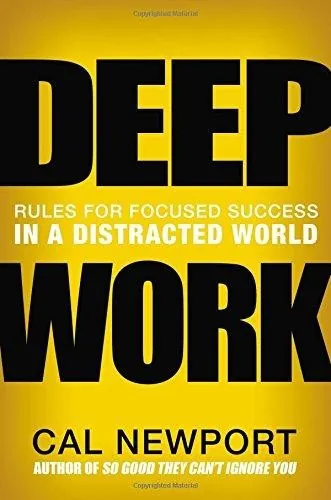
Deep Work by Cal Newport
The habit system is only as good as the focused time it protects, and Deep Work is the definitive modern book on focus. Cal Newport argues that the ability to concentrate without distraction on cognitively demanding tasks is increasingly rare and increasingly valuable - and he shows how to build it into your schedule.
For the Atomic Habits reader, Deep Work is the habit book for the most important habit of all: the deep work block. Newport’s strategies - the ritualized schedule, the shutdown routine, the disciplined use of technology - are the daily practice that makes everything else possible.
Content notes: Accessible non-fiction, suitable for students and professionals.
The One Thing by Gary Keller and Jay Papasan
Atomic Habits is about the daily system; The One Thing is about the direction the system serves. Keller and Papasan argue that extraordinary results come from narrowing your focus to the one thing that makes everything else easier or unnecessary - and they show how to protect that focus against the pull of the many.
For the Atomic Habits reader, this is the prioritization book that tells you which habits deserve the system in the first place. It is short, direct and relentlessly practical.
Content notes: Accessible non-fiction, suitable for a wide range of readers.
The Discipline and Perseverance Books
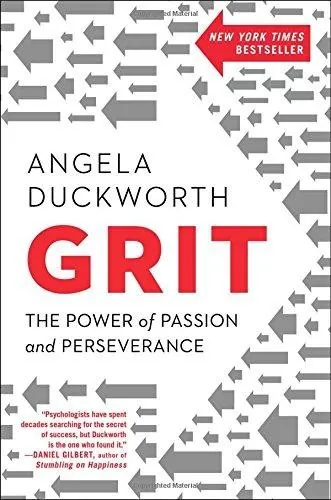
Grit by Angela Duckworth
The habit system runs on a fuel that Atomic Habits assumes but does not fully examine: perseverance. Grit is Angela Duckworth’s research-based account of the passion and perseverance that predict achievement more reliably than talent - the capacity to keep going toward long-term goals through difficulty.
For the Atomic Habits reader, Grit is the long view: the system handles the daily repetitions, and grit is what keeps the system running for the years it takes. Duckworth’s research - on cadets, champions and teachers - shows that the sustained effort is the hidden variable, and the book makes the case for patience that the habit compounder needs.
Content notes: Accessible non-fiction, suitable for a wide range of readers.
The 7 Habits of Highly Effective People by Stephen R. Covey
For readers who want to see the habit project at its most complete, there is no better companion than the book that started the modern conversation. Covey’s framework - be proactive, begin with the end in mind, put first things first, think win-win, seek first to understand, synergize, sharpen the saw - builds effectiveness on character and principles rather than technique.
Where Atomic Habits gives you the mechanics, Covey gives you the architecture: the character foundation that the daily habits serve. The two books belong together because Clear answers the how and Covey answers the why - and the reader with both has the complete system.
Content notes: Accessible non-fiction, suitable for a wide range of readers.
How to Choose Your Next Read
The right next book depends on what you are trying to solve. If you want the science behind the system: The Power of Habit. If habits still do not stick: Tiny Habits. If you are exhausted and the system keeps failing: The Power of Full Engagement. If you want the psychology of change for a team or family: Switch. If distraction is destroying your habits: Indistractable. If you need focused time: Deep Work. If you have too many directions: The One Thing. If you want the long view: Grit. If you want the character architecture: The 7 Habits.
There is no wrong order, but there is a sensible one: start with the science (The Power of Habit), then the method (Tiny Habits), then the focus (Deep Work), and let the discipline research (Grit) deepen the foundation as you go.
A Note on Building Your Own System
The deepest lesson of this shelf is that the systems are yours to build, not theirs to prescribe. Clear’s four laws, Fogg’s tiny behaviors, Newport’s deep work blocks - each is a starting point, and the reader who adapts them to their own life is the reader who keeps them. The practical version of this is the habit audit: once a month, look at the systems you have installed and ask which ones are serving you, which ones have drifted, and which one small change would improve the week ahead.
There is also a trap worth naming: the reader who keeps collecting habit books without installing any habits. The shelf is only useful in the practice, and the practice is one tiny behavior, attached to one existing routine, repeated until it is automatic. The books give you the method; only the repetition gives you the habit - and the habit is the whole point. These titles all belong to the growth section of our library, which collects the whole shelf of change together.
The Wider Growth Shelf
Atomic Habits belongs to the wider project of personal growth, and the connection is worth naming because it gives the habit system its direction. The habits are the daily mechanics; the growth is what they are for. Our guide to family-friendly personal growth explores how the same project works across a whole household - because habits are caught as much as taught, and the family that builds good systems builds good people.
The shelf also connects to self-discipline, in a specific way: the habit system only works because discipline makes the repetitions possible in the hard moments. Our guide to meaningful self-discipline for adults walks through the capacity that Atomic Habits quietly depends on - the willingness to do the small thing daily, even when it is the last thing you feel like doing.
Conclusion
Atomic Habits became a phenomenon because it solved the real problem of why change fails, and the books on this list are the honest responses to the question it leaves behind: what next? The science of Duhigg, the method of Fogg, the energy work of Loehr and Schwartz, the change psychology of the Heath brothers, the focus of Newport, the prioritization of Keller, and the perseverance research of Duckworth - together they complete the system.
Read the notes, choose the problem you are actually solving, and let the books build on each other. Atomic Habits gave you the system; these books give you the science, the method and the endurance - and together they turn a framework into a life.
Frequently Asked Questions
What should I read after Atomic Habits?
Is The Power of Habit similar to Atomic Habits?
What is the difference between Atomic Habits and Tiny Habits?
Are there books like Atomic Habits for discipline?
Which book is most practical after Atomic Habits?
Are these books suitable for teenagers?
Featured Recommendations


Raining Book Editorial Team
The Raining Book editorial team curates the best book recommendations and reading guides for every type of reader.