Books Like The Happiness Project

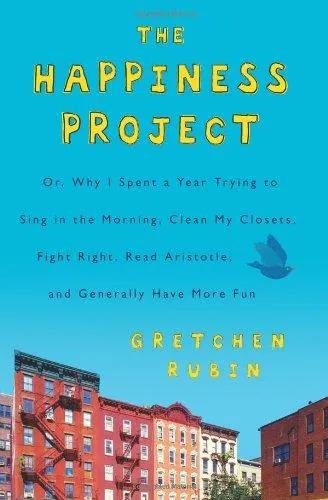
There is a specific feeling that comes from finishing The Happiness Project: you want to start your own. Gretchen Rubin’s account of her year of deliberate experiments - one resolution a month, from boosting energy to making time for friends - became a phenomenon because it did something rare: it treated happiness not as a mood that happens to you but as a project you can run, with resolutions, measurements and results.
The book’s appeal is its practicality: the monthly themes, the resolutions, the honest reporting of what worked and what did not. The problem after finishing it is the one every great book creates: you want more of the feeling, and more of the method. This guide collects the books that genuinely belong on that shelf.
What Made The Happiness Project Special
Before the recommendations, it is worth naming what you are actually looking for, because the right next book depends on which part of Rubin stayed with you.
If the method stayed with you - the resolutions, the monthly themes, the experiments - then the habit and productivity books will fit. If the science stayed with you - the research Rubin draws on - then the wellbeing science books will be your natural next step. And if the happiness itself stayed with you - the question of what actually makes life better - then the happiness books will carry it forward.
Most readers are looking for all three, and the books below cover the range.
More from Gretchen Rubin
Better Than Before by Gretchen Rubin
If there is one book that the Happiness Project reader should pick up next, it is Rubin’s own Better Than Before. Where The Happiness Project is the story of her year of experiments, Better Than Before is the framework underneath them: how habits actually work, and how to change them - organized around the four tendencies that explain why some strategies work for some people and not others.
The book is the practical engine of the happiness project: the habit knowledge that makes resolutions stick. For readers who tried the resolutions and found some of them slipping, this is the book.
Content notes: Accessible non-fiction; suitable for a wide range of readers.
The Four Tendencies by Gretchen Rubin
For readers who want the personality framework in full, The Four Tendencies is the book. Rubin’s taxonomy - Upholders, Questioners, Obligers and Rebels - explains how people respond to expectations, and why the same habit strategy works for one person and fails for another.
The book is the key to customizing the happiness project: once you know your tendency, you know which resolutions will stick for you. It is the most distinctive contribution of Rubin’s work, and it is the book her readers keep returning to.
Content notes: Accessible non-fiction; suitable for a wide range of readers.
The Science of Happiness
The How of Happiness by Sonja Lyubomirsky
The Happiness Project is the story of one person’s experiments; The How of Happiness is the research behind them. Sonja Lyubomirsky, a leading happiness researcher, synthesizes decades of studies on what actually increases happiness - and her finding is liberating: a significant portion of your happiness is within your control, and specific, research-tested practices can raise it.
The book is the scientific foundation of the happiness project: gratitude, kindness, connection, savoring - the practices Rubin discovered by trial, Lyubomirsky confirms by evidence. For readers who want the research, this is the book.
Content notes: Accessible non-fiction, grounded in research; suitable for a wide range of readers.
The Happiness Advantage by Shawn Achor
For readers who want the happiness research applied to work and performance, The Happiness Advantage is the book. Shawn Achor, who studied happiness at Harvard, argues that happiness is not the result of success but the cause of it - that the happiness advantage (positive mindset, gratitude, social connection) precedes and produces better performance.
The book is the workplace version of the happiness project, with concrete strategies for using the happiness advantage at work. For readers who want happiness connected to performance, this is the book.
Content notes: Accessible non-fiction, grounded in research; suitable for a wide range of readers.
The Art of Happiness by the Dalai Lama and Howard Cutler
For readers who want the happiness question explored at its deepest, The Art of Happiness is the book. It records a series of conversations between the Dalai Lama and the psychiatrist Howard Cutler, moving through the nature of happiness, the sources of suffering and the practices that lead to a happier life.
The book is the wisdom version of the happiness project: where Rubin experiments with resolutions, the Dalai Lama teaches the inner work - the compassion, the perspective, the letting go - that the resolutions ultimately serve. The two belong together.
Content notes: Accessible non-fiction; suitable for a wide range of readers.
The Habit and Practice Books
Atomic Habits by James Clear
The Happiness Project runs on resolutions; Atomic Habits is the book that explains why resolutions work or fail. James Clear’s framework - make it obvious, attractive, easy and satisfying - is the modern science of habit formation, and it is the practical machinery that makes Rubin’s monthly themes sustainable.
The two books belong together because they answer different questions: Rubin shows you what to resolve; Clear shows you how to make the resolution stick. For readers who want the habits to last, this is the book.
Content notes: Accessible non-fiction; suitable for a wide range of readers.
The Power of Habit by Charles Duhigg
For readers who want the science of habits in full, The Power of Habit is the book. Charles Duhigg explains the habit loop - cue, routine, reward - and shows it working across individual lives, companies and movements, with the case studies that make the science vivid.
The book is the deeper research behind the resolutions of the happiness project: understanding the loop is the first step to changing it. For readers who want to know why habits work, this is the book.
Content notes: Accessible non-fiction; suitable for a wide range of readers.
The Gratitude and Mindfulness Books
The Book of Joy by the Dalai Lama, Desmond Tutu and Douglas Abrams
Gratitude is one of the most reliable happiness practices, and The Book of Joy is the definitive book on the joy it produces. It records a week of conversations between the Dalai Lama and Archbishop Desmond Tutu on the eight pillars of joy - including gratitude, forgiveness and compassion - with the practices that build each one.
The book is the deep wisdom version of the happiness project’s gratitude month, taught by two masters of the practice. For readers who want the gratitude dimension developed in full, this is the book.
Content notes: Accessible non-fiction; suitable for a wide range of readers.
Radical Acceptance by Tara Brach
For readers who want the mindfulness underneath the happiness practices, Radical Acceptance is the book. Tara Brach argues that much of our suffering comes from the refusal to accept what is - and that the path through is radical acceptance: the compassionate embrace of the present moment.
The book is the inner practice that the resolutions of the happiness project ultimately depend on: the acceptance that makes change possible without self-criticism. For readers who want the mindfulness foundation, this is the book.
Content notes: Accessible non-fiction, includes meditation practices; suitable for a wide range of readers.
How to Choose Your Next Read
The right next book depends on what you are ready for. If you want more of Rubin: Better Than Before or The Four Tendencies. If you want the research: The How of Happiness or The Happiness Advantage. If you want the deepest wisdom: The Art of Happiness. If you want the habit machinery: Atomic Habits or The Power of Habit. If you want the gratitude and mindfulness practices: The Book of Joy or Radical Acceptance.
There is no wrong order, but there is a sensible one: start with Better Than Before for the habit framework, then The How of Happiness for the science, then The Book of Joy for the depth, and let the others fill in as you go.
A Note on Designing Your Own Project
The deepest lesson of The Happiness Project is that it is a template, not a prescription. Rubin’s resolutions - boost energy, make time for friends, buy some happiness - were chosen for her life, and the reader who copies them wholesale will miss the point. The point is the method: choose a domain of your life, name the specific resolutions that would improve it, and test them for a month.
A practical version: start with one month and one domain. Energy, work, love, money, leisure, friendship - choose the one that nags at you most, and write five specific resolutions for it. Then do them, honestly, for a month, and note what works. The project does not need to be grand; it needs to be specific. The books on this list are the companions for the project - the science of what works, the habits that make it stick, the wisdom that gives it depth - and they are best read as the project runs, not instead of it.
The Character and Growth Shelf
The Happiness Project is, at its core, a book about character - about the deliberate cultivation of the qualities that make life good: energy, friendship, gratitude, meaning. It belongs on the wider character shelf, alongside the books that explore how character is built. Our notes on character themes, values and reading notes explore the ideas that run through the whole character shelf, and they pair naturally with this reading - because the happiness project is, in practice, a character project.
The shelf also connects to courage, in a specific way: Rubin’s book is full of small acts of courage - the resolutions kept, the honest self-assessment, the willingness to change. Our guide to family-friendly courage explores how that capacity is built and passed on, and it belongs with this reading because the happiness project requires it daily. Together they form part of the growth section of our library, where the whole shelf of becoming is gathered.
The Resolutions That Recur
Readers of The Happiness Project often notice the same pattern: certain resolutions recur across the months because they are the ones that matter most. The energy work returns because everything else depends on it. The gratitude work returns because it is the cheapest and most reliable happiness practice there is. The relationship work returns because the research - and Rubin’s own experience - keeps confirming that connection is the strongest predictor of happiness.
It is worth letting the recurrences teach you something about your own project: the resolutions that keep returning are the ones your life is actually asking for. When you design your own happiness project, expect the same pattern - the domain that nags at you will keep nagging until you attend to it, and the attending is the project. The books on this list are the companions for the recurrences: the science of Lyubomirsky for the gratitude, the habits of Clear for the energy, the wisdom of the Dalai Lama for the depth. Let the recurrences set your agenda, and let the shelf supply the method.
The Danger of the Happiness Obsession
It is worth naming the danger that the happiness genre creates, because Rubin’s book is not immune to it: the obsession with happiness can itself make people less happy. The constant self-monitoring - am I happy yet? is this project working? - can become a treadmill, and the person who treats happiness as a goal to be achieved can end up more anxious than the person who simply lives. Rubin’s own book is a partial antidote to this, because it is honest about the failures and the ordinary days, but the reader should carry the caveat forward.
The antidote is in the books themselves, if read rightly. The happiness is not in the achieving; it is in the attention - the gratitude, the connection, the presence. The Book of Joy teaches the joy that coexists with suffering, not the happiness that requires everything to go well. Radical Acceptance teaches the peace that does not depend on circumstances. The project works when it is a vehicle for attention, and fails when it becomes another performance. Read the shelf with that distinction in mind, and the project will serve you rather than supervise you.
Conclusion
The Happiness Project became a phenomenon because it treated happiness as a project you can run - with resolutions, measurements and results - instead of a mood that happens to you. The books on this list are the honest responses to the question it leaves behind: what next?
The frameworks of Rubin herself, the research of Lyubomirsky and Achor, the wisdom of the Dalai Lama, the habit science of Clear and Duhigg, and the mindfulness of Brach - together they carry the same truth in different voices: happiness is built, one resolution, one habit, one grateful moment at a time. Read the notes, choose where you are, and let the books take their time.
Frequently Asked Questions
What should I read after The Happiness Project?
Is Better Than Before like The Happiness Project?
What is the difference between The Happiness Project and The How of Happiness?
Are there books like The Happiness Project for science-minded readers?
Which book is the most practical after Rubin?
Do these books contain difficult content?
Featured Recommendations

Raining Book Editorial Team
The Raining Book editorial team curates the best book recommendations and reading guides for every type of reader.