Books Like The Obstacle Is the Way
There is a specific feeling that comes from finishing The Obstacle Is the Way: you want to go find an obstacle. Ryan Holiday’s book - the modern restatement of the Stoic art of turning difficulty into advantage - became a phenomenon because it gave readers a lens: perception, action, will. See the obstacle clearly. Act on it. Endure what cannot be changed. The book is full of examples, from presidents to athletes to artists, of people who did exactly that.
The problem after finishing it is the one every great book creates: you want more of the lens, and more of the practice. This guide collects the books that genuinely belong on that shelf.
What Made The Obstacle Is the Way Special
Before the recommendations, it is worth naming what you are actually looking for, because the right next book depends on which part of the book stayed with you.
If the framework stayed with you - perception, action, will - then the applied Stoicism books will fit. If the examples stayed with you - the historical figures, the stories - then the philosophy behind them will be your natural next step. And if the daily practice stayed with you - the desire to actually use the lens - then the daily Stoic books will carry it forward.
Most readers are looking for all three, and the books below cover the range.
More from Ryan Holiday
Ego Is the Enemy by Ryan Holiday
If there is one book that the Obstacle Is the Way reader should pick up next, it is Holiday’s own Ego Is the Enemy. Where The Obstacle Is the Way deals with outer obstacles, Ego Is the Enemy deals with the inner one: the need to be seen as right, important and successful, which Holiday argues is the enemy of growth.
The book is the companion volume - the same Stoic lens, turned inward. For readers who loved the framework and wanted it applied to the inner life, this is the book.
Content notes: Accessible non-fiction; suitable for a wide range of readers.
Stillness Is the Key by Ryan Holiday
For readers who want the contemplative side of the practice, Stillness Is the Key is the book. Holiday argues that the ability to find inner stillness - calm, clarity, focus - is the hidden capacity behind all great work, and he shows how to cultivate it.
The book is the third volume of the trilogy that began with The Obstacle Is the Way: perception, action, will - and now stillness, the foundation underneath all three. For readers who want the complete system, this is the book.
Content notes: Accessible non-fiction; suitable for a wide range of readers.
The Daily Stoic by Ryan Holiday and Stephen Hanselman
For readers who want the practice made daily, The Daily Stoic is the book. Holiday and Hanselman have curated one Stoic passage for every day of the year - from Marcus Aurelius, Seneca and Epictetus - each with a commentary that makes the ancient wisdom usable today.
The book is the daily version of the Obstacle Is the Way lens: one reminder a day, accumulated into a year of practice. For readers who want the philosophy not just read but lived, this is the book.
Content notes: Accessible non-fiction; suitable for a wide range of readers.
The Original Stoics
Meditations by Marcus Aurelius
For readers who want the source of the framework, Meditations is the essential book. Written as a private notebook by a Roman emperor, it is the record of a man practicing exactly what Holiday describes - seeing clearly, acting on what is in his control, accepting what is not.
The book has no system, which is its power: it is the practice itself, unmediated. For readers who loved the lens and want the original, this is the book.
Content notes: A classical text, accessible and suitable for a wide range of readers.
Letters from a Stoic by Seneca
For readers who want the Stoic wisdom in a warmer voice, Letters from a Stoic is the book. Seneca’s letters to his friend Lucilius cover the whole range of the practice - grief, anger, wealth, adversity - with a directness that feels surprisingly modern.
The book is the most readable of the Stoic originals, and it is the natural companion for readers who want the philosophy in a more personal form than Marcus’s fragments.
Content notes: A classical text, accessible and suitable for a wide range of readers.
Discourses and Selected Writings by Epictetus
For readers who want the hardest version of the philosophy, Discourses is the book. Epictetus, a former slave turned philosopher, teaches the starkest form of the practice: some things are up to us and some are not, and all our suffering comes from confusing the two.
The book is the argument behind the lens, and it is the right choice for readers who want the reasoning in full rather than in summary.
Content notes: A classical text, accessible and suitable for a wide range of readers.
The Applied Resilience Books
The War of Art by Steven Pressfield
The Obstacle Is the Way deals with outer obstacles; The War of Art deals with the inner one that blocks creative work. Pressfield calls it Resistance - the universal force that opposes any act of creation - and he offers the practice that defeats it: showing up, doing the work, day after day.
The book is the artist’s version of the obstacle philosophy: the same refusal to be stopped, applied to the one obstacle every creative person faces. For readers who struggle to start, this is the book.
Content notes: Accessible non-fiction; contains some strong language; suitable for mature readers.
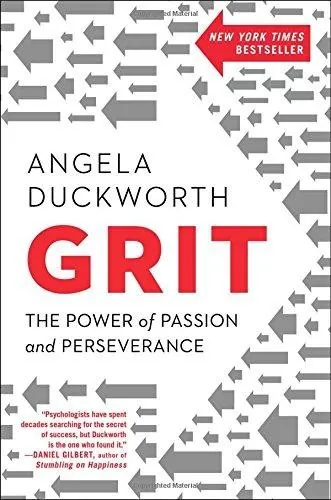
Grit by Angela Duckworth
For readers who want the research on perseverance, Grit is the book. Angela Duckworth’s study of passion and perseverance shows that sustained effort predicts achievement more reliably than talent - the empirical version of the will that Holiday describes.
The book is the science behind the third part of the framework - the will to keep going - and it is the right choice for readers who want the evidence.
Content notes: Accessible non-fiction; suitable for a wide range of readers.
Man’s Search for Meaning by Viktor Frankl
For readers who want the deepest demonstration of the philosophy, Man’s Search for Meaning is the book. Viktor Frankl, a psychiatrist who survived the Nazi concentration camps, argues that meaning can be found even in the worst circumstances - the ultimate proof that the obstacle can be the way.
The book is the framework tested at the limit of human endurance, and it is the book the whole Stoic shelf ultimately points toward.
Content notes: Contains first-hand accounts of the Holocaust; for mature readers.
How to Choose Your Next Read
The right next book depends on what you are ready for. If you want more of Holiday: Ego Is the Enemy or Stillness Is the Key. If you want the daily practice: The Daily Stoic. If you want the originals: Meditations, Letters from a Stoic or Discourses. If you want the creative application: The War of Art. If you want the research: Grit. If you want the deepest ground: Man’s Search for Meaning.
There is no wrong order, but there is a sensible one: start with Ego Is the Enemy for the inner obstacle, then The Daily Stoic for the practice, then Meditations for the source, and let the others fill in as you go.
A Note on Applying the Framework
The Obstacle Is the Way is a book that must be applied to be understood. Read as theory, it is a collection of inspiring stories about people who overcame difficulty; applied, it is a lens for your own life - and the difference is the whole point. The practice has a simple shape: when an obstacle arrives, name which of the three disciplines it calls for. Is it a perception problem - are you seeing it wrong, exaggerating it, letting it loom? Is it an action problem - is there a next step you are avoiding? Is it a will problem - is it something you must simply endure?
Most obstacles call for all three, in order: see it clearly, act on it, endure what remains. The reader who practices this naming - at work, at home, in the ordinary frustrations of the week - is the reader who has actually read the book. The recommendations above are best used the same way: each one a tool for a different part of the framework, picked up when the obstacle demands it.
The Courage and Patience Shelf
The Obstacle Is the Way is, at its core, a book about courage and patience - the courage to act on obstacles and the patience to endure what cannot be changed. It belongs on the wider growth shelf, alongside the books that explore those capacities. Our guide to family-friendly courage explores how courage is taught and caught across a household, and it pairs naturally with this reading - because the willingness to face obstacles is learned early and modeled daily.
The shelf also connects to patience, in a specific way: the second part of the Stoic practice is the patient acceptance of what is not in our control. Our guide to meaningful patience for adults walks through the capacity that the framework depends on, and it belongs with this reading because the obstacle philosophy is half courage and half patience - the two together are the whole art. Together they form part of the growth section of our library, where the whole shelf of resilience is gathered.
The Obstacle in the Ordinary Day
It is easy to read The Obstacle Is the Way and imagine the obstacles as large - the bankruptcy, the diagnosis, the failure on the national stage. But the framework is built for the ordinary day, and the ordinary day is where it is best practiced. The traffic jam is an obstacle: perception says it is ruining the morning; action says there is a podcast to hear or a call to make; will says this too will pass. The difficult colleague is an obstacle: perception says the personality clash is the whole story; action says the project still needs to move; will says the relationship can be endured with dignity.
Practicing the framework on the small obstacles is what makes it available for the large ones. The naming - is this perception, action or will? - builds the reflex, and the reflex is the capacity. The books on this list are the companions for the practice: the daily reminders of The Daily Stoic, the research of Duckworth on endurance, the meaning of Frankl for the deepest will. Start with the traffic; the framework will be ready when the real obstacles arrive.
The Examples as Teachers
Part of the appeal of The Obstacle Is the Way is its examples - the presidents, athletes, artists and soldiers who turned difficulty into advantage - and it is worth reading them deliberately rather than as decoration. Each example is a case study in one of the three disciplines: Thomas Edison’s perception of failure as discovery; Theodore Roosevelt’s action in the face of personal loss; the endurance of the explorers through the worst the world could send. The examples are not inspiration; they are instruction - each one a worked demonstration of the framework.
The practice is to read them as such: name the discipline each example exercises, and notice how it would apply to your own obstacles. The historical figure who turned the setback into the triumph is not a story to admire; she is a template to adapt. This is why the examples reward rereading with your own difficulties in mind - the third time through, the book becomes less about them and more about you, which is exactly what a book of this kind is for.
Conclusion
The Obstacle Is the Way became a phenomenon because it gave readers a lens - perception, action, will - for turning difficulty into advantage. The books on this list are the honest responses to the question it leaves behind: what next?
The inner work of Holiday’s own trilogy, the daily practice of The Daily Stoic, the originals of Marcus, Seneca and Epictetus, the resistance of Pressfield, the grit of Duckworth and the meaning of Frankl - together they carry the same truth in different voices: the obstacle is the way, and the way is walked daily. Read the notes, choose where you are, and let the books take their time.
Frequently Asked Questions
What should I read after The Obstacle Is the Way?
Is Ego Is the Enemy like The Obstacle Is the Way?
What is the difference between The Obstacle Is the Way and Meditations?
Are there books like The Obstacle Is the Way for the daily practice?
Which book is the most practical after Holiday?
Do these books contain difficult content?
Featured Recommendations

Raining Book Editorial Team
The Raining Book editorial team curates the best book recommendations and reading guides for every type of reader.