Books Like The Power of Habit

There is a specific feeling that comes from finishing The Power of Habit: you will never see your routines the same way again. Charles Duhigg’s book became a phenomenon because it took something invisible - the automatic patterns that run our days - and made it visible. The habit loop of cue, routine and reward, told through the stories of a brain-damaged patient, a transformed company and a social movement, gave readers a new lens on their own lives.
The problem after finishing it is the one every good science book creates: you have the understanding, and now you want the method. This guide collects the books that genuinely belong on that shelf - the practical habit systems, the behavior change methods, the energy science, and the discipline research that the habit loop depends on.
What Made The Power of Habit Special
Before the recommendations, it is worth naming what you are actually looking for, because the right next book depends on which part of Duhigg stayed with you.
If the habit loop stayed with you - the cue, routine, reward structure - then the practical systems will show you how to use it. If the stories stayed with you - the organizations, the movements, the transformed lives - then the change psychology books will deepen your understanding of how change actually happens. And if the question stayed with you - how do I change my own habits? - then the method books are the natural next step.
Most readers are looking for all three, and the books below cover the range. Each one takes a piece of the habit project and builds on it with method, science or depth.
The Practical Systems
Atomic Habits by James Clear
If there is one book the Power of Habit reader should pick up next, it is Atomic Habits. Where Duhigg explains the science, James Clear gives you the system: the four laws of behavior change - make it obvious, attractive, easy and satisfying - and the argument that tiny improvements, compounded daily, produce extraordinary results.
The two books are perfect companions: Duhigg is the science of how habits exist; Clear is the engineering of how to build them. If you finished The Power of Habit understanding your habits and want to actually change them, Atomic Habits is the most direct next step available.
Content notes: Accessible non-fiction, suitable for a wide range of readers including motivated teenagers.
Tiny Habits by BJ Fogg
If you understand the habit loop but struggle to make changes stick, Tiny Habits is the book for you. BJ Fogg, a behavior scientist at Stanford, argues that the secret to lasting change is not motivation but size: start with behaviors so small they cannot fail, attach them to existing routines, and celebrate the success.
Fogg’s distinctive contribution is the celebration - the instant emotional reward that his research shows makes the behavior stick. It is a more forgiving method than most, and it is the book readers turn to when the grand plans keep failing. For the Power of Habit reader, Tiny Habits is the method that the loop actually runs on.
Content notes: Accessible non-fiction, suitable for a wide range of readers.
The Power of Full Engagement by Jim Loehr and Tony Schwartz
The habit loop has a hidden dependency: energy. The Power of Full Engagement argues that performance is managed not by time but by energy, and that energy is renewed through the rhythms of work and recovery - the way athletes train.
For the Power of Habit reader, this is the book that explains why habits fail when you are depleted: the loop works, but the fuel runs out. Loehr and Schwartz show how to build recovery into the routine, and the result is a habit system that can run for years instead of weeks.
Content notes: Accessible non-fiction, written for professionals and athletes.
The Change Psychology
Switch by Chip and Dan Heath
Duhigg explains the habit loop; the Heath brothers explain why change is so hard and how to make it easier. Switch argues that change fails because the emotional side of the brain (the Elephant) and the rational side (the Rider) are not moving together - and offers a framework for getting both pointed the same way: direct the Rider, motivate the Elephant, shape the Path.
The book is the most story-driven on this list, full of case studies from companies, classrooms and hospitals, and it is the natural next step for readers who loved the narrative power of Duhigg’s book. It shows how the same psychology operates at the scale of teams and organizations, not just individuals.
Content notes: Accessible non-fiction, suitable for a wide range of readers.
Nudge by Richard Thaler and Cass Sunstein
If The Power of Habit made you curious about how environments shape behavior, Nudge is the book that takes the idea to its most influential conclusion. Thaler, a Nobel laureate, and Sunstein argue that small changes in how choices are presented - the default option, the ordering, the framing - can dramatically change what people do, without forcing anyone.
The book is about choice architecture: how the design of the environment nudges behavior in one direction or another. For the Power of Habit reader, it is the environmental side of the loop - the cues that trigger routines are often designed by someone, and understanding the design is the first step to taking it back.
Content notes: Accessible non-fiction, written for general readers.
The Identity and Discipline Books
Grit by Angela Duckworth
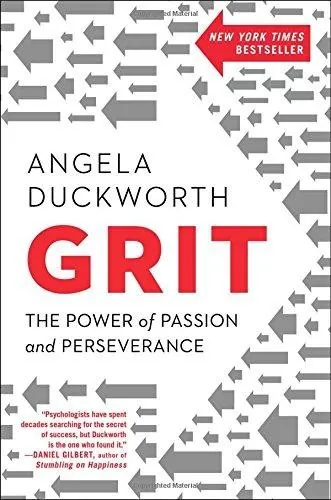
The habit loop runs on a fuel that Duhigg describes but does not fully examine: perseverance. Grit is Angela Duckworth’s research-based account of the passion and perseverance that predict achievement more reliably than talent - the capacity to keep the routine running through difficulty and boredom.
For the Power of Habit reader, Grit is the long view: the loop handles the daily repetitions, and grit is what keeps the loop running for the years it takes. Duckworth’s research - on cadets, champions and teachers - shows that sustained effort is the hidden variable in most success stories.
Content notes: Accessible non-fiction, suitable for a wide range of readers.
The 7 Habits of Highly Effective People by Stephen R. Covey
For readers who want to see the habit project at its most complete, there is no better companion than the book that started the modern conversation. Covey’s framework - be proactive, begin with the end in mind, put first things first - builds effectiveness on character and principles rather than technique.
Where Duhigg gives you the science, Covey gives you the architecture: the character foundation that the daily habits serve. The two books belong together because Duhigg answers the how and Covey answers the why - and the reader with both has the complete system.
Content notes: Accessible non-fiction, suitable for a wide range of readers.
How to Choose Your Next Read
The right next book depends on what you are trying to solve. If you want the practical system for building habits: Atomic Habits. If changes keep failing: Tiny Habits. If you are exhausted and the loop keeps breaking: The Power of Full Engagement. If you want change at the scale of teams or organizations: Switch. If you want to understand how environments shape behavior: Nudge. If you want the long-term perseverance research: Grit. If you want the character architecture: The 7 Habits.
There is no wrong order, but there is a sensible one: start with the system (Atomic Habits), then the method (Tiny Habits), then the change psychology (Switch), and let the discipline research (Grit) deepen the foundation as you go.
Changing a Habit, Not Breaking It
One of Duhigg’s most practical lessons - and the one that distinguishes this shelf from the moralizing versions of self-help - is that habits are not broken; they are changed. The cue and the reward stay; the routine is replaced. The person who wants to stop snacking at 3 p.m. does not need to remove the cue (the clock) or the reward (the break, the comfort); they need to insert a new routine - the walk, the water, the brief stretch - that delivers the same reward. The loop is not destroyed; it is rewired.
This reframing is worth carrying into every book on this list. The goal is never the blank slate; it is the better loop. And the practical consequence is that change is less heroic and more mechanical than the culture suggests: identify the cue, name the reward, swap the routine. The books on this shelf give you the vocabulary for the swap - and the reader who learns the vocabulary can apply it to any habit, in any season of life.
The Keystone Habits
One of the most useful ideas Duhigg contributes - and one that connects this shelf to the wider habit literature - is the keystone habit: the single change that starts a chain reaction, altering other habits without being aimed at them. For many people, exercise is the keystone: the person who starts exercising often starts eating better, sleeping better and working more productively, without consciously changing any of those things. For others, it is making the bed, or the evening review, or the daily walk.
The practical implication is that change does not have to be comprehensive to be real. The reader who identifies one keystone habit and installs it is not doing one small thing; they are levering the whole system. This is why the books on this shelf so often converge on the same small starting points - the tiny behavior, the single routine, the one thing - and it is why the reader who is overwhelmed by the scope of change can safely begin with just one.
A Note on Habits in Context
The habit loop does not run in a vacuum, and the best readers of this shelf keep the context in view. A habit that serves one season of life can trap you in the next; the routine that built the business can become the routine that prevents the change. The practice that keeps the loop useful is the regular audit: once a quarter, look at the cues that run your days and ask which ones are still serving the person you are becoming.
There is also the social context, which Duhigg’s case studies make vivid: habits are contagious, and the groups we belong to shape the loops we run. The reader who wants lasting change often needs to change the environment and the company, not just the cue - and the books on this shelf are more powerful read together with that understanding. The Power of Habit explains the loop; the surrounding titles show how it scales to teams, families and organizations. All of these books belong to the growth section of our library, which gathers the whole change shelf in one place.
The Wider Growth Shelf
The Power of Habit belongs to the wider project of personal growth, and the connection is worth naming because it gives the habit loop its direction. The habits are the daily mechanics; the growth is what they are for. Our guide to personal growth themes, values and reading notes explores the ideas that run through the whole growth shelf, and it belongs with this reading because the habit books supply the machinery for the growth books’ aims.
The shelf also connects to self-discipline, in a specific way: the habit loop only works because discipline makes the repetitions possible in the hard moments. Our guide to family-friendly self-discipline walks through how the same capacity is built across a whole household - because the routines that run a family are habits too, and the family that understands the loop can design better ones.
Conclusion
The Power of Habit changed how millions of readers see their routines, and the books on this list are the honest responses to the question it leaves behind: what next? The systems of Clear and Fogg, the energy science of Loehr and Schwartz, the change psychology of the Heath brothers and Thaler, and the perseverance research of Duckworth and Covey - together they complete the picture.
Read the notes, choose the problem you are actually solving, and let the books build on each other. The Power of Habit gave you the lens; these books give you the method - and together they turn understanding into change.
Frequently Asked Questions
What should I read after The Power of Habit?
Is Atomic Habits similar to The Power of Habit?
What is the habit loop?
Are there books like The Power of Habit for changing habits?
Which book is most scientific after Duhigg?
Are these books suitable for teenagers?
Featured Recommendations

Raining Book Editorial Team
The Raining Book editorial team curates the best book recommendations and reading guides for every type of reader.