Books Like Pride and Prejudice
Introduction: What Readers Mean by “Books Like Pride and Prejudice”
When readers ask for books like Pride and Prejudice, they are rarely asking for another Regency romance. They are asking for something more specific: a story with a heroine worth arguing with, a narrator who is funny on every page, a romance built on misunderstanding rather than fate, and a world where manners are the language of morality. Pride and Prejudice (1813) combines all of these with a lightness that has never been matched, and the books that come closest are the ones that find their own way to the same balance of wit and feeling.
This guide gathers the strongest readalikes, old and new, with honest content notes and a clear sense of what each book shares with Austen’s masterpiece and where it departs from it. Whether you are looking for another Austen novel, a modern retelling, or a quiet classic in the same spirit, you will find a path here.
The Essential Readalikes: Austen’s Own Novels
No writer understood what Pride and Prejudice was doing better than Jane Austen herself, and her other novels are the natural first stop.
Sense and Sensibility (1811) is the closest in structure: two sisters, Elinor and Marianne Dashwood, who embody sense and sensibility respectively, navigating love, money and the cruelties of a society that punishes women for both. It shares Pride and Prejudice’s sharp social observation and its insistence that feeling must be disciplined by judgment - but it is a sadder, more sober book, with none of Elizabeth Bennet’s delighted self-confidence. Read it when you want the same world and the same irony, with more melancholy underneath.
Emma (1815) is the closest in voice. Emma Woodhouse is Austen’s other great comic heroine, and the novel is her most sustained performance of irony: the reader sees Emma’s mistakes pages before she does. It shares Pride and Prejudice’s wit and its theme of a clever person learning to see clearly, but it is gentler and more domestic, with no villain and no real obstacle except Emma’s own imagination.
Persuasion (1817) is the one to choose when you want the same author’s romanticism without the comedy. Anne Elliot is older, quieter and wiser than Elizabeth, and the novel’s central situation - a love given up, regretted, and offered a second chance - is Austen’s most emotionally direct. It is not funny in the way Pride and Prejudice is funny, but it is the novel Austen readers graduate to when they want feeling over wit.
Northanger Abbey (1817) is the odd one out and the most playful: a parody of Gothic novels in which a heroine who reads too many thrillers mistakes a respectable house for a haunted one. It is the lightest of Austen’s books and the one closest in tone to the young Elizabeth Bennet’s love of reading and her willingness to be wrong.
Modern Retellings: The Same Story, New Clothes
Pride and Prejudice has been retold more often than almost any novel in English, and the retellings are a useful way to see what the original is actually about - strip away the gowns and the carriages and the story still works, which tells you the machinery is human, not historical.
Eligible by Curtis Sittenfeld (2016) moves the Bennet family to contemporary Cincinnati and makes Mr. Darcy a neurosurgeon. It is faithful to the plot in ways that are sometimes startlingly funny - Wickham is a personal trainer, Lydia is a CrossFit devotee - and it treats the serious undercurrents of the original, especially money and class, with genuine bite. It is a novel for adult readers; the language and situations are modern, though the romance itself stays as chaste as Austen’s.
Bridget Jones’s Diary by Helen Fielding (1996) is the most famous modern adaptation in spirit, if not in detail: a single woman in London keeping a diary, navigating men, weight and self-esteem, with a hero named Mark Darcy. It is frank in a way Austen never was, and readers should know it is a grown-up book, but its structure - misunderstanding, pride, a man who seems cold and turns out to be kind - is pure Austen.
Pride by Ibi Zoboi (2018) is a young adult retelling set in Brooklyn, in which Zuri Benitez is a sharp, proud, working-class poet who clashes with the wealthy Darcy family moving into her neighborhood. It is the best of the YA adaptations because it keeps Elizabeth’s wit and pride intact while giving the story a new social setting that makes the original’s themes about class feel urgent again.
Quiet Classics in the Same Spirit
Some books share less of Austen’s plot and more of her sensibility: the value placed on character, the comedy of social life, and the belief that a good marriage is a meeting of minds.
Anne of Green Gables by L. M. Montgomery (1908) is the book readers of Elizabeth Bennet often fall in love with next. Anne Shirley has Elizabeth’s imagination, her quick tongue and her tendency to be wrong in the most interesting way possible, and her rivalry-turned-friendship with Gilbert Blythe is one of the great slow-burn courtships in children’s literature. It is entirely clean and suitable for readers of any age.
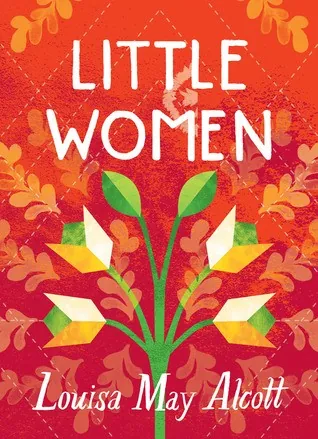
Little Women by Louisa May Alcott (1868) shares the domestic warmth and the emphasis on character, and Jo March is the heroine with the most of Elizabeth in her: independent, impulsive, impatient with propriety, and ultimately generous. The romance is quieter and the book’s center is family rather than courtship, but readers who love Austen’s heroines usually love Jo immediately.
I Capture the Castle by Dodie Smith (1948) is the modern classic that Austen fans discover with delight. Told through the journal of Cassandra Mortmain, a seventeen-year-old living in a crumbling English castle with her eccentric family, it has the same witty first-person voice, the same comedy of poverty and manners, and the same sharp-eyed account of a young woman learning to see the people around her clearly. It is clean, warm and deeply funny.
The Grand Sophy by Georgette Heyer (1950) is the entry point for readers who want the Regency setting and the confident, managing heroine without Austen’s irony. Sophy Stanton-Lacy is Elizabeth Bennet turned up a few notches - she arrives at her relatives’ London house and reorganizes everyone’s lives within a week. Heyer’s books are lighter and less moral than Austen’s, but her command of the period is exact, and the romance is clean.
Themes and Values That Hold the Readalikes Together
Once you have read a few of these books side by side, the shared themes become clear, and they are worth naming because they are what make the category cohere.
The value of self-knowledge runs through every one of them. Elizabeth Bennet’s arc is a long, slow lesson in seeing herself - her prejudice, her vanity, her pleasure in her own cleverness - and the books that follow Austen’s model all give their heroines the same education. Emma Woodhouse must learn that her matchmaking has been a form of self-deception. Anne Shirley must learn that imagination needs discipline. Bridget Jones must learn to stop measuring herself against a checklist. The pleasure of these books is watching someone intelligent discover that intelligence is not the same thing as wisdom.
The comedy of social judgment is the second shared value. Austen’s world is one where everyone is evaluating everyone else - who is respectable, who is marriageable, who has risen above their station - and her heroines are often the sharpest judges in the room, which is exactly why their own misjudgments are so funny and so instructive. Heyer, Montgomery and Smith all inherit this: the comedy is not in the events but in the gap between what people say and what they mean, and between what the heroine thinks she knows and what the reader can see.
The importance of money and security is the theme that modern readers often miss because the historical details have faded. In Pride and Prejudice, every marriage is also a financial transaction, and Austen never lets the reader forget it: the Bennet daughters have no inheritance, and Elizabeth’s refusal of Mr. Collins is, among other things, a refusal of economic safety in favor of self-respect. The modern retellings make this explicit - Eligible is openly about class in contemporary America - and the classic readalikes carry the same weight. Little Women is a book about a family without money choosing character over comfort. I Capture the Castle is a book about a family that is technically aristocratic and practically penniless. Reading these books together is an education in how much of the romance is really economics.
The belief in character over charm is the moral center. Every book here ultimately rewards the person who is good rather than the person who is dazzling: Darcy over Wickham, Mr. Knightley over Frank Churchill, Gilbert Blythe over the boys who flatter Anne, Laurie’s steadiness in Little Women over the excitement of the moment. This is the value system that makes the books feel clean and wholesome even when the prose is sharp - the satire is aimed at pretense, and the affection is aimed at genuine worth.
What to Read Next Depends on Why You Loved It
The right next book depends on which part of Pride and Prejudice you loved most, so it is worth being honest with yourself before you choose.
If you loved the wit, read Emma, or I Capture the Castle, or anything by P. G. Wodehouse, whose comedies of manners are Austen’s irony without the romance.
If you loved Elizabeth and Darcy’s relationship - the misunderstanding, the insult, the slow revision of judgment - read Eligible, or Pride, or the retellings, which isolate that machinery and show you how it works.
If you loved the Regency world, the manners, the houses, the social rules, read Georgette Heyer, who researched the period obsessively and built an entire genre on it.
If you loved Elizabeth herself - her pride, her independence, her refusal to be dazzled - read Anne of Green Gables and Little Women, which give you heroines with the same temperament, and then Persuasion, which shows you the same temperament thirty years on, humbled and deepened.
If you loved the moral clarity - the sense that character matters, that a good person is good in small choices - you are really asking for books in the moral tradition of English fiction, and the essays in our character book club questions guide will help you name what you are responding to and find more of it.
Content Notes: What These Books Contain
All of the books recommended here are clean in the sense readers usually mean: no explicit content, no graphic violence, and romance conducted through conversation and implication rather than description. The distinctions are worth noting.
Austen’s own novels are entirely suitable for family reading; there is nothing in any of them beyond a few dances and a great deal of talk. Anne of Green Gables and Little Women are classics of children’s literature, though both contain moments of grief - the death of a parent, the loss of a child - that younger readers may find moving. I Capture the Castle and The Grand Sophy are similarly clean, the former with a touch of grown-up melancholy.
The modern retellings are the ones that need flags. Eligible and Bridget Jones’s Diary are adult novels with modern language and adult situations, including references to sex; they are not appropriate for younger readers. Pride is the exception: it is a young adult novel, clean and suitable for teenagers. Our family book club questions guide includes guidance on discussing these books across age groups, and our content guides help you match the right book to the right reader.
A Reading Plan for Book Clubs
Pride and Prejudice is one of the most discussed novels in English, and it generates conversation on every level: the romance, the satire, the social history, the characters, and the question of what Austen is actually saying about pride and prejudice - and about whom. Some of the best discussion questions for clubs come from asking which character the members would defend, which they would refuse to sit next to at dinner, and whether Elizabeth’s pride or Darcy’s is the bigger obstacle.
The book also rewards the question of translation: what is lost when the story is moved to another century? Clubs that read Pride and Prejudice alongside Eligible or Pride get a fascinating comparison - which parts of the original are timeless, which are period, and whether a modern Elizabeth would even recognize herself. Our character book club questions guide offers structured questions for exactly this kind of comparison, and our family book club questions guide adapts them for mixed-age groups.
Conclusion: The Novel That Keeps Giving
Pride and Prejudice endures because it is about something permanent: two intelligent people who are wrong about each other, who are each too proud to admit it, and who are lucky enough to get a second chance to see clearly. Every book on this list takes one piece of that - the wit, the romance, the heroine, the world - and builds its own story around it. The joy of reading them is the joy of seeing the same machinery of pride and prejudice at work in different clothes, different centuries, and different voices. Start with whichever piece of Austen’s novel you loved most, and let the comparison teach you what the original is really made of. For the full collection of reading paths, start at the Guides section of our site.