Best Books About Education and Learning by Cal Newport
Introduction: Concentration as the Master Skill
Cal Newport is a computer science professor at Georgetown University and the most influential voice of his generation on how to learn and work in a distracted age. His central argument, made in Deep Work (2016) and developed across his books, is that the ability to concentrate without distraction is the most valuable skill of the modern economy - and the least practiced. In a world of notifications, open offices and fragmented attention, the person who can focus for long stretches on cognitively demanding work holds an advantage that is becoming both rarer and more valuable by the year.
This guide maps Newport’s books on education and learning, from the essential statement of deep work to the companion works on craft, career and digital life, with a reading order, honest content notes, the themes that make his work cohere, and companions for when you want more.
The Learning Books in Reading Order
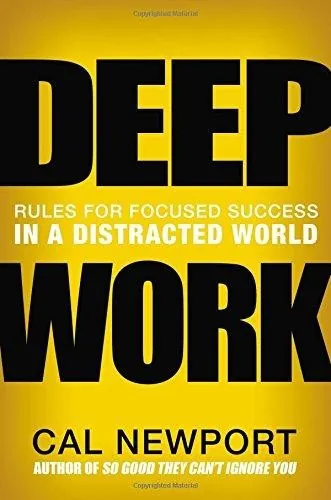
Deep Work: Rules for Focused Success in a Distracted World (2016) is the essential Newport, and the book that named the modern problem: the claim that deep work - professional activity performed in a state of distraction-free concentration - is the source of the most valuable output, and that shallow work - the email, the meetings, the reaction - is its constant enemy. Newport builds the argument from the science of attention and the practice of the most productive people, then gives the rules: work deeply, embrace boredom, quit social media, drain the shallows. The book is an education in attention itself, and it is the essential starting point for anyone who wants to learn anything difficult in the modern world. Content note: a work on productivity and attention; for readers from around age fifteen upward.
So Good They Can’t Ignore You (2012) is the essential companion about the career of learning: Newport’s argument against the “follow your passion” advice and for the craftsman mindset - the claim that passion is not found but built, by getting so good at something valuable that opportunities follow. It is the book about the learning that makes a life, and it is the natural companion to Deep Work: the first builds the skill, the second explains why the skill is the career. Content note: a work on career and craft; for readers from around age fifteen upward.
How to Become a Straight-A Student (2006) is the essential companion for the student: Newport’s system for college success - the study habits, the exam strategies, the time management - built from interviews with students who actually earned straight As without all-nighters. It is the most directly educational of his books, and the one to hand to a student. Content note: a practical study guide; for readers from around age fifteen upward.
Digital Minimalism (2019) is the essential companion about the environment of learning: Newport’s argument for a philosophy of technology use in which the tools that matter get the attention and the rest are put away - the book that clears the ground on which deep work can grow. Content note: a work on technology and attention; for readers from around age fifteen upward.
Content Notes for Each Book
Newport’s books are works on productivity, career and attention, written for a general audience of students and professionals. They contain nothing beyond workplace and academic examples, occasional research summaries and the era’s technology; there is no violence, no explicit content and no language. Deep Work and So Good They Can’t Ignore You are accessible to motivated readers from around age fifteen upward; How to Become a Straight-A Student is aimed at college students; Digital Minimalism is for any reader who wants to rethink their relationship with technology. Newport writes in clear, structured prose - he is a professor and it shows in the best way - and his books are designed to be applied, with each chapter ending in practice.
Readers choosing among Newport’s books will find our family-friendly knowledge and education reading list helpful for matching the right book to the right reader, and our family-friendly purpose and meaning reading list useful for the larger questions of what the learning is for.
The Learning Themes in Newport’s Work
Three themes give Newport’s treatment of education and learning its distinctive shape.
Learning as deep work is his central claim. Newport’s education is concentration: the deliberate practice of focused attention on cognitively demanding tasks, sustained long enough to build real skill. His argument is that depth is the bottleneck - that most people never learn anything difficult because they never give it the undistracted attention it requires.
Learning as deliberate practice is the second theme. Newport draws on the science of expertise - the deliberate practice of Anders Ericsson and the focus of the great performers - and his books are the practical translation: the rules, the rituals, the scheduling that turn the science of mastery into a weekly routine.
The environment of learning is the third theme. Newport is a theorist of the conditions of attention: the deep-work ritual, the digital minimalism, the rejection of the shallow - the argument that what surrounds the learner determines what the learner can become. His education is the conviction that we do not just learn in an environment; we learn the environment.
Why Newport’s Learning Endures
Deep Work has sold over a million copies, has been translated into dozens of languages, and has made “deep work” a standard term in the vocabulary of work and education. The reason is simple: Newport wrote about learning at the scale of the working day, and made the largest questions of attention feel like a schedule you could actually keep. His books are the reference point for every conversation about distraction, focus and the future of knowledge work - and they are read by students, professors, programmers and executives alike.
His influence extends far beyond his books: his ideas about focus have shaped how companies design work, how schools teach study skills, and how a generation thinks about its relationship with technology. But the books endure because of their clarity - a rigor that never becomes rigidity, a practicality that never becomes mere list-making, and a respect for the reader’s time that practices what it preaches. Newport wrote the essential books on learning in the age of distraction, and no one has written better ones since.
Companion Books for Every Newport Reader
When you have finished Newport’s own books, these titles extend the same territory.
Peak: Secrets from the New Science of Expertise by Anders Ericsson and Robert Pool (2016) is the essential companion: the science of deliberate practice from its source - the research that Newport’s practical rules translate into routine.
The Art of Learning by Josh Waitzkin (2007) is the essential companion about the inner game: the chess prodigy and martial artist’s account of how he learned to learn - the psychology of focus, adversity and growth beneath the practice.
Thinking, Fast and Slow by Daniel Kahneman (2011) is the essential companion for the science of attention: the Nobel laureate’s account of the two systems of thought - the fast, automatic and the slow, deliberate - which is the cognitive science beneath Newport’s distinction between deep and shallow work.
For the practical questions of what the learning is for, our knowledge and education themes and values guide and our purpose and meaning themes and values guide gather the framing readers need.
A Reading Plan for Book Clubs
Deep Work works unusually well as a club book because it is designed to be practiced, not just read: each member can report on their experiments with deep-work rituals between meetings. The most fertile questions are the ones Newport refuses to settle: Is deep work available to everyone, or is it a privilege of certain jobs and lives? Where is the line between productive focus and unhealthy obsession? What would the world look like if everyone practiced digital minimalism?
The book also generates the hardest kind of discussion: the admission that most readers’ days are built of shallow work, and the question of what they would have to give up to go deep. Clubs should expect the conversation to turn personal, and should give members room to be honest - the book rewards exactly the self-audit it provokes.
Clubs preparing without spoilers will find our a thoughtful guide to knowledge and education useful for framing the themes.
A Note on the Book’s Structure and Editions
Deep Work is organized in two movements - the argument (why deep work matters) and the rules (how to practice it) - and Newport’s method is to alternate between research and story, the science of attention and the practice of the most focused people alive. Readers should know that the book is designed to be applied: the second half is a manual, and the value is in the doing, not the reading. The book also rewards rereading at different stages - the student reads it for study, the professional for career, the parent for modeling attention for children. Read it once for the argument, and again with a schedule in hand; the second reading is where Deep Work becomes a discipline rather than a survey.
What Newport’s Books Teach Together
Read together, Newport’s books form a single system for the working life, each one supplying a layer the others assume. Deep Work supplies the skill - the concentration that produces the valuable output. So Good They Can’t Ignore You supplies the strategy - the craftsman mindset that turns the skill into a career worth having. How to Become a Straight-A Student supplies the method for the student - the study system that trains the concentration early. Digital Minimalism supplies the environment - the technology philosophy that clears the ground on which the other three can operate. Each book is a layer of the same argument, and they are best read in roughly that order, because the later books presume the earlier disciplines. That is why they belong on the same shelf: the reader who works through all four is not collecting advice but building a system - the focused, deliberate, undistracted life that is the whole point of Newport’s project.
Conclusion: The Depth That Compounds
Cal Newport’s contribution to the literature of learning is a single distinction, and it has entered the language: deep work and shallow work. He wrote it into the schedule of the working day, and it has outlasted every productivity fad since. His learning is not motivation and not multitasking; it is concentration, deliberate practice and the environment that makes both possible. His books are readable, and they are inexhaustible. Read them, and let Newport show you what attention is actually for. For more reading paths, explore the Ideas section of our site.