Best Books About Ethical Leadership by Doris Kearns Goodwin
Introduction: Character Revealed in Crisis
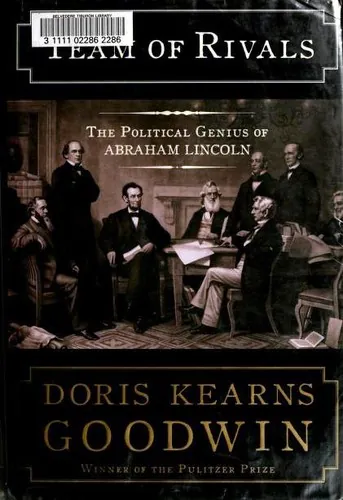
Doris Kearns Goodwin has spent her career studying the character of American presidents, and she has become the country’s most trusted historian of leadership. Her landmark book, Team of Rivals: The Political Genius of Abraham Lincoln (2005), tells the story of how Lincoln built his cabinet from the three men who had been his fiercest rivals for the presidency - and turned them into the engine of the Union’s survival. It is the essential modern study of ethical leadership: not leadership as charisma or command, but leadership as character, empathy and the mastery of one’s own ambition.
This guide maps Goodwin’s books on ethical leadership, from the essential study of Lincoln to the companion studies of the presidents who followed, with a reading order, honest content notes, the themes that make her work cohere, and companions for when you want more.
The Leadership Books in Reading Order
Team of Rivals: The Political Genius of Abraham Lincoln (2005) is the essential Goodwin, and one of the most influential history books of the century. It follows the four great rivals of the 1860 Republican contest - Lincoln, William Seward, Salmon Chase and Edward Bates - and shows how Lincoln, the least likely candidate, won the nomination and then appointed his opponents to the cabinet, a decision that looked like weakness and proved to be genius. The book is a study in ethical leadership at its most demanding: Lincoln’s empathy with the ordinary soldiers and citizens, his willingness to absorb blame and share credit, his patience with the men who had dismissed him, and his capacity to hold the Union together through four years of civil war. It won the Pulitzer Prize in 2006 and was the basis for Steven Spielberg’s film Lincoln.
No Ordinary Time: Franklin and Eleanor Roosevelt (1994) is the essential companion about leadership through partnership: the story of the White House during World War II, told through the marriage at its center - Franklin’s leadership of the nation at war and Eleanor’s leadership of the nation’s conscience. It won the Pulitzer Prize in 1995 and shows Goodwin’s second great theme: leadership is not a solitary act but a partnership, and the Roosevelts led together in ways neither could have managed alone. Content note: adult history with the war’s weight; for readers from around age sixteen upward.
Leadership in Turbulent Times (2018) is the essential companion as a synthesis: Goodwin’s study of four presidents - Abraham Lincoln, Theodore Roosevelt, Franklin Roosevelt and Lyndon Johnson - through the crises that defined them, distilling the qualities they shared: ambition mastered, adversity turned to learning, empathy practiced, and a team built from strength. It is the closest thing Goodwin has written to a leadership manual, and the natural next step after the biographies. Content note: adult history; for readers from around age sixteen upward.
Wait Till Next Year (1997) is the essential companion in memoir: Goodwin’s account of growing up in 1950s Rockville Centre, New York, as a Brooklyn Dodgers fan, with the game as the thread that held her family together - the book that shows where the historian’s love of stories began. Content note: a warm memoir, accessible to readers from around age twelve upward.
Content Notes for Each Book
Goodwin’s books are adult history: Team of Rivals and No Ordinary Time are long, dense works that deal with the Civil War and World War II, including the wars’ violence and the era’s politics; both are best for readers from around age sixteen upward. Leadership in Turbulent Times covers the same ground in a more distilled form. Wait Till Next Year is the exception - a warm family memoir of baseball and childhood, accessible to younger readers and a lovely introduction to Goodwin’s voice. None of the books contain anything gratuitous; the weight is historical, and the length is the price of the depth.
Readers choosing among Goodwin’s books will find our a thoughtful guide to ethical leadership helpful for matching the right book to the right reader, and our a thoughtful guide to moral dilemmas useful for the ethical questions her histories raise.
The Leadership Themes in Goodwin’s Work
Three themes give Goodwin’s treatment of ethical leadership its distinctive shape.
Leadership as the mastery of ambition is her central claim. Goodwin’s presidents - Lincoln above all - are men who learned to subordinate their own ambition to the cause, and her villains are the men whose ambition mastered them. The mastery is not the absence of ambition but its direction: the ambition converted from a personal drive into a national one.
Leadership as the capacity to learn from adversity is the second theme. Goodwin is fascinated by failure - Lincoln’s defeats, FDR’s polio, LBJ’s humiliations - and her argument is that the great leaders converted their worst experiences into the empathy and resilience that carried them. Her leadership is forged in the defeats that precede the victories.
Leadership as empathy and connection is the third theme. Goodwin’s Lincoln walks among the soldiers and the crowds, writes the condolence letters, holds the grief of the country; her Roosevelts connect with the ordinary people the Depression and the war were crushing. Her leadership is the ability to feel the country one leads - and to act on what one feels.
Why Goodwin’s Leadership Endures
Team of Rivals has sold millions of copies, won the Pulitzer Prize, and become the reference point for every conversation about how leaders should treat their opponents. The reason is simple: Goodwin wrote about ethical leadership at the scale of one man’s character, and made the largest questions of power feel like a cabinet meeting you could sit in on. Her Lincoln is not a marble statue but a man who laughed, grieved and mastered himself, and her account of how he did it has become the standard example of leadership through empathy and reconciliation.
Her influence extends far beyond history: “team of rivals” has entered the vocabulary of politics and business, her books are read in leadership programs and law schools, and her studies of presidents have shaped how a generation of executives thinks about ambition, adversity and empathy. But the books endure because of her craft - a narrative gift that makes six-hundred-page histories read like novels, a moral seriousness that never becomes hagiography, and a fairness that shows even her flawed presidents whole. Goodwin wrote the essential histories of ethical leadership, and no one has written better ones since.
Companion Books for Every Goodwin Reader
When you have finished Goodwin’s own books, these titles extend the same territory.
Truman by David McCullough (1992) is the essential companion: the Pulitzer Prize-winning biography of the plain-speaking Missourian whose character - honesty, humility, decisiveness - carried him through the presidency’s hardest decisions.
American Lion: Andrew Jackson in the White House by Jon Meacham (2008) is the essential companion about the flawed leader: the Pulitzer Prize-winning study of Jackson’s presidency - leadership at its most forceful, and its most ethically complicated.
Leadership by James MacGregor Burns (1978) is the essential nonfiction companion: the political scientist’s foundational study that distinguished transactional from transforming leadership - the academic framework beneath Goodwin’s portraits.
For the practical application of the same ideas, our meaningful ethical leadership reading list and our meaningful moral dilemmas reading list gather the modern titles that extend her questions.
A Reading Plan for Book Clubs
Team of Rivals is a commitment - most editions run well over seven hundred pages - but it is the rare history book that generates conversation on every level: the politics, the characters, the leadership lessons. The most fertile questions are the ones the book refuses to settle: Was Lincoln’s decision to appoint his rivals genius or gamble? What does “team of rivals” mean as a modern management principle - and when does it fail? Which of Lincoln’s qualities could a modern leader actually practice?
The book also generates the hardest kind of discussion: the difference between ethical leadership and effective leadership - whether Lincoln’s empathy was a strategic asset or a moral commitment, and whether the two can be separated. Clubs should consider reading Leadership in Turbulent Times instead if the length is daunting; it distills the same lessons in a third of the pages.
Clubs preparing without spoilers will find our family-friendly ethical leadership reading list useful for framing the themes.
A Note on the Book’s Structure and Editions
Team of Rivals is organized as a triple biography that converges on Lincoln: the first half follows Seward, Chase and Bates to 1860, and the second half follows Lincoln’s presidency through the cabinet he built from them. Readers should know that the structure is the argument - Lincoln’s rivals are not a framing device but the subject, because the story of how he won them is the story of his leadership. Goodwin’s research is famous for its depth: she drew on the papers of all four men, the diaries of their families and the letters of the era. The book also rewards rereading, because the early chapters on the rivals’ ambitions illuminate the later chapters on the cabinet’s cooperation. Read it once for the story, and again for the leadership lessons; the second reading is where the book becomes a study rather than a narrative.
What Goodwin’s Books Teach Together
Read together, Goodwin’s histories form a single study in leadership under the hardest circumstances. Team of Rivals shows Lincoln leading a nation through civil war with a cabinet of his opponents; No Ordinary Time shows the Roosevelts leading a nation through world war as a partnership; Leadership in Turbulent Times distills the pattern across four presidents and their crises; Wait Till Next Year shows the historian’s own formation - the childhood in which she learned to love stories, patience and the long game. The common thread is Goodwin’s conviction that character is revealed in crisis and that the crises do not make the leaders but expose them: Lincoln’s defeats, FDR’s polio, LBJ’s humiliations were not obstacles to their leadership but its raw material. That is why the books belong on the same shelf: each is another test case of the same thesis, and the reader who has watched four presidents learn from adversity has seen the pattern Goodwin believes is the heart of ethical leadership.
Conclusion: The Rivals Made into a Team
Doris Kearns Goodwin’s contribution to the literature of ethical leadership is a single image, and it has entered the language: the team of rivals. She wrote it into the story of one president’s cabinet, and it has outlasted every management theory since. Her leadership is not charisma and not command; it is ambition mastered, adversity converted into empathy, and the courage to build strength from the people who opposed you. Her books are long, and they are inexhaustible. Read them, and let Lincoln show you what leadership is actually for. For more reading paths, explore the Ideas section of our site.