Best Books About Knowledge and Wisdom by Marcus Aurelius

Introduction: The Emperor’s Private Journal
Marcus Aurelius is the philosopher-king that Plato imagined - the Roman emperor from 161 to 180 AD, the last of the Five Good Emperors, who governed an empire while practicing the philosophy of Stoicism. His Meditations is the most personal classic in Western philosophy: a private journal, written in Greek during his campaigns and his sleepless nights, never intended for publication. It is the record of a man at the summit of power reminding himself of what actually matters - reason, virtue, the shortness of life, the equality of all human beings - and it has been read ever since as the essential handbook of wisdom under pressure.
This guide maps Marcus Aurelius’s writing on knowledge and wisdom, from the essential Meditations to the Stoic tradition it belongs to, with a reading order, honest content notes, the themes that make his work cohere, and companions for when you want more.
The Wisdom Books in Reading Order
Meditations (c. 170–180 AD) is the essential Marcus Aurelius, and the only book he left us. It is not a treatise but a journal - twelve books of short entries, addressed by the emperor to himself: reminders of the Stoic disciplines, meditations on death and nature, thank-yous to the teachers who formed him, and the repeated counsel that we control our judgments, not our circumstances. Its power is that it is practice, not theory: Marcus is not teaching wisdom but doing it, in the margins of a life of war, plague and power. The book is famously uneven - some entries are gnomic, some repetitive - and that is its authenticity: this is what wisdom looks like as a daily discipline, not as a polished system. Content note: a philosophical journal with no content concerns; accessible to readers from around age fifteen upward.
The Meditations is best read with the Stoic tradition it belongs to, and the essential companion within Marcus’s own circle is the tradition he drew on: the Stoics taught that wisdom is the art of living in accordance with nature and reason, and Marcus’s journal is the most intimate record of that art ever written.
Content Notes for the Meditations
The Meditations is a philosophical journal written by an emperor to himself. It contains no explicit content, no violence beyond the passing mention of war, and no language; its only difficulty is its form - the entries are short, repetitive and occasionally obscure, and the book rewards slow reading and rereading more than almost any other classic. It is accessible to motivated readers from around age fifteen upward, and it is one of the most portable books ever written - literally: it fits in a pocket, and it is meant to be carried and consulted. The standard modern translations - by Gregory Hays, Martin Hammond and Robin Hard - are all excellent, and each has its devotees.
Readers choosing among Marcus Aurelius’s books will find our meaningful moral dilemmas reading list helpful for the ethical questions his work raises, and our meaningful positive messages reading list useful for the vision of the steady life his wisdom offers.
The Knowledge and Wisdom Themes in Marcus Aurelius’s Work
Three themes give Marcus Aurelius’s treatment of knowledge and wisdom its distinctive shape.
The discipline of the inner life is his central claim. Marcus’s wisdom is the control of the only things fully up to us - our judgments, our intentions, our actions - and the acceptance of everything else. His journal is the daily practice of that discipline, and his most famous lines are reminders of it: “You have power over your mind - not outside events.”
The shortness of life is the second theme. Marcus never lets himself forget mortality - the campaigns, the plague, the emperors who preceded him, the brevity of fame - and his wisdom is the urgent practice that follows: live each day as the last, act justly now, do not postpone the good life.
The equality of all human beings is the third theme. The emperor who could have believed himself above humanity keeps reminding himself of the common nature: all people are made of the same matter, the same reason, the same fate. His wisdom is the argument that power is a trust and that no one is better than another.
Why Marcus Aurelius’s Wisdom Endures
The Meditations has been read continuously for eighteen centuries, and it has never been more popular than it is today: it is one of the best-selling classics of philosophy, read by soldiers, executives, athletes and students, and its phrases - “the impediment to action advances action,” “the universe is change; our life is what our thoughts make it” - have entered the language. The reason is simple: Marcus wrote about wisdom at the scale of one man’s daily life, and made the largest questions of philosophy feel like notes to oneself. It is the book people carry into war, into illness, into loss.
His influence extends far beyond philosophy: he is the model of the philosopher-king, the Stoic tradition he practiced shaped Christianity and the Enlightenment, and the modern Stoic revival has made him the face of practical wisdom. But the book endures because of its intimacy - a seriousness that never becomes pomp, a humility that never becomes self-contempt, and a wisdom that is practiced rather than preached. Marcus Aurelius wrote the essential journal of wisdom, and no one has written a better one since.
Companion Books for Every Marcus Aurelius Reader
When you have finished the Meditations, these titles extend the same territory.
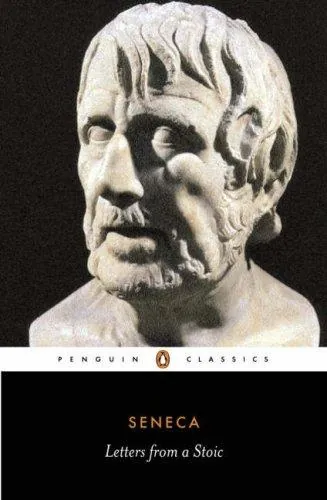
Letters from a Stoic by Seneca (c. 65 AD) is the essential companion: the Roman statesman’s letters on the good life - the other great Roman Stoic, more eloquent and more worldly than Marcus, and the perfect complement to the emperor’s private journal.
Discourses by Epictetus (c. 108 AD) is the essential companion for the philosophy itself: the lectures of the former slave who taught that we control our judgments and nothing else - the systematic statement of the wisdom Marcus practiced.
The Daily Stoic by Ryan Holiday and Stephen Hanselman (2016) is the essential companion for the modern practice: 366 daily readings from Marcus, Seneca and Epictetus - the ancient wisdom organized into a daily discipline for the present.
For the practical questions of right and wrong, our family-friendly moral dilemmas reading list and our family-friendly positive messages reading list gather the framing readers need.
A Reading Plan for Book Clubs
The Meditations is the ideal club book for a busy group: the entries are short enough to read one or two a day, and the book is designed to be dipped into rather than consumed. The most fertile questions are the ones Marcus refuses to settle: Is the Stoic acceptance of fate a strength or a resignation? Can the discipline of the inner life really hold in the modern world - and where does it fail? What would the emperor’s wisdom say to a contemporary life of stress, ambition and noise?
The book also generates the hardest kind of discussion: the claim that we control our judgments, not our events - which forces every member to examine where they have given their peace of mind to things outside their control. Clubs should expect the conversation to turn personal, and should give members room to disagree - the journal rewards exactly the self-examination it provokes.
Clubs preparing without spoilers will find our moral dilemmas themes and values guide useful for framing the themes.
A Note on the Book’s Structure and Editions
The Meditations was never meant to be published - it is a private journal, and its structure is the structure of a life: twelve books written over years of campaigns and administration, with no argument, no plan and no polish. Readers should know that this is the book’s greatest gift and its only obstacle: the repetition is the practice, and the obscurity of some entries is the price of authenticity. The first book - Marcus’s thank-yous to the people who formed him - is the best entry point, and the later books can be read in any order. The translation matters enormously; Gregory Hays’s modern version is the most readable, and reading two translations side by side is a revelation. Read it once quickly, and then carry it; the second reading is where the Meditations becomes a companion rather than a classic.
What Marcus Aurelius’s Writing Teaches in Context
Marcus Aurelius left only the Meditations, but the book is best understood - and best practiced - in the company of the Stoic tradition it belongs to. The Meditations itself is the practice: the emperor reminding himself, entry by entry, of the disciplines of judgment, action and acceptance. Seneca supplies the eloquence - the letters that give the same wisdom its most polished expression. Epictetus supplies the system - the former slave who taught the philosophy Marcus practiced, and whose distinction between what is up to us and what is not is the engine of the whole school. Read together, the three form a complete Stoic curriculum: the theory from Epictetus, the style from Seneca, the practice from Marcus. That is why the Meditations belongs on a shelf with its tradition rather than alone: the emperor’s journal is the daily exercise, and the tradition is the school that explains what the exercise is for.
Conclusion: The Power Over Your Own Mind
Marcus Aurelius’s contribution to the literature of wisdom is a single reminder, and it has entered the language: you have power over your mind, not over outside events. He wrote it into a private journal, never meant for readers, and it has outlasted every empire since his own. His wisdom is not theory and not comfort; it is the daily discipline of the inner life, the memory of death and the equality of all human beings. His book is short, and it is inexhaustible. Read it, and let Marcus show you what wisdom is actually for. For more reading paths, explore the Ideas section of our site.