Best Ethical Leadership to Read
Introduction: The Question of What Leadership Is For
Leadership is one of the most discussed subjects in the world and one of the least understood. Most books about it are about effectiveness - how to get people to do things - and effectiveness is not the same as ethics. Ethical leadership is the harder subject: not how to lead, but what leadership is for, what it owes, and what it does when doing the right thing is costly. It is the subject of some of the deepest books ever written - biographies of leaders who were tested, memoirs of people who led from the margins, and works of theory that ask what leadership should be.
This reading list gathers the essential books about ethical leadership across three registers: theory, history and lived experience. Each entry includes honest content notes and a sense of how the books speak to each other.
The Essential Theory
Leadership Without Easy Answers by Ronald Heifetz (1994) is the essential work of theory: the book that redefined leadership as the activity of mobilizing people to face hard problems - not giving answers, but holding people in the discomfort of real change. Heifetz’s distinction between technical problems (which have known solutions) and adaptive challenges (which require people to change) is the most useful idea in the field, and his argument that leadership is an activity, not a position, is the foundation of ethical leadership. Content note: accessible and practical, appropriate for readers from high school upward.
The Nicomachean Ethics by Aristotle (c. 350 BCE) is the essential foundation: the oldest systematic account of what makes a person good, and of virtue as the habit of choosing well. Its account of practical wisdom - the ability to see what a situation requires - is the ancestor of every modern theory of ethical leadership. Content note: a work of ancient philosophy, accessible in good translations though demanding in places.
Start with Why by Simon Sinek (2009) is the essential modern argument that leadership begins with purpose: leaders who inspire are the ones who can articulate why the work matters, not just what to do. It is the accessible entry point into the field, and its argument - that people follow purpose, not commands - is the bridge between effectiveness and ethics. Content note: clean and accessible, appropriate for any reader.
The Essential History
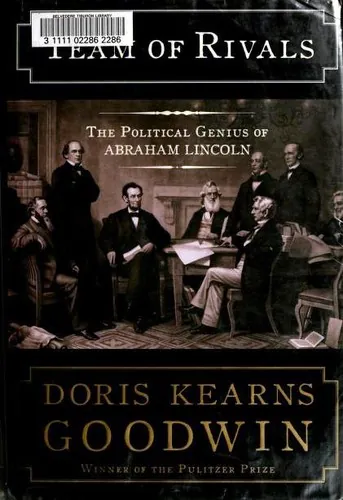
Team of Rivals by Doris Kearns Goodwin (2005) is the essential book about ethical leadership in history: Abraham Lincoln’s leadership of a cabinet filled with the men who had run against him for president - his rivals - and his conversion of them into allies. It is the book that shows ethical leadership as a craft: the patience, the generosity, the refusal to carry grudges, and the moral clarity that held the Union together. Content note: a long work of narrative history, appropriate for mature readers; it contains the realities of the Civil War and Lincoln’s assassination.
Long Walk to Freedom by Nelson Mandela (1994) is the essential memoir of ethical leadership: Mandela’s account of his life - the struggle against apartheid, the twenty-seven years in prison, the negotiation that ended the regime, and the presidency that followed. It is the book that shows ethical leadership tested at the greatest scale: the leader who emerged from prison without bitterness, and who insisted on reconciliation over revenge. Content note: a long autobiography that includes the harshness of prison and the violence of apartheid; appropriate for mature readers.
A Promised Land by Barack Obama (2020) is the essential modern memoir of leadership: Obama’s account of his first term as president - the decisions, the limits, the costs. It is the book that shows ethical leadership in the ordinary machinery of power: not the dramatic choice but the daily pressure, the compromise, the attempt to keep faith with principles inside institutions. Content note: appropriate for mature readers.
The Essential Lived Experience
Just Mercy by Bryan Stevenson (2014) is the essential book about leadership from the margins: a lawyer who founded the Equal Justice Initiative and spent decades defending the wrongly condemned - leading not from a position of power but from a position of service. It is the book that shows what ethical leadership looks like when no one is watching and the work is unwinnable: Stevenson takes the cases no one else will take, loses most of them, and keeps going. Content note: an adult book about the justice system and its cruelties; appropriate for mature readers.
The Boy Who Harnessed the Wind by William Kamkwamba (2009) is the essential book about leadership for younger readers: a boy in Malawi who, during a famine, taught himself engineering from library books and built a windmill that powered his village. It is the book that shows leadership as resourcefulness and service - the leader who builds, not commands. Content note: appropriate for readers from around age ten upward; it includes the famine and its hardships.
I Am Malala by Malala Yousafzai (2013) is the essential book about leadership under threat: a girl in Pakistan’s Swat Valley who spoke out for girls’ education, was shot by the Taliban, and survived to become the youngest Nobel Peace Prize laureate. It is the book that shows ethical leadership at its purest - a child who refused to be silent, and whose refusal changed the world. Content note: appropriate for readers from around age twelve upward; it includes the shooting and the Taliban’s violence, handled with restraint.
The Essential Books of Character
The 7 Habits of Highly Effective People by Stephen R. Covey (1989) is the essential book connecting character and leadership: the argument that effectiveness is built on character - integrity, trust, the keeping of promises - not on technique. Its famous ordering of habits - private victory before public victory - is the clearest statement that ethical leadership begins with leading oneself. Content note: clean and accessible, appropriate for any reader.
Man’s Search for Meaning by Viktor E. Frankl (1946) is the essential book about leadership under the worst conditions: Frankl’s account of surviving the Nazi camps and the psychological system - logotherapy - he built from the experience. It is the book that shows the deepest form of ethical leadership: the leadership of meaning, the refusal to surrender the will to find purpose in suffering. Content note: the memoir of the camps is devastating; appropriate for mature readers.
How These Books Speak to Each Other
The literature of ethical leadership is a conversation. Heifetz’s theory asks what leadership is for; Goodwin’s Lincoln shows the answer in history; Mandela’s memoir shows it at the greatest scale; Stevenson’s book shows it from the margins; Frankl’s shows it under the worst conditions. Aristotle asks what makes a leader good; Covey answers that it is character; Sinek answers that it is purpose. The essential question running through all of them: what do you do when doing the right thing is costly - and what are you willing to pay?
The Essential Books of Moral Courage
Ethical leadership is tested at the moments when doing the right thing is costly, and the deepest books about it are the ones that show the cost - and the courage that pays it.
To Kill a Mockingbird by Harper Lee (1960) is the essential novel of ethical leadership: Atticus Finch, the lawyer who takes the case no one else will take because the obligation is to the person, not to the odds. He is the literary archetype of the ethical leader - the person who leads not from position but from principle - and his famous definition of courage, “when you know you’re licked before you begin but you begin anyway,” is the working definition of ethical leadership under pressure. Content note: uses racial slurs in dialogue and deals with racism; read from middle school upward, with discussion.
The Book Thief by Markus Zusak (2005) is the essential novel about leadership in ordinary lives: Hans and Rosa Hubermann, an ordinary German couple who hide a Jewish man in their basement during the war - leadership not from any position of power but from the daily, costly choice of doing right. It is the book that shows ethical leadership as the small moral choices ordinary people make under pressure. Content note: a young adult novel dealing directly with the Holocaust; for readers from around age thirteen or fourteen, with discussion.
The Boy, the Mole, the Fox and the Horse by Charlie Mackesy (2019) is the essential book of leadership as kindness: a boy’s journey with three animal companions, full of the small encouragements - “asking for help isn’t giving up,” “what do you want to be when you grow up? Kind” - that are the quietest form of leadership. It is entirely clean, appropriate for any age, and the book families read together when they want leadership without any machinery at all.
Our thoughtful guide to ethical leadership extends the discussion into the ideas, and our courage reading for families connects ethical leadership to the courage it requires.
Content Notes Summary
The books on this list span every age range. For younger readers: The Boy Who Harnessed the Wind (from around age ten), I Am Malala (from around age twelve). For general readers: Start with Why, The 7 Habits of Highly Effective People, Man’s Search for Meaning (the last for mature readers). For mature readers: Leadership Without Easy Answers, Team of Rivals, Long Walk to Freedom, A Promised Land, Just Mercy, The Nicomachean Ethics. None of the books contain explicit content; the notes are about length, intellectual demand and emotional weight. Our thoughtful guide to ethical leadership extends this list, our knowledge and education reading list connects leadership to learning, and our world literature reading list shows leaders across cultures.
A Reading Plan for Every Kind of Reader
For the reader who wants a single book: Team of Rivals, or Just Mercy for the hardest case. For the reader who wants the theory: Leadership Without Easy Answers, or Start with Why for the accessible entry. For the reader who wants the memoir: Long Walk to Freedom. For the young reader: The Boy Who Harnessed the Wind. For the book club: read Team of Rivals with Leadership Without Easy Answers, and let the history and the theory argue with each other about what ethical leadership actually is.
Conclusion: The Question of What Leadership Is For
Ethical leadership is the hardest subject in the literature of leadership, and the books that take it seriously are the ones that ask what leadership is for - not how to get people to do things, but what things are worth doing, what leadership owes, and what it does when doing the right thing is costly. The books on this list span theory, history and lived experience, and together they form a complete education in the subject: Aristotle’s virtues, Heifetz’s adaptive challenges, Lincoln’s patience, Mandela’s reconciliation, Stevenson’s service, Frankl’s meaning. Start with the book that calls to you, and let the conversation between the books carry you deeper. For more reading paths, explore the Ideas section of our site.