Books Like The Nightingale
Introduction: What Readers Mean by “Books Like The Nightingale”
When readers ask for books like The Nightingale, they are rarely asking for another war novel. They are asking for something more specific: WWII told through women, resistance and survival in occupied territory, and a family story - sisters, mothers, daughters - at the center of the war. The Nightingale (2015) has all three: Vianne and Isabelle, two sisters in occupied France - one who survives by endurance, one who fights with everything she has - and the novel’s insistence that the war was fought in kitchens and bedrooms as well as battlefields. The books that come closest are the ones that find their own way to the same combination.
This guide gathers the strongest readalikes, old and new, with honest content notes and a clear sense of what each book shares with Hannah’s novel and where it departs from it.
The Women of the War
The books that come closest to The Nightingale are the novels that put women at the center of the war.
The Alice Network by Kate Quinn (2017) is the essential companion: two timelines - Eve, a female spy in the real Alice Network of WWI France, and Charlie, a young American woman after WWII searching for her vanished cousin - converging on the truth Eve has hidden for decades. It shares The Nightingale’s structure (the woman, the resistance, the secret kept for decades) and its emotional intensity, and it is the book that readers of Vianne and Isabelle most often discover next. Content note: an adult novel with wartime violence, including sexual violence; for mature readers.
The Lilac Girls by Martha Hall Kelly (2016) is the essential companion about the three women: a New York socialite, a Polish prisoner in Ravensbrück, and a German doctor - in the novel that follows the three through the war and its aftermath, based on true stories. It shares The Nightingale’s structure (the women on different sides, the war as the frame) with the stakes of the camps. Content note: an adult novel dealing with the camps and wartime violence; for mature readers.
The Lost Girls of Paris by Pam Jenoff (2019) is the essential companion about the female agents: three women recruited into the British Special Operations Executive and dropped into occupied France - and the postwar search for what happened to them. It is the Nightingale’s theme (the women who fought) with the mystery structure added. Content note: an adult novel dealing with wartime violence and loss; for mature readers.
The Occupation and the Resistance
A second branch of the family is the novel of occupied Europe.
All the Light We Cannot See by Anthony Doerr (2014) is the essential literary companion: Marie-Laure, a blind French girl, and Werner, a German boy soldier, whose lives converge in occupied Saint-Malo - told in short, luminous chapters. It shares The Nightingale’s occupation, its converging fates and its lyricism, with the style turned up. Content note: an adult novel about the war, intense but not graphic; appropriate for readers from around age fifteen upward.
Salt to the Sea by Ruta Sepetys (2016) is the essential companion about the forgotten tragedy: four young people from different nations flee toward the Wilhelm Gustloff, the ship whose sinking killed more people than the Titanic. It shares The Nightingale’s structure (young narrators, converging fates, history’s shadow) and its emotional weight. Content note: a young adult novel dealing with war, loss and the sinking; for readers from around age fourteen upward.
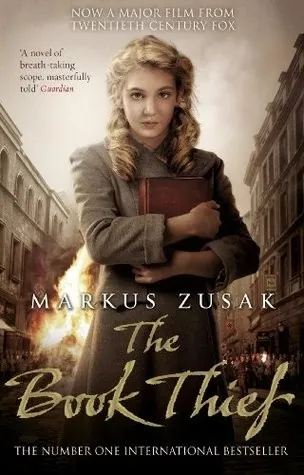
The Book Thief by Markus Zusak (2005) is the essential companion about ordinary life under tyranny: Liesel, a girl in Nazi Germany who steals books, in the novel narrated by Death and full of love. It is the Nightingale’s Germany seen from the other side, through a child’s eye, and it is the essential pairing for readers who loved the domestic scale. Content note: a young adult novel dealing directly with the Holocaust; for readers from around age thirteen or fourteen, with discussion.
The Kristin Hannah Novels
A third branch is the author’s own explorations of the same territory.
The Four Winds by Kristin Hannah (2021) is the essential companion from the same author: Elsa Martinelli, a Texas woman in the Dust Bowl, makes the journey west with her children - in the novel of the family tested by displacement, with the same blend of hardship and hope. It is the Nightingale’s structure (the woman, the endurance, the family) in the Depression, and it is for readers who loved Hannah’s voice. Content note: an adult novel with hardship and some violence; for mature readers.
The Women by Kristin Hannah (2024) is the essential companion about the war at home: Frankie McGrath, a young woman who serves as a nurse in Vietnam and returns to a country that does not want to see her - in the novel about the women of the war and their silence. It is the Nightingale’s theme (the women the history forgets) moved to Vietnam. Content note: an adult novel dealing with war and its aftermath; for mature readers.
Themes and Values That Hold the Readalikes Together
Once you have read a few of these books side by side, the shared themes become clear, and they are worth naming because they are what make the category cohere.
The women the history forgot runs through every one of them. The Nightingale’s central claim - that the war was fought by women in kitchens and bedrooms and secret networks, and that their story was not told - is the load-bearing structure of the whole family. The female spies, the sisters, the nurses, the prisoners: the books are united by the conviction that the war’s history must be retold from the women’s side.
Resistance in its two forms is the second shared value. The category is defined by the two sisters’ two ways of fighting - Isabelle’s overt resistance, Vianne’s quiet endurance - and by the insistence that both are courage. The books agree that the endurance is as heroic as the heroics, and that the survival is a form of resistance.
The secret kept for decades is the third shared shape. The Nightingale is framed by the older Vianne, the secret she has kept, the story finally told - and the family keeps the frame: Eve’s hidden past, the lost girls’ fate, the veterans’ silence. The books agree that the telling is the redemption, and that the story withheld is the wound.
One more theme is worth naming because it is the one that separates the family from the standard war novel: the love is not the escape from the war but the engine of it. Vianne’s endurance is for her daughter; Isabelle’s recklessness is partly for the man she loves and the father she never had; the sisters’ bond is the novel’s spine. The category is united by the conviction that the women fight for the people they love, that the love is what makes the courage possible, and that the war story told through the women is, at bottom, a love story with the highest stakes.
What to Read Next Depends on Why You Loved It
If you loved the women of the war, read The Alice Network, The Lilac Girls and The Lost Girls of Paris.
If you loved the occupation and the resistance, read All the Light We Cannot See and Salt to the Sea, and The Book Thief for the child’s eye.
If you loved the author, read The Four Winds and The Women, which are Hannah’s other novels.
Content Notes: What These Books Contain
The Nightingale is an adult novel that includes wartime violence, including sexual violence, and the horrors of the camps; it is usually recommended for readers from around age sixteen upward. The Alice Network and The Lost Girls of Paris include wartime violence and sexual violence. The Lilac Girls deals with the camps. All the Light We Cannot See is intense but not graphic, from around age fifteen. Salt to the Sea is a young adult novel, from around age fourteen. The Book Thief deals directly with the Holocaust, from around age thirteen or fourteen with discussion. The Four Winds and The Women deal with hardship and war. None contain gratuitous content; the weight is historical and emotional. Our kindness and compassion themes and reading notes and our family-friendly truth and integrity offer related reading paths for the questions of courage, sacrifice and love these books raise.
A Reading Plan for Book Clubs
The Nightingale generates conversation on every level: the sisters, the resistance, the question of which sister’s courage the reader most admires. Some of the best discussion questions come from pairing it with a book that shares or challenges it: read it with The Alice Network, and compare the two spies and their two wars; read it with All the Light We Cannot See, and ask how the two novels handle the occupation; read it with The Book Thief, and compare the endurance from the two sides.
A second kind of question turns the discussion toward the sisters: which form of courage - Isabelle’s fighting or Vianne’s enduring - would you want in yourself, and why does the novel refuse to rank them? The Nightingale works best in a club because the sisters are the argument, and the group can take each side.
Conclusion: The Song That Keeps Giving
The Nightingale endures because it is about something permanent: the conviction that the women the history forgot are the story, that endurance is a form of resistance, and that the secret kept must finally be told. Every book on this list takes one piece of that - the women, the resistance, the author, the telling - and builds its own account around it. The joy of reading them is the joy of watching the same courage practiced in different wars, different countries, different registers. Start with whichever part of Vianne and Isabelle’s story you loved most, and let the comparison teach you what the resistance is really made of. For the full collection of reading paths, start at the Ideas section of our site.