Meaningful Responsibility and Duty for Adults
Introduction: The Weight Adults Carry
Children learn that responsibility exists; adults learn what it costs. By the time a reader reaches adulthood, duty is no longer an abstraction - it is a job, a family, a promise, a set of obligations that do not pause when you are tired. The most meaningful books about responsibility and duty for adults are the ones that take this weight seriously: they do not celebrate duty, they examine it, and they ask the questions adults actually face. What am I answerable for? What do I do when duties conflict? What is the difference between a life of discharged obligations and a life that was actually answered for?
This guide gathers the essential adult books across three registers - the practice, the story, and the examination - with honest content notes and a reading plan.
The Essential Books of Practice
Man’s Search for Meaning by Viktor Frankl (1946) is the essential adult book about responsibility, and the one from which all the others take their measure. Frankl’s account of surviving the concentration camps is also an argument: that everything can be taken from a person except the last freedom - the freedom to choose one’s response to circumstances. His central claim, that “each man is questioned by life; and he can only answer to life by answering for his own life,” makes responsibility the very substance of meaning. It is the book adults return to when they need to know whether their answer still counts. Content note: an adult memoir that includes the horrors of the camps, handled with restraint; devastating in parts.
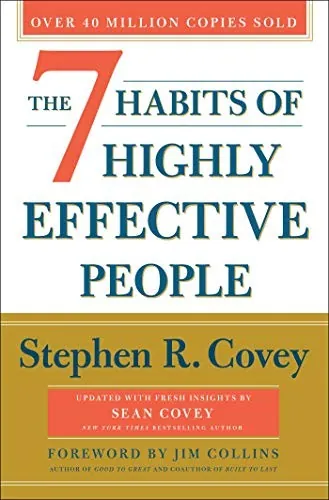
The 7 Habits of Highly Effective People by Stephen R. Covey (1989) is the essential practical book: Covey’s first habit - be proactive - is built on the distinction between the circle of concern and the circle of influence, and the claim that responsible people spend their energy where it can act. His formulation of responsibility as “response-ability,” the ability to choose a response, is the most useful definition in the modern literature. Content note: clean and practical; appropriate for any adult reader.
Meditations by Marcus Aurelius (c. 170–180 CE) is the essential book of daily duty: the private notebooks of a Roman emperor, written for himself, rehearsing the same obligations - to his work, to his fellow citizens, to the present moment - until they become habit. It is the book for anyone whose duty does not end, and its practical advice - “you could leave life right now. Let that determine what you do and say and think” - is the stoic core of adult responsibility. Content note: entirely clean; accessible in good translations.
The Essential Novels
The Plague by Albert Camus (1947) is the essential adult novel of duty: a North African city sealed off by an epidemic, and Dr. Rieux, who keeps treating patients long after hope has gone. Camus’s argument is quietly radical - that heroism is not the point, that “the only way to fight the plague is with decency,” and that decency means doing your job - and it is the book adults read when they need permission to keep going without a grand reason. Content note: an adult novel about suffering and death, intense but not graphic.
A Man Called Ove by Fredrik Backman (2012) is the essential novel about the duty of ordinary life: a grumpy old man whose identity is his sense of obligation - to his routines, his neighborhood, his dead wife’s memory - and who is pulled back into caring for the people around him. It is the book that shows adult duty as the thousand small things done because they are yours to do, and it is the least preachy book on this list. Content note: clean, warm and funny; deals with grief.
The Death of Ivan Ilyich by Leo Tolstoy (1886) is the essential novel of the duty that was never answered: a middle-aged judge, dying, discovers that his entire life - the career, the respectability, the propriety - was a set of obligations discharged without ever being chosen. It is the sharpest warning in the literature: that it is possible to do everything assigned and miss the one thing required. Content note: short, entirely clean, and intense.
The Essential Examination
Team of Rivals by Doris Kearns Goodwin (2005) is the essential book about responsibility and power: the story of Abraham Lincoln, who appointed his political enemies to his cabinet and held the country together through the Civil War. It is the book that shows adult responsibility at the scale of nations - the decisions that cannot be unmade, the burdens that cannot be shared - and Lincoln’s combination of firmness and humility remains the standard portrait of the responsible leader. Content note: a long work of history; accessible and absorbing; appropriate for any adult reader.
Letter from Birmingham Jail by Martin Luther King Jr. (1963) is the essential essay about the limits of duty: King’s defense of civil disobedience, distinguishing just from unjust laws and arguing that a person has a moral duty to obey the one and disobey the other. It is the book that answers the adult question of what to do when the assigned duty is wrong. Content note: short and clean; appropriate for any adult reader.
The Everyday Practice of Adult Responsibility
The books in this guide agree that adult responsibility is a practice, not an event, and each book models a practice that can be taken up immediately.
From Meditations, take the practice of the morning and the evening: Marcus Aurelius wrote for himself, rehearsing the duties of the day before they arrived and reviewing them after. The adult version is small - the morning question of what today requires of you, the evening check of what you answered for - and it is the stoic core of responsible living. The notebooks are the proof that the practice works: the emperor who wrote them kept an empire, and he kept it by the daily rehearsal.
From The 7 Habits, take the practice of the circle of influence: Covey’s first habit is built on the distinction between what you can act on and what you cannot, and the discipline of spending your energy where it can actually move. The responsible adult does not exhaust herself on what she cannot change; she answers for what is hers, and she leaves the rest. The distinction sounds simple and is the hardest discipline on this list: the difference between the worry that is responsibility and the worry that is only worry.
From Man’s Search for Meaning, take the practice of the why: name in one sentence the thing you answer for, and test each day’s choices against it. Frankl’s claim - that the person with a why can bear almost any how - is meant to be verified in daily life, not just believed, and the verification is the practice. The adult who can name what she is answerable for has the answer to the question that comes on the hard days.
From The Plague, take the practice of ordinary decency: Rieux’s heroism is simply doing his job after the hope is gone, and the adult version is the unglamorous faithfulness - the meeting kept, the call returned, the promise held - that holds a life together. The book’s quiet argument is that this is enough, and that it is everything.
From The Death of Ivan Ilyich, take the practice of the review: Tolstoy’s protagonist only sees his life clearly when dying, and the lesson is not to wait. The periodic question - is this the life I am answering for, or the one that was expected of me? - is the cheapest form of the book’s warning, and the most valuable.
These practices do not require finishing any of the books first. Adult responsibility is built in small answered things, and the reader who takes up the practices has made the literature a discipline rather than a shelf.
How These Books Speak to Each Other
The adult literature of responsibility is a conversation. Frankl argues that answering for one’s life is the last freedom; Camus shows the answering as ordinary decency; Tolstoy warns what happens when the answering never happens; Marcus Aurelius practices it daily; Covey makes it a skill; King shows when it requires defiance; Goodwin shows it at the scale of a nation. The essential question running through all of them: what are you answerable for, and to whom - and are you answering?
Content Notes: Choosing the Right Book
All of these books are for adult readers, and the notes are about emotional weight as much as content. Man’s Search for Meaning contains Frankl’s account of the camps and is devastating in parts. The Plague and The Death of Ivan Ilyich are intense in their different ways. Team of Rivals is long. Meditations, The 7 Habits, A Man Called Ove and Letter from Birmingham Jail are the most accessible. None require a warning about explicit content. Our family-friendly responsibility and duty guide offers gentler alternatives, our kindness and compassion for adults guide connects duty to care, and our thoughtful guide to integrity shows the inner consistency that responsibility requires.
A Reading Plan for Adult Readers
For the reader who wants a single book: Man’s Search for Meaning. For the reader who wants the practice: Meditations, or The 7 Habits if you prefer the modern version. For the reader who wants the story: The Plague, or A Man Called Ove if you want warmth. For the reader who wants the warning: The Death of Ivan Ilyich. For the reader who wants the scale: Team of Rivals. For the book club: read The Plague with Man’s Search for Meaning, and let the novel and the memoir argue with each other about what one person can do.
Conclusion: The Answering That Is Still Possible
Adults carry the weight of responsibility, and the most meaningful books about it are the ones that take the weight seriously without softening it: they show duty as ordinary, costly, sometimes wrong, and sometimes the last freedom we have. From Frankl’s claim that life questions each of us, to Rieux’s ordinary decency, to Ivan Ilyich’s missed life, to Lincoln’s impossible choices - the books form a complete education in what it means to answer for a life. Start with the book that matches where you are, and let the conversation carry you deeper. For more reading paths, explore the Ideas section of our site.