Books Like Eleanor Oliphant Is Completely Fine

There are characters you read about, and there are characters you feel you have met. Eleanor Oliphant is the second kind. She is a woman in her thirties who works the same job, eats the same lunch, and talks to the same houseplant, all while insisting, with magnificent conviction, that she is completely fine. She is odd, brilliant, blunt, and hiding a wound so deep that the novel reveals it only slowly, and with immense care.
Eleanor Oliphant Is Completely Fine by Gail Honeyman became a phenomenon because it does something rare: it makes you laugh at a woman in enormous pain, then makes you love her, then quietly breaks your heart. It is a book about the smallest act of friendship - a colleague asking if you want to go for a pizza - and how that single gesture can be the beginning of a life. If that is what you want next, the books below are kindred spirits.
Why Eleanor Works So Well
The secret of the novel is its voice. Eleanor narrates in a register that is formal, precise and completely her own - she describes ordinary things with the intensity of a scientist and the vulnerability of a child. That voice is what lets Honeyman balance tragedy and comedy on the same page: Eleanor’s matter-of-fact descriptions of her own isolation are funny precisely because they are so devastating.
The novel is also a masterclass in pacing. The reader senses early on that something terrible happened in Eleanor’s past, and Honeyman doles out the truth in careful increments, earning every revelation. By the time the full picture emerges, the book has already made you care so deeply that the revelation lands like a blow. And at the center of it all is the friendship with Raymond, the IT guy - an unglamorous, kind, slightly scruffy man whose ordinary decency turns out to be exactly what Eleanor needs. Their friendship is one of the great friendships of modern fiction.
Convenience Store Woman by Sayaka Murata
Keiko Furukura has never fit in, and she has stopped trying. She works at a convenience store, where she has found a script to follow - the store’s manual, its routines, its rituals - and it is the closest thing to a home she has ever known. When she is thirty-six, pressure from her family and a strange new coworker push her toward a decision that threatens the life she has carefully built.
The kinship with Eleanor Oliphant is immediate: both novels center on women who do not fit the world’s expectations and have built their own strange, functional systems for surviving it. Murata’s book is stranger and more unsettling than Honeyman’s - it is a Japanese novel that refuses the comforts of conventional healing - but it shares Eleanor’s sharp voice and its refusal to sentimentalize its heroine. For readers who loved Eleanor’s oddness, Keiko will be an unforgettable companion.
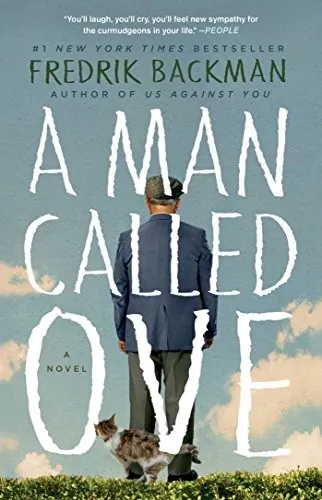
A Man Called Ove by Fredrik Backman
Ove is a fifty-nine-year-old widower who has decided that the world is full of idiots and that he has had enough of it. He has a plan, and it involves his wife’s memory, his Saab, and leaving it all behind. But the chaotic young family that moves in next door keeps getting in the way - and slowly, grumpily, Ove is pulled back into the world of the living.
Like Eleanor, Ove is a difficult, wounded person whose defenses are dismantled by ordinary kindness. Backman writes with more overt humor than Honeyman, and Ove is funnier, but the emotional arc is the same: a lonely person, a closed heart, and the community that refuses to let it stay closed. It is one of the most beloved comfort books of the century, and it pairs perfectly with Eleanor.
The Rosie Project by Graeme Simsion
Don Tillman is a genetics professor who has never been on a second date. Convinced that he is simply approaching romance wrong, he designs the Wife Project: a sixteen-page questionnaire designed to find the perfect partner. Then he meets Rosie, who fails every criterion on his list and upends his carefully ordered life entirely.
Don is Eleanor’s male cousin in many ways - brilliant, literal-minded, socially bewildered, and secretly longing for connection. Simsion’s novel is lighter and more romantic than Honeyman’s, but it shares the deep respect for neurodivergent characters and the insistence that love does not require becoming someone else. For readers who loved Eleanor’s unique way of seeing the world, Don Tillman is a delight.
The One-in-a-Million Boy by Monica Wood
A hundred-and-four-year-old woman named Ona has a weekly visitor: a boy who has been assigned to help her as part of his scout service hours. He is odd, brilliant, obsessed with Guinness World Records, and he asks Ona endless questions about her long life. When he stops coming, his father steps in to finish the boy’s hours - and discovers, through the records the boy left behind, the extraordinary friendship his son had begun.
The novel shares Eleanor’s structure of an unlikely friendship slowly revealing hidden depths, and it treats its characters with the same combination of humor and tenderness. The relationship between Ona and the boy is one of the most quietly devastating in modern fiction, and the way Wood braids together grief, music and memory makes the book linger long after the final page. For readers who loved the Eleanor-Raymond dynamic, this is a perfect next step.
The Authenticity Project by Clare Pooley
When an elderly artist leaves a notebook of honest confessions in a London café, a chain of strangers begins adding their own truths - and a community slowly forms around their shared honesty. The ensemble includes a woman hiding from her past, a lawyer pretending to have it all, and a young man searching for his father.
Like Eleanor Oliphant, this is a novel about people who are performing lives they are not actually living, and about the small acts of honesty that begin to set them free. Pooley writes with more warmth and less darkness than Honeyman, but both books share a deep faith in ordinary kindness. If you want the Eleanor feeling - lonely people slowly becoming less lonely - wrapped in a bigger, warmer ensemble, this is the one.
The Rosie Project by Graeme Simsion
Don Tillman is a genetics professor who has never been on a second date. Convinced that he is simply approaching romance wrong, he designs the Wife Project: a sixteen-page questionnaire designed to find the perfect partner. Then he meets Rosie, who fails every criterion on his list and upends his carefully ordered life entirely.
Don is Eleanor’s male cousin in many ways - brilliant, literal-minded, socially bewildered, and secretly longing for connection. Simsion’s novel is lighter and more romantic than Honeyman’s, but it shares the deep respect for neurodivergent characters and the insistence that love does not require becoming someone else. For readers who loved Eleanor’s unique way of seeing the world, Don Tillman is a delight.
The One-in-a-Million Boy by Monica Wood
A hundred-and-four-year-old woman named Ona has a weekly visitor: a boy who has been assigned to help her as part of his scout service hours. He is odd, brilliant, obsessed with Guinness World Records, and he asks Ona endless questions about her long life. When he stops coming, his father steps in to finish the boy’s hours - and discovers, through the records the boy left behind, the extraordinary friendship his son had begun.
The novel shares Eleanor’s structure of an unlikely friendship slowly revealing hidden depths, and it treats its characters with the same combination of humor and tenderness. The relationship between Ona and the boy is one of the most quietly devastating in modern fiction, and the way Wood braids together grief, music and memory makes the book linger long after the final page. For readers who loved the Eleanor-Raymond dynamic, this is a perfect next step.
The Authenticity Project by Clare Pooley
When an elderly artist leaves a notebook of honest confessions in a London café, a chain of strangers begins adding their own truths - and a community slowly forms around their shared honesty. The ensemble includes a woman hiding from her past, a lawyer pretending to have it all, and a young man searching for his father.
Like Eleanor Oliphant, this is a novel about people who are performing lives they are not actually living, and about the small acts of honesty that begin to set them free. Pooley writes with more warmth and less darkness than Honeyman, but both books share a deep faith in ordinary kindness. If you want the Eleanor feeling - lonely people slowly becoming less lonely - wrapped in a bigger, warmer ensemble, this is the one.
Loneliness and the Courage to Connect
Eleanor’s story resonates because loneliness is so common and so rarely spoken about. Researchers have found that loneliness is not just emotionally painful - it is a genuine health concern, with effects comparable to well-documented risk factors. But the research also points to the same conclusion Eleanor’s story dramatizes: connection is built through small, repeated, ordinary interactions, not grand gestures. A shared lunch, a question about your weekend, an invitation to walk somewhere together - these are the raw materials of a life.
If you want to go deeper into what makes connection possible, our guide to meaningful community and belonging for adults explores the research on belonging, and our thoughtful guide to family healing looks at how people mend relationships that have been wounded. The relationships section is full of novels and guides in this exact spirit.
Choosing Your Next Read
If you want Eleanor’s voice in a stranger, more unsettling key, read Convenience Store Woman. If you want the same lonely-person-healed-by-community arc with more laughter, A Man Called Ove is the one. If you want a male Eleanor, The Rosie Project will charm you. And if you want an unlikely friendship that will quietly devastate you, The One-in-a-Million Boy is waiting.
Conclusion
Eleanor Oliphant Is Completely Fine is a novel about the difference between surviving and living - and about how small, ordinary acts of kindness can be the bridge between the two. It made millions of readers fall in love with a woman who insisted she was completely fine, and in doing so, it reminded us that none of us is completely fine, and that that is exactly why we need each other. The books gathered here share that truth, and any of them will remind you, like Raymond did for Eleanor, that you do not have to be alone.