Books Like The Reading List

Every so often a book arrives that seems designed for exactly the moment you are in. The Reading List by Sara Nisha Adams is that book for a great many readers. It opens with Aleisha, a teenager working an unenthusiastic summer job at a library in a London suburb, and Mukesh, a lonely widower who has never understood his late wife’s devotion to novels. Then a mysterious list of books appears - titles like To Kill a Mockingbird, The Kite Runner and Pride and Prejudice - and as the two of them work through it, the stories on the page begin to stitch them, and the people around them, back together.
What readers adore about the novel is its fundamental kindness. It does not pretend that grief or loneliness are easy, but it insists that connection is possible - that a stranger, a library and a stack of books can be enough to start. If that is the feeling you want next, the books below share its warmth, its bookishness and its faith in people.
The Magic of the Reading List
Part of why the novel works so well is its structure. Each chapter is anchored by one of the books on the list, and Adams weaves the lessons of those classics into the lives of her characters with a light touch. When Aleisha reads The Kite Runner at the same moment she is struggling with her own family secrets, the resonance feels earned rather than forced. The list functions almost as a character itself - a quiet, mysterious presence nudging people toward the stories they need.
The novel is also honest about loneliness. Aleisha is caring for her younger brother while their mother struggles with mental illness, and Mukesh is adrift without his wife of fifty years. Neither is cured by reading; instead, reading gives them a way back to other people. That realism is why the book’s hopefulness lands so hard. It never asks you to believe in magic - only in the ordinary miracle of two people deciding to keep showing up for each other.
The Midnight Library by Matt Haig
Nora Seed is having the worst night of her life, and she decides it will be her last. Instead of dying, she finds herself in a library between life and death, where every book offers a chance to live a different version of her life - the one where she stayed with the band, the one where she married the man she loved, the one where she became a glaciologist. As she tries on these lives, she begins to understand what she actually had all along.
The Midnight Library shares The Reading List’s structure of a life transformed by books, but it pushes the metaphor further: here, the library itself is the mechanism of transformation. Both novels are fundamentally about perspective - about learning to see your own life, and the people in it, with fresh eyes. Haig’s book is more philosophical and less grounded than Adams’s, but it has the same generous heart, and it has helped countless readers through their own dark nights.
The Authenticity Project by Clare Pooley
When an elderly artist named Julian writes his honest life story in a green notebook and leaves it in a London café, he sets off a chain reaction. Each person who finds the notebook adds their own confession - the café owner hiding from her past, the overworked lawyer pretending everything is fine, the young man searching for his biological father - and a community of strangers slowly forms around their shared honesty.
The novel is the literary equivalent of a warm embrace, and its premise will feel instantly familiar to fans of The Reading List: ordinary people, connected by an object, discovering that they are not as alone as they thought. Pooley writes with real affection for her characters’ flaws, and the book’s central argument - that authenticity is what connects us - makes it a perfect companion read. It is funnier and more ensemble-driven than Adams’s novel, but the emotional payoff is just as satisfying.
The Storied Life of A. J. Fikry by Gabrielle Zevin
A grieving bookseller. A baby left in a bookshop. A small island community that slowly wraps itself around both of them. The Storied Life of A. J. Fikry is one of the most beloved books-about-books of the century, and it belongs on any list of reads for fans of The Reading List.
The two novels share more than their bookishness. Both are about adults who have closed themselves off - A. J. after his wife’s death, Mukesh after his wife’s death - and both show how an unexpected responsibility or connection can pry the door back open. A. J. has Maya; Mukesh has Aleisha. In both cases, the younger person needs the older one as much as the older one needs them, and the books are wise enough to show that reciprocity without ever making it sentimental. If you loved the Mukesh and Aleisha dynamic, A. J. and Maya will get you right in the same place.
Days at the Morisaki Bookshop by Satoshi Yagisawa
Takako has just been dumped, and when she quits her job and agrees to live in the tiny, cluttered Morisaki bookshop owned by her eccentric uncle in the Jimbocho neighborhood of Tokyo, she expects to be miserable. Instead, the shop - and the odd, kind people who drift through it - slowly gives her a reason to get up in the morning.
This slim Japanese novel is quiet in exactly the way The Reading List is loud: where Adams fills her pages with multiple characters and urgent emotions, Yagisawa lets a single story breathe. But both books make the same argument about the healing power of books and the communities that form around them. The Morisaki bookshop is a place where lonely people find each other by accident, and Takako’s slow thaw is rendered with such tenderness that the book has become a global comfort-read phenomenon. For readers who want the bookish warmth of The Reading List in a smaller, softer package, it is ideal.
The Library of Lost and Found by Phaedra Patrick
Martha Storm has spent her life being helpful - to her aging neighbors, to the library patrons she serves, to everyone except herself. When a book of fairy tales arrives, inscribed by the grandmother who supposedly died years ago, Martha begins to unravel a family secret, and in doing so, finally starts to build a life of her own.
Martha is a wonderful echo of Aleisha’s mother and of the people in The Reading List who have put themselves last for so long that they have forgotten they matter. Like Adams, Patrick writes about quiet people making brave choices, and about the small communities - a library, a neighborhood, a group of neighbors - that hold them up while they do it. It is a gentle, satisfying read with a mystery at its center that keeps the pages turning.
The Classics That Anchor the List
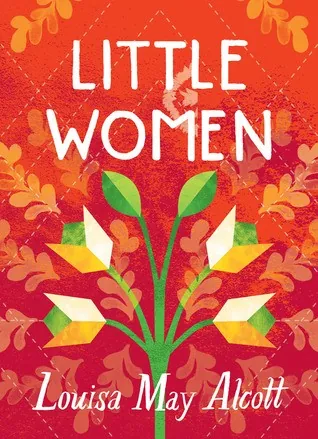
One of the delights of The Reading List is meeting the books on the list itself - To Kill a Mockingbird, The Kite Runner, Pride and Prejudice, Little Women, A Suitable Boy and others. For many readers, the novel works as a gentle introduction to books they have always meant to read, and it is a joy to watch Aleisha and Mukesh discover them together, each bringing their own life experience to the same pages.
If the list left you wanting to read the classics themselves, that is very much the point. Each of those novels is a door into a different kind of story, and together they form a kind of liberal education in what fiction can do - how it can make you laugh, break your heart, expand your sense of what is possible, and connect you to people you will never meet. The Reading List is, among other things, an argument that this is what books are for, and the books on its list make that argument better than any review could.
Intergenerational Friendship in Fiction
One of the most moving threads in The Reading List is the friendship between Aleisha and Mukesh - a friendship that crosses generations, backgrounds and life experience. Fiction does this brilliantly, and it is worth seeking out more of it, because these stories model something real: research on social connection consistently finds that relationships across age groups benefit everyone involved, offering fresh perspective to the young and renewed purpose to the old.
If you want to read more about why connection matters, our guide to family-friendly healthy relationships explores how families and friends build trust across generations, and our collection of the most meaningful books about community and belonging gathers more novels in this spirit. Browse the relationships section for more recommendations whenever you are ready for the next one.
The Library Book by Susan Orlean
If the mystery of the reading list in Adams’s novel made you curious about libraries themselves, Susan Orlean’s The Library Book is a wonderful nonfiction companion. It centers on the 1986 fire that destroyed hundreds of thousands of books at the Los Angeles Public Library, but it expands into a sweeping history of libraries - the people who built them, the patrons who saved them, the strange and wonderful things that happen inside them.
Orlean writes about libraries with the same affection Adams brings to her fictional library, and the book is full of the kind of stories - a patron who lived in the stacks, a librarian who memorized the catalog - that feel like they belong in a novel. For readers who loved the library setting of The Reading List and want to understand why these institutions matter so much, it is an essential companion.
Choosing Your Next Read
If you want the same structure of a life changed by books, start with The Midnight Library. If you want a whole ensemble of strangers becoming friends, try The Authenticity Project. If the intergenerational friendship was your favorite part, The Storied Life of A. J. Fikry delivers it again. And if you are in the mood for something quiet and tender, Days at the Morisaki Bookshop is a small masterpiece of the genre.
Conclusion
The Reading List is a love letter to libraries, to the books that find us at the right moment, and to the people we meet along the way. It reminds us that a list of titles can be a lifeline, and that the person shelving books at your local library might be exactly who you need to meet. The novels gathered here share that faith - in stories, in strangers, and in the quiet bravery of two people deciding to read the same book and talk about it. Pick one up, and let the list grow.