Books Like The Unlikely Pilgrimage of Harold Fry

Some novels are loud; some are quiet. The Unlikely Pilgrimage of Harold Fry is one of the quiet ones - the kind that creeps up on you and then, without warning, breaks your heart and puts it back together. It begins on an ordinary morning in a seaside English town, when Harold Fry, a retired man whose life has shrunk to the size of his garden, receives a letter from Queenie Hennessy, a former colleague he has not seen in twenty years. She is dying, and she is writing to say goodbye.
Harold writes a reply, walks to the postbox, and keeps walking. Six hundred miles, in his yachting shoes, without a map or a phone - because, as he tells himself and everyone he meets, as long as he keeps walking, Queenie will keep living. What follows is a novel about marriage, grief, faith, and the strange grace of ordinary people, and it has become one of the most beloved quiet books of the century. If that is the register you want next, the books below walk a similar road.
What Makes Harold Fry So Moving
Harold is a masterpiece of understatement. He is a man who has spent his life not quite showing up - to his marriage, to his son, to himself - and the walk is his slow, fumbling attempt to make up for all of it. Rachel Joyce never lets the reader forget the weight Harold carries, but she also never lets the book sink under it. The encounters along the road - the garage owner, the woman with the sick mother, the former soldier - each add a small story to Harold’s journey, and together they build the novel’s quiet argument: that a life is made of ordinary meetings, and that showing up for even one of them can be enough.
The novel is also a profound meditation on marriage. Harold’s wife Maureen, left behind, has her own chapters, and their parallel journeys toward understanding each other are as moving as anything in contemporary fiction. By the end, the book has asked the reader to reconsider what a pilgrimage really is - not a destination, but a way of paying attention.
The Love Song of Miss Queenie Hennessy by Rachel Joyce
If you finished Harold Fry and immediately wanted more, Joyce wrote the companion novel you are looking for. The Love Song of Miss Queenie Hennessy tells the same story from the other side: Queenie, in her hospice room, writing the long letter she was never able to send - the full truth about why she left, and what she has carried with her ever since.
Where Harold’s novel is about the road, Queenie’s is about the room; where his is outward, hers is inward. But the two books share a profound tenderness, and reading them back to back is one of the great two-book experiences in modern fiction. Queenie emerges as a character of extraordinary depth and dignity, and her story will make you see Harold’s in a completely new light. If you loved the first book even a little, this one is essential.
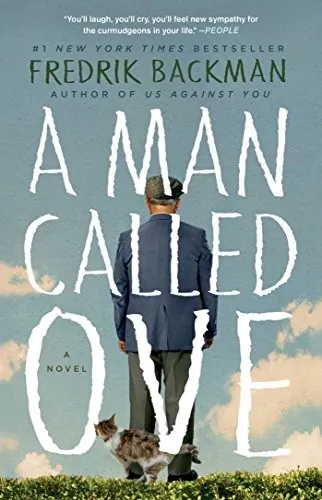
A Man Called Ove by Fredrik Backman
Ove is a grumpy, rule-obsessed widower who has decided that life without his wife is not worth living. His plans keep being interrupted, though, by the chaotic young family that moves in next door and refuses to leave him alone - and slowly, against his will, Ove is pulled back into the world of the living.
The parallels to Harold Fry are everywhere. Both men are quiet, difficult, grieving, and both are transformed by being needed. Backman writes with more humor and warmth than Joyce, and Ove is funnier, but the emotional architecture is the same: an ordinary man, a stubborn heart, and the people who refuse to let him close himself off. It is one of the most beloved comfort books of the century, and it belongs on this list without question.
The Unlikely Pilgrimage Continues: Walking and Healing
There is a reason the walking novel works so well as a form. A long walk gives a character time - time to think, to remember, to meet people, to change at a human pace. It is a narrative structure that matches the psychology of healing: slow, physical, cumulative. Harold’s blistered feet and aching knees are not obstacles to his transformation; they are the transformation, made visible.
If that idea speaks to you, novels built around journeys of atonement or healing will keep you well supplied. The Pilgrimage by Paulo Coelho, Wild by Cheryl Strayed, and The Salt Path by Raynor Winn all use the same structure to powerful effect - each a walk that becomes a reckoning. And for a story that shares Harold’s quiet register, The Curious Incident of the Dog in the Night-Time by Mark Haddon, while very different in voice, is another portrait of an unusual journey made by an unforgettable narrator.
The Midnight Library by Matt Haig
When Nora Seed decides to end her life, she finds herself instead in a library between life and death, where every book lets her try on a different version of her life - the one where she stayed with the band, married the man she loved, became a glaciologist. As she tries on these lives, she begins to understand what she actually had all along.
The Midnight Library shares Harold Fry’s central question - what does a life mean, and what would it take to live it differently? - but it explores it through imagination rather than a walk. Both books are fundamentally about regret and the possibility of making peace with it. Haig is more overtly philosophical, and the book has become a phenomenon for readers wrestling with their own dark moments. If Harold’s quiet reckoning moved you, Nora’s library of possibilities will too.
The Salt Path by Raynor Winn
This one is a memoir, but it reads like the best kind of novel. Raynor and her husband Moth lose their home and their livelihood in the same week that Moth is diagnosed with a degenerative disease. With nothing left, they decide to walk the South West Coast Path - six hundred and thirty miles of England’s most beautiful and brutal coastline - with only what they can carry.
The echoes of Harold Fry are almost eerie: a long English walk, a marriage tested and renewed, a body pushed past its limits. But where Harold’s journey is fiction, Winn’s is real, and the book’s raw honesty about poverty, illness and love has made it a modern classic. It is a heavier read than Joyce’s novel, but it shares the same faith in walking as a form of healing - and in marriage as a form of pilgrimage.
A Companion Book and a Film
If you find yourself wanting to stay in Harold’s world, there is good news: the story continues. Rachel Joyce wrote a companion novel, The Love Song of Miss Queenie Hennessy, which tells the same story from Queenie’s side and is best read right after the first book. A film adaptation of The Unlikely Pilgrimage of Harold Fry, starring Jim Broadbent as Harold and Penelope Wilton as Maureen, also brought the story to the screen with the same quiet power. Watching the film after reading the novel is its own pleasure - the landscapes Harold walks through are rendered so beautifully that you feel the miles in your feet.
The novel also pairs well with the rest of Joyce’s work. She is a writer who returns, again and again, to the same questions: What do we owe the people we love? How do we live with the choices we did not make? Her books are quiet in the best sense - they ask large questions in small voices, and they trust the reader to feel the weight of the answers. If Harold Fry moves you, Joyce’s other novels will keep you company for a long time.
The Wisdom of Ordinary Men
One of the most moving things about Harold Fry is how ordinary he is. He is not a hero, not a saint, not even particularly likable at first. He is a retired man in yachting shoes who decides to walk to a dying friend because it is the only thing he can think of to do. And the novel insists, gently but firmly, that this is enough - that ordinary people are capable of extraordinary devotion, and that a life is not measured by its grand gestures but by its quiet ones.
If you want to read more about the quiet bonds that hold families and communities together, our guide to community and belonging explores what research says about the ties that sustain us, and our collection of the best books about family healing gathers more novels about mending what was broken. The relationships section is full of quiet, hopeful recommendations like this one.
Choosing Your Next Read
If you want the rest of Harold’s story, read The Love Song of Miss Queenie Hennessy immediately. If you want the same grumpy-man-transformed energy with more humor, A Man Called Ove is the one. If you want to stay with the walking-and-healing theme, The Salt Path will break and mend your heart in equal measure. And if you want a more philosophical take on the same questions, The Midnight Library is waiting.
Conclusion
The Unlikely Pilgrimage of Harold Fry is a novel about the grace available to ordinary people - the grace of a walk, a promise, a second chance at showing up. It reminds us that we do not need to be extraordinary to be good, and that the longest journeys are often the ones that begin with a single step toward another person. The books gathered here walk alongside Harold, each in its own shoes, and any of them will carry you somewhere worth going.