Marriage and Commitment: Themes, Values and Reading Notes

Every marriage book is carrying something - a theme it explores, a value it endorses, a lesson it wants the reader to absorb. This guide takes the marriage and commitment shelf apart to show what it is carrying: the themes that run through the strongest books, the values they teach, and the reading notes that help a couple actually use them. It is a map of the marriage shelf, and a guide to the conversation underneath.
Theme and Value: The Two Layers
As with the family values shelf, it helps to be precise about the difference. A theme is the subject the book explores: fidelity, repair, the long middle, desire inside security. A value is the behavior the book endorses: faithfulness, honesty, patience, the daily decision to stay. The Seven Principles explores the theme of repair and endorses the value of turning toward. Anna Karenina explores the theme of passion without commitment and endorses the value of ordinary faithfulness. The theme is the question; the value is the answer the book keeps returning to.
A useful reading note for any marriage book is to name both: what is this book about, and what does it want us to do? The naming turns a passive reading into an active one.
The Theme of Fidelity
The deepest theme in marriage literature is fidelity - what it means to keep faith with a person, and what happens when faith is broken.
Anna Karenina by Leo Tolstoy
Tolstoy’s novel is the essential book on fidelity. Anna leaves her marriage for passion and finds that passion without commitment becomes its own prison; Levin stays and works at his marriage the way he works at his land, and finds the peace Anna cannot reach. The theme is that passion is not the same as love; the value is that fidelity is the daily decision to stay, practiced in the ordinary.
Reading note: Ask what Levin has that Anna cannot reach, and what the couple in the room does to practice the ordinary faithfulness Levin represents.
The State of Affairs by Esther Perel
Perel’s book is the modern examination of infidelity, and it asks the questions the moralizing shelf avoids: what does an affair mean, and can a relationship survive it? The theme is that betrayal is not simple; the value is honesty - the willingness to examine the meaning of the breach rather than to moralize it. The book is for couples facing the worst test of fidelity, and it treats them with unusual compassion.
Reading note: For couples ready for it, ask what the book suggests about the difference between the breach and the meaning of the breach - and what the couple believes about their own boundaries.
The Theme of Repair
The second great theme is repair: what it takes to mend a marriage after conflict, and why repair matters more than avoiding conflict.
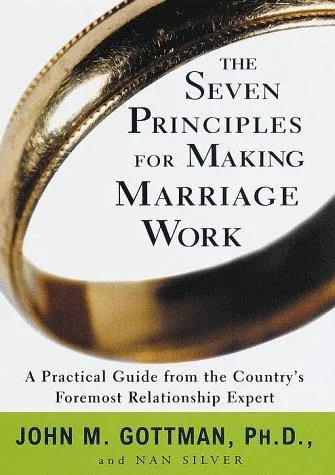
The Seven Principles for Making Marriage Work by John Gottman
Gottman’s research is the foundation of the repair theme. His central finding is that lasting marriage is predicted less by the absence of conflict than by the quality of repair - the turning toward after the fight, the apology offered, the choice to reconnect. The theme is that conflict is inevitable; the value is that repair is the work. The book turns the research into exercises a couple can actually do.
Reading note: Ask the couple to name their own repair rituals, and to try one from the book for thirty days.
Hold Me Tight by Sue Johnson
Johnson’s book grounds repair in attachment science. Her account of the demon dialogue - the pursue-withdraw cycle that erodes so many marriages - explains the pattern beneath the fights, and her seven conversations offer the repair. The theme is that the deepest conflicts are bids for connection going unanswered; the value is turning toward the bid. The book is the repair manual the research points to.
Reading note: Ask the couple to identify their own version of the demon dialogue, and which of Johnson’s conversations they need most.
The Theme of Self-Knowledge
There is one more theme that runs beneath the others, and it is the one the strongest books share with the family values shelf: self-knowledge. Pride and Prejudice is the essential book here - Elizabeth’s commitment is built on the painful revision of her own judgment, on her admission that she was wrong and her determination to see clearly. The theme is that a person cannot choose a partner truly without knowing themselves truly; the value is the honesty we owe ourselves before we owe it to anyone else. The theme appears throughout the shelf: Gottman’s love maps are maps of self-knowledge as much as of the partner; de Botton’s argument that we marry a person we have learned to see clearly is an argument for self-knowledge as the foundation of the choice.
Reading note: Ask the couple what the books suggest about their own self-knowledge - what each has learned about themselves through the marriage, and what remains to be learned.
The Theme of the Long Middle
The third great theme is the one the courtship stories skip: the ordinary decades of a committed life, when nothing dramatic is happening and commitment must be practiced daily.
The Course of Love by Alain de Botton
de Botton’s novel-in-essays is the essential book on the long middle. It follows a couple from first meeting through marriage, children, infidelity and the quiet daily grind, and its central claim is that the romantic ideal of effortless love is the enemy of real love. The theme is that the ordinary years are the real marriage; the value is the daily decision to keep choosing a person you have learned to see clearly.
Reading note: Ask the couple which of the book’s scenes they recognize from their own marriage, and what the book suggests about the work they are already doing.
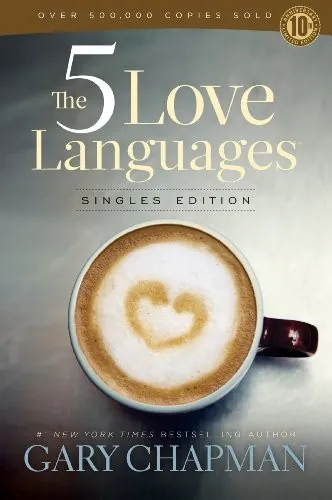
The Five Love Languages by Gary Chapman
Chapman’s book addresses the long middle practically: people express and receive love in different languages, and couples often fail not from lack of love but from speaking different languages. The theme is that love must be translated to be received; the value is learning the partner’s language. Used as a diagnostic, the book gives the long middle a concrete tool.
Reading note: Ask each partner to name their own language and guess their partner’s - the guessing is often the revelation.
The Theme of the Choice to Stay
There is one more theme that runs beneath the others, and it is the oldest in the marriage shelf: the choice to stay. Anna Karenina is the negative portrait - the leaving that becomes a prison; The Course of Love is the positive one - the staying that becomes the love. The theme is that commitment is only meaningful when it is a choice: a decision made by people who have seen each other whole, who have counted the cost, and who choose anyway. The books that explore it best are the ones that refuse to make the choice automatic - that show the staying as something decided, again and again, in the ordinary middle of a marriage.
Reading note: Ask the couple what the books suggest about their own choice - whether the staying in their marriage is something they decide, and how they renew the decision.
The Theme of Desire
The fourth great theme is the one the primers avoid: desire inside long commitment.
Mating in Captivity by Esther Perel
Perel’s book names the problem the self-help shelf denies: that security and desire pull in opposite directions. The couples who keep desire alive, she found, are the ones who preserve some mystery, some separateness, some space for the partner to be a stranger again. The theme is the tension between closeness and desire; the value is tending both, holding the space between.
Reading note: Ask the couple what they do to preserve some mystery in their own relationship - and whether the book’s provocation feels true in their marriage.
The Time Traveler’s Wife by Audrey Niffenegger
Niffenegger’s novel makes the desire-and-distance theme literal: Henry time-travels involuntarily, and Clare must wait for him across a lifetime of absences. The novel is a fable of the oldest commitment question - will you still choose me when I cannot be here - and it shows desire surviving distance, and commitment surviving absence. The theme is that love includes waiting; the value is the choice to stay through every absence.
Reading note: Ask what the novel suggests about the role of absence and waiting in a committed life - and what the couple’s own absences have taught them.
The Theme of the Family They Build
There is one more theme worth naming, because it connects the marriage shelf to the family shelf and completes the map: the family the commitment builds. The strongest marriage books do not end at the couple; they show the commitment becoming a household. Levin’s marriage in Anna Karenina becomes his family, his land, his daily work; the Bennet marriage in Pride and Prejudice becomes the household that shapes the next generation; de Botton’s couple becomes parents who pass on - deliberately or not - the patterns of their own commitment. The theme is that marriage is not a private arrangement but a foundation: the partnership builds the family, and the family inherits the partnership’s patterns.
Reading note: Ask the couple what their marriage is passing on to the family - the patterns, the rituals, the habits of repair - and what they want it to pass on.
The Value Map
Reading the marriage shelf as a whole, the values cluster into a short list:
- Fidelity - the daily decision to stay, practiced in Anna Karenina and The Course of Love.
- Repair - the turning toward after conflict, practiced in The Seven Principles and Hold Me Tight.
- Honesty - with the partner and with oneself, practiced in Pride and Prejudice and The State of Affairs.
- Patience - with the ordinary years, practiced in The Course of Love and The Five Love Languages.
- Desire tended - the preservation of mystery, practiced in Mating in Captivity and The Time Traveler’s Wife.
Every book on the shelf carries at least one of these, and most carry several. A useful couple practice is to name the value a book is carrying before the discussion begins.
How to Use Reading Notes
Reading notes are not tests; they are conversation starters. Three practices make them work.
First, one question per chapter, aimed at the characters’ choices and the couple’s own patterns - not at plot recall. The question is the lesson.
Second, read the same book and discuss the same chapter. The shared reading is the shared conversation, and the conversation is where the book does its work.
Third, practice one value at a time. Choose a single behavior from the book - a daily turning toward, a repair ritual, a love-map question - and commit to it for thirty days before adding anything else. The practice is the point.
The Shelf as a Whole
The marriage shelf is a ladder. The research books - The Seven Principles - give the map. The practice books - The Five Love Languages, The Course of Love - turn the map into daily life. The novels - Anna Karenina, Pride and Prejudice, The Time Traveler’s Wife - show the map from the inside. And the harder books - Perel’s - ask the questions the rest of the shelf avoids.
For readers who want the conversation to continue, our guide to parents and children carries the shelf into the next generation, and our deeper exploration of parents and children maps the themes of that shelf. For readers who want the family values map alongside this one, our guide to family values is the companion. And for readers who want to keep the reading clean, our guide to books without graphic violence gathers more titles.
Conclusion
The best marriage and commitment books work on two levels at once: they explore a theme - fidelity, repair, the long middle, desire - and they endorse a value - staying, turning toward, honesty, patience, tending desire. Reading the shelf as a whole reveals the map underneath: a ladder from the research to the practice to the novels to the hard questions.
Name the theme, name the value, ask one good question, and practice one behavior for thirty days. The books are the occasion; the conversation is the teaching; and the marriage that talks about what it reads is the point.
Frequently Asked Questions
What are the main themes in marriage and commitment books?
What is the difference between a theme and a value in a marriage book?
Why do the best marriage books show commitment being tested?
Which book is best for discussing repair after conflict?
How should couples use reading notes?
Do marriage books need to be realistic to be useful?
Featured Recommendations

Raining Book Editorial Team
The Raining Book editorial team curates the best book recommendations and reading guides for every type of reader.