A Thoughtful Guide to Clean Books for Adults
Choosing clean books as an adult can feel oddly difficult. The publishing world is full of wonderful books, but discovering which ones match your standards - without explicit content, without gratuitous violence, without the assumption that a book must be graphic to be grown-up - often takes work. This guide is meant to make that work easier: a thoughtful map of the category, with careful selections, honest content notes and a way of thinking about clean reading that will serve you for years.
The first thing to say is what this guide is not. It is not a list of books that avoid reality. Clean books can be about war, grief, addiction, injustice and loss. What they avoid is the gratuitous: the sex scene that exists to sell pages, the violence described for its own sake, the language that adds nothing. The distinction matters, because it opens up an enormous library of serious, beautiful fiction that too many readers assume is off-limits.
Rethinking What “Clean” Means
The most useful way to think about clean books is to focus on what is present rather than what is absent. A clean book is not defined by the sex scenes it lacks; it is defined by the quality of its attention. The best clean novels give their energy to character, dialogue, place and moral drama - and their authors have discovered that restraint is a craft, not a limitation. When a writer chooses implication over description, the reader’s imagination does more work, and the story often becomes more involving, not less.
It is also worth separating “clean” from “light.” A book can be clean and heavy; it can be clean and dark. Peace Like a River is clean and deals with murder; The Book Thief is clean and is set in the Holocaust. What these books share is a refusal to exploit their own darkness. They trust the reader to feel the weight of what is implied.
Building a Personal Standard
Because “clean” means slightly different things to different readers, the most important step is defining your own standard. Ask yourself a few questions. Where is your line on language - is occasional profanity acceptable, or none at all? Where is your line on violence - is on-page violence ever acceptable, or should it always be off-page? And what about difficult subjects like abuse, addiction or death - are you comfortable with them if handled with restraint? There are no wrong answers; the point is to know your own answers before you choose a book, so you are not making decisions mid-chapter.
Once you know your standard, the tools for finding clean books become much more effective. Content-focused review sites flag the specific elements readers care about, and their summaries let you screen a book in minutes. Publisher descriptions are increasingly honest about content as well. And other readers remain the best resource: a trusted friend or a book club with shared values will save you more failed picks than any algorithm.
Where to Start: Literary Fiction
If you want clean books with real literary weight, begin with the writers who have built entire careers on restraint.
Marilynne Robinson
Robinson is the patron saint of clean literary fiction. Gilead, her Pulitzer Prize-winning novel, is a letter from an aging pastor to his young son - a book about faith, memory and grace that contains not a single gratuitous moment. Its sequel, Home, and its companion novels, Lila and Jack, extend the same world with the same care. Robinson’s prose is so good that readers often find themselves reading sentences twice, and her books are proof that the deepest fiction can also be the cleanest.
Leif Enger
Enger’s Peace Like a River is the book readers most often mention when asked for clean fiction that is also great fiction. It is a family story with a thread of the miraculous, narrated by a boy who believes his father can work wonders. Enger’s later novel Virgil Wander is equally clean and equally wonderful - a small-town story about loss, kindness and second chances. Enger writes with a gentleness that is never soft, and his books have a devoted following for good reason.
Wendell Berry
Berry’s Port William novels and stories are among the most sustained works of clean fiction in American literature. Set in a Kentucky farming community over more than a century, they are about neighbors, land, work and faithfulness - and they are written with a moral seriousness that never becomes preachy. Hannah Coulter, often recommended as an entry point, is the story of a farm wife’s life, and it is one of the most quietly powerful books of the past fifty years.
Where to Start: Mystery and Suspense
Clean mystery is a large and wonderful category, and it deserves a section of its own.
The Golden Age of the Cosy
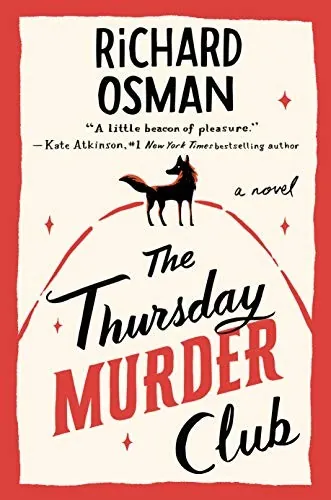
The cosy mystery - the mystery that unfolds in a village or a community, with an amateur detective and violence that happens off-page - is almost by definition clean. The genre’s masters are numerous: Agatha Christie’s Miss Marple novels remain the gold standard; the modern wave of cosies is led by Richard Osman’s Thursday Murder Club series and Alexander McCall Smith’s No. 1 Ladies’ Detective Agency. What these books share is that the pleasure comes from the puzzle and the people, not from gore. They are suspenseful, clever and completely comfortable to read.
The Literary Thriller That Stays Clean
Readers who want more tension can find literary thrillers that keep the violence off-page. Books in this vein build suspense through psychology rather than description - through what is threatened rather than what is shown. The result is often more frightening, because the reader’s imagination does the work, and it is entirely clean.
Where to Start: Warm Contemporary Fiction
The recent wave of warm, humane contemporary fiction is a gift to clean readers.
Fredrik Backman
Backman’s A Man Called Ove is the flagship: a grumpy widower pulled back into life by the neighbors who refuse to give up on him. His later books - Beartown, Anxious People, The Winners - are more serious and ambitious, but they share his signature: deep feeling, sharp humor and a refusal to be cynical about human goodness. All of it is clean.
Gail Honeyman
Eleanor Oliphant Is Completely Fine is a clean book about difficult things: loneliness, trauma and the slow work of healing. Its restraint is the point - Eleanor’s past is implied, never exploited, and the novel’s warmth comes from its belief in friendship. It won the Costa First Novel Award and became a global bestseller, and it remains one of the best examples of a clean book with real emotional weight.
Building a Reading Practice
Finding clean books is one thing; making them a lasting part of your life is another. A few practices help. Keep a running list, and add to it whenever you hear of a promising title. Read slowly enough to notice what you value, and note which authors you want to follow. Share what you find: clean reading is a community activity, and the readers who discover a great clean book usually want to pass it on. Our deeper guide to meaningful clean books for adults explores the books with the most staying power, and if you are choosing for younger readers, our guide to clean books for teens is the place to start. For families, our guide to family values in fiction connects clean reading to the values families want to share. The stories section is full of guides like this one.
Common Misconceptions About Clean Books
It is worth clearing up a few misconceptions that keep readers away from the category. The first is that clean books are boring - this is simply false, as anyone who has read a cosy mystery or a Backman novel can confirm; suspense, humor and excitement all survive perfectly well without explicit content. The second is that clean books are only for religious readers - in fact, the category is defined by content rather than faith, and the best clean books are read and loved by readers of every background. The third is that clean books cannot be literary - the existence of Marilynne Robinson and Wendell Berry, both among the most honored American writers of the past fifty years, settles that question permanently. And the fourth is that choosing clean books means constantly compromising - in practice, readers who commit to the category report the opposite: they read more, because they are not constantly stumbling over passages they wish they had not encountered. The category is larger, deeper and more various than its reputation, and the misconceptions dissolve the moment you start reading.
Matching Books to Mood and Season
A thoughtful reading practice also means matching books to the season of your life. Clean books support this beautifully because the category spans every register. When you want comfort, there is the cosy mystery or a warm Backman novel. When you want depth, there is Robinson or Berry. When you want adventure, there is Tolkien. When you want a book to share, there is The Guernsey Literary and Potato Peel Pie Society. Building a personal library of clean books means having something for every mood - a shelf that can meet you where you are. The readers who sustain clean reading for years are the ones who treat it as a full library rather than a single genre, and who let the books find them across the whole range of the category. Start by building the shelf, and let the seasons do the rest.
Conclusion
A thoughtful approach to clean books changes the experience of reading. Instead of stumbling through picks and hoping for the best, you build a standard, learn the authors and categories that reward you, and turn reading into a practice that reflects your values. The library is larger than you think - from Robinson’s grace to Backman’s warmth to the endless cosy mysteries - and it is waiting. Start with one book, read it slowly, and let it lead you to the next.
Frequently Asked Questions
What makes a book similar to l Guide to Clean Books for Adults?
Which book is closest to l Guide to Clean Books for Adults?
Are there other books like l Guide to Clean Books for Adults for younger readers?
What should I read after l Guide to Clean Books for Adults?
Is l Guide to Clean Books for Adults suitable for all readers?
Where can I find more clean reads like this?
Featured Recommendations
Raining Book Editorial
The Raining Book editorial team curates the best book recommendations and reading guides for every type of reader.