Books Like The Guernsey Literary and Potato Peel Pie Society

There are novels that entertain and novels that envelop, and The Guernsey Literary and Potato Peel Pie Society belongs firmly to the second category. Written entirely in letters, it tells the story of a writer who begins corresponding with the members of a book club on the island of Guernsey - a club invented in 1941, during the German occupation, as an excuse to break curfew, and then made real by the discovery that the books were keeping its members alive.
The novel is a love letter to reading, to community, and to the ordinary people who endured extraordinary times. Its form - the letters, with their voices, their interruptions, their half-said things - is its method: you are always overhearing conversations that were not meant for you. If you have finished it and want more of that feeling, here is where to look.
If You Loved the Letter Form: Stories Told in Fragments
The genius of the book is that its letters do what a single narrator cannot: they give you a whole community, one voice at a time. These books use similar forms to similar effect.
The Appeal (Janice Hallett)
A murder mystery told entirely through emails, texts, and messages among the members of a small-town amateur theater group. The reader is handed the whole file - every message, every attachment, every telling pause - and invited to solve the case before the lawyers reviewing it do. Like The Guernsey Literary Society, the form is the message: correspondence is full of the small deceptions and polite evasions that make up ordinary life, and the community is built one message at a time.
It is darker than the Guernsey book - there is a murder at the center - but the pleasure is the same: watching a community assemble itself through its own words, and understanding each person better than they understand themselves.
The Perks of Being a Wallflower (Stephen Chbosky)
A novel told entirely in letters from Charlie to an unnamed friend - letters that are never answered, which is exactly the point. Charlie is a freshman navigating friendship, love, loss, and mental health, and his letters are intimate in the way that only writing-to-no-one can be. The form gives the book its unbearable tenderness: you are reading something private, something not meant for you, and that is precisely why it works.
The Guernsey Literary and Potato Peel Pie Society, Read Again for the Voices
On a re-read, what you notice is the orchestration. Every letter-writer has a distinct voice - Juliet’s wit, Isola’s wildness, Dawsey’s restraint, Amelia’s warmth - and Shaffer and Barrows use the gaps between letters as carefully as the letters themselves. The war is never described head-on; it is pieced together from what people do not say. The book is a masterclass in the epistolary form, and the second read reveals how much of the novel’s power comes from what is withheld.
If You Loved the Wartime Setting: Occupation, Resistance, and Daily Life
The book’s subject is not the war itself but the people living through it - the occupation of Guernsey, the curfews, the shortages, the small acts of defiance. These books share that focus.
The Book Thief (Markus Zusak)
Narrated by Death himself, The Book Thief follows Liesel Meminger through Nazi Germany, where she steals books and shares them with her neighbors - acts of defiance that keep a small community alive through the worst of times. It is the most famous companion on this list, and the connection to the Guernsey book is exact: both are about communities kept alive by words, and both are told from the inside of the war rather than the outside.
The two books make a perfect pair: one set on an island under occupation, one set in a German town under the Reich; one told in letters, one told by Death; both insisting that literature is a form of resistance.
The Nightingale (Kristin Hannah)
Two sisters in occupied France, two very different forms of resistance: Vianne, who stays and endures, and Isabelle, who joins the resistance and fights. Hannah’s novel is a sweeping, emotionally devastating story about the women the history books left out, and it shares the Guernsey book’s central insight: that heroism in wartime is not only grand gestures but also the daily, invisible work of survival and care.
The Alice Network (Kate Quinn)
Two timelines, two women, one spy network: Charlie, an American college girl in 1947 searching for the truth about a friend, and Eve, a former spy whose work for the real-life Alice Network in occupied France changed her forever. It is a story about women at war and the cost of courage, and it shares the Guernsey book’s fascination with the secret lives people lead under occupation - the codes, the messages hidden in plain sight, the ordinary people doing extraordinary things.
If You Loved the Books-About-Books: Stories That Celebrate Stories
The Guernsey Literary Society is a book about a book club, and its deep subject is the same as The Book Thief’s: reading is survival. These books share the conviction.
The Storied Life of A. J. Fikry (Gabrielle Zevin)
A grumpy bookseller, a remote island bookstore, a baby left on the doorstep, and a life rearranged by both. Zevin’s novel is a love letter to bookstores and the communities they create, and it shares the Guernsey book’s belief that books are not ornaments but necessities - the things that connect us to each other and to ourselves.
The Shadow of the Wind (Carlos Ruiz Zafón)
In postwar Barcelona, a boy is taken to the Cemetery of Forgotten Books, a secret library of books that have been saved from oblivion, and he chooses one - The Shadow of the Wind by Julián Carax - only to discover that someone is systematically destroying every copy of Carax’s work. The book is a mystery, a love letter to reading, and a meditation on the power of stories, and it shares the Guernsey book’s conviction that books are worth saving - literally, at any cost.
Fahrenheit 451 (Ray Bradbury)
The darkest book on this list: a future where firemen burn books, and one fireman begins to question his work. Bradbury’s novel is the ultimate argument for what the Guernsey club discovered - that books carry the things that keep a civilization human, and that a community without books is a community without memory. It is dystopian where the Guernsey book is hopeful, but the two books are arguing for the same thing.
If You Loved the Community: Islands, Towns, and Found Families
The real subject of the Guernsey book is community - the way a group of ordinary people becomes, through shared experience, a kind of family. These books tell the same story.
The No. 1 Ladies’ Detective Agency (Alexander McCall Smith)
Precious Ramotswe, Botswana’s first female private detective, solves cases that are mostly about people’s hearts, and the book’s real subject is the community she serves. It is the gentlest book on this list - no occupation, no curfew, no war - but it shares the Guernsey book’s deep conviction: that a community is made of its people, and that its people are made of their stories.
The Secret Life of Bees (Sue Monk Kidd)
Set in South Carolina in 1964, The Secret Life of Bees is about a girl, a jar of honey, and a search for a mother that leads her to a beekeeping family of three sisters. Like the Guernsey book, it is a novel about women, community, and the small acts of care that hold a world together - and it is narrated with the same unhurried warmth.
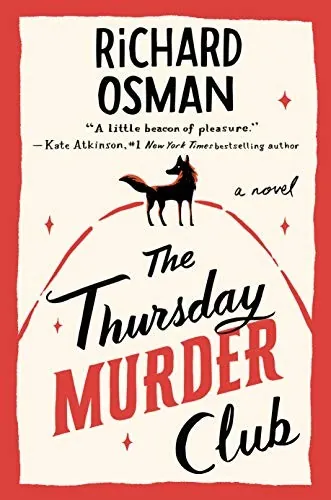
The Thursday Murder Club (Richard Osman)
Four retirees in an English retirement village solve cold cases for fun, and then a real murder arrives. The book is a cozy in the best sense, and its real subject - like the Guernsey book’s - is the community: the friendships, the rivalries, the shared history that makes the village what it is. If you loved the way the Guernsey club members took care of each other, you will recognize the same care at Coopers Chase.
If You Loved the Romance: Love Letters in Wartime
Beneath the books and the occupation, the Guernsey book is a romance - Juliet’s story unfolds through letters that become, slowly, something more. These books have love stories at their hearts.
The Guernsey Literary and Potato Peel Pie Society, and the Letters Between Juliet and Dawsey
The first letter in the book - Dawsey’s, about the book club - is a stranger’s letter, and the last is something else entirely. Watching Juliet and Dawsey’s correspondence move from formality to friendship to something more is one of the great quiet pleasures of the novel, and it is a reminder of what letters can do that conversation cannot: they let people say things they could not say face to face, and they let the reader watch a love story being written in real time.
Atonement (Ian McEwan)
A novel about a lie told by a child, and the lives it destroys - a country house, a summer, a love affair broken by a single false accusation, and the war that swallows the lovers anyway. McEwan’s book is darker and more formally audacious than the Guernsey book, but it shares its love of the English country house, its wartime setting, and its understanding that a story can be a weapon as well as a refuge. The ending is one of the most controversial in modern fiction, and it is devastating.
The Notebook (Nicholas Sparks)
A simpler romance, but one that shares the Guernsey book’s conviction that love can survive anything - even time, even forgetting. Noah and Allie’s story, told in flashback by an old man to a woman who no longer remembers, is the purest expression on this list of the idea that stories are how we hold on to what matters.
Building Your Own Club: A Reading Order
Here is a suggested path that moves from the closest match outward:
- Start with The Book Thief for the most famous wartime companion.
- Move to The Nightingale for the sweeping epic.
- Try The Alice Network for the spy story with two timelines.
- Pick up The Storied Life of A. J. Fikry for the books-about-books warmth.
- End with The Thursday Murder Club when you need the community back.
For more stories that celebrate books and community, our thoughtful guide to books without explicit content helps you find warm, substantial reads, and our best books without profanity list gathers stories that are rich without being rough. The stories section of our site is full of guides like this one, so there is always another book to love.
The Club That Keeps Meeting
The Guernsey Literary and Potato Peel Pie Society endures because it is about something that never goes out of style: the discovery that books are not solitary pleasures but communal ones, and that a group of people reading together can become something more than the sum of its parts. The club on Guernsey was invented as a cover and became a lifeline; the novel that tells its story was written in letters and became a beloved classic. The books on this list - from the book thief’s Germany to the spies of the Alice Network to the bookstores of Zevin’s islands - are all, in their own ways, clubs that keep meeting. There is always room for one more member.
Frequently Asked Questions
What makes a book similar to The Guernsey Literary and Potato Peel Pie Society?
Which book is closest to The Guernsey Literary and Potato Peel Pie Society?
Are there other books like The Guernsey Literary and Potato Peel Pie Society for younger readers?
What should I read after The Guernsey Literary and Potato Peel Pie Society?
Is The Guernsey Literary and Potato Peel Pie Society suitable for all readers?
Where can I find more clean reads like this?
Featured Recommendations


Raining Book Editorial
The Raining Book editorial team curates the best book recommendations and reading guides for every type of reader.