Books Like The Nightingale
Kristin Hannah’s The Nightingale became a phenomenon for a reason: it tells the story of the Second World War that the history books left out. Two sisters in occupied France - Vianne, who stays and endures, and Isabelle, who joins the resistance and fights - and the novel follows them through the war in all its horror and all its small mercies. It is sweeping, emotionally devastating, and unapologetically centered on women: their courage, their sacrifices, their invisible heroism.
If you have finished it - and needed a moment before you could talk about it - here is where to go next.
If You Loved the Sisters: Stories of Women Bound by Blood and Broken by War
The heart of The Nightingale is the relationship between Vianne and Isabelle - sisters who could not be more different, who fail each other, who save each other, whose love is tested by everything the war throws at them. These books center women whose bonds are tested in the same way.
The Alice Network (Kate Quinn)
Two timelines, two women, one spy network: Charlie, an American college girl in 1947 searching for the truth about a friend, and Eve, a former spy whose work for the real-life Alice Network in occupied France changed her forever. The book alternates between their stories, and the connection between them - revealed slowly, painfully - gives the novel its shape.
It is the closest companion to The Nightingale on this list: the same war, the same occupied France, the same focus on women whose courage was written out of the official record. Quinn’s book is more plot-driven than Hannah’s, but the emotional register is the same.
The Four Winds (Kristin Hannah)
Hannah’s own follow-up to The Nightingale: Elsa Martinelli, a woman in 1930s Texas, must decide whether to stay and watch her family starve during the Dust Bowl or leave for California, where the promise of work is really a promise of exploitation. It is the same novelistic machinery - a woman pushed to her limits, a family tested, a historical catastrophe rendered through intimate detail - applied to a different American disaster.
A Woman of No Importance (Sonia Purnell)
The true story that reads like the most thrilling fiction: Virginia Hall, an American woman with a prosthetic leg, who became one of the most wanted spies in occupied France - the Gestapo’s most dangerous Allied agent, and the woman they could never catch. Purnell’s biography is the real-world counterpart to Isabelle’s story, and it is a reminder that Hannah’s novel, for all its drama, is rooted in the actual courage of actual women.
If You Loved the Resistance: Ordinary People, Extraordinary Acts
Isabelle’s arc - the girl who joins the resistance, who risks everything to save downed airmen - is the novel’s most thrilling thread. These books are about the resistance and the people who fought it from the shadows.
Code Name Verity (Elizabeth Wein)
A young woman, captured by the Gestapo and accused of being a spy, is forced to write a confession - and what she writes is the story of her friendship with the pilot who brought her down. The book is structured as her confession, and the structure is the key to the mystery at its heart. It is a book about friendship and courage under the worst possible circumstances, and its ending is devastating and earned. For readers who loved Isabelle’s story, this is the essential next read.
The Nightingale, and the Question of What Courage Looks Like
The novel’s great argument is that courage has two faces: Isabelle’s - dramatic, defiant, glamorous in its danger - and Vianne’s - quiet, daily, invisible. Vianne does not join the resistance; she shelters children, hides a Jewish friend, endures the occupation of her home by a German officer, and keeps her family alive one day at a time. The book insists that her courage is not lesser, only quieter. That argument is the novel’s deepest subject, and it is what makes the ending so devastating: the reader finally understands that the quiet sister was the bravest one all along.
Resistance Women (Jennifer Chiaverini)
A novel that follows a group of women - an American journalist, a German countess, a student, a doctor - through the rise of the Third Reich and into the resistance. It is a sweeping ensemble story in the Nightingale mold, and it shares Hannah’s conviction that women’s stories from this period have been systematically undervalued. It is slower and more sprawling than Hannah’s novel, but the emotional territory is the same.
If You Loved the Historical Scope: Big Novels, Big Wars, Big Feelings
The Nightingale is a saga - decades, countries, a war, a lifetime of consequences. These books share its scope.
The Book Thief (Markus Zusak)
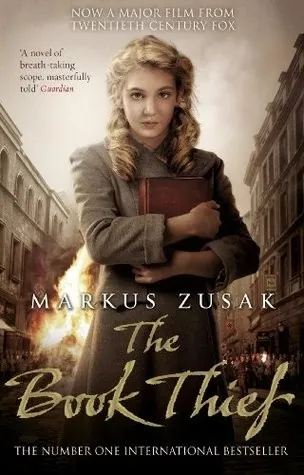
Narrated by Death himself, The Book Thief follows Liesel Meminger through Nazi Germany, where she steals books and shares them with her neighbors - acts of defiance that keep a small community alive through the worst of times. It is the most beloved companion on this list, and it shares the Nightingale’s understanding that the war was lived, day by day, by ordinary people - and that their stories matter as much as the battles.
The two books make a powerful pair: one from the German side, one from the French; one told by Death, one told in close third person; both insisting that the war’s true history is the history of the people who endured it.
All the Light We Cannot See (Anthony Doerr)
A blind French girl and a German boy whose paths cross in occupied Saint-Malo, at the end of the war. Doerr’s Pulitzer winner is a novel of extraordinary beauty - its prose, its structure, its two interleaved stories - and it shares the Nightingale’s focus on the civilian experience of war: the children, the women, the ordinary people caught in the machinery of history.
Salt to the Sea (Ruta Sepetys)
Four young people, four secrets, one doomed ship: the Wilhelm Gustloff, the worst maritime disaster in history, sinking in the Baltic in 1945 with thousands of refugees aboard. Sepetys’s novel is told in alternating voices - a Lithuanian nurse, a Prussian soldier, a Polish girl, an East Prussian boy - and it is a devastating account of the war’s forgotten victims. It shares the Nightingale’s commitment to telling the stories the history books skipped.
If You Loved the Love Story: War as the Setting for Love
Beneath the war, The Nightingale is a love story - several of them - and the novel insists that love is not a distraction from the war but a form of resistance against it. These books share that conviction.
The Guernsey Literary and Potato Peel Pie Society (Mary Ann Shaffer and Annie Barrows)
A novel told entirely in letters, set in the aftermath of the war on the island of Guernsey: a writer begins corresponding with the members of a book club that was invented in 1941 as an excuse to break curfew, and the letters reveal the island’s story - occupation, resistance, loss, and the books that kept people alive. The romance that grows through the letters is one of the gentlest on this list, and the book shares the Nightingale’s love of the English Channel islands and the people who endured their occupation.
The Bronze Horseman (Paullina Simons)
A sweeping love story set in Leningrad during the siege: Tatiana, a young woman, and Alexander, a soldier, fall in love as their city starves. Simons’s novel is the most romantic book on this list - epic, operatic, unapologetic - and it shares the Nightingale’s conviction that love can be a form of survival. It is longer and more melodramatic than Hannah’s novel, but readers who loved the love story at the heart of The Nightingale will find it hard to resist.
If You Loved the Emotional Devastation: Books That Break Your Heart and Put It Back Together
Let us be honest about what The Nightingale does: it destroys you. And then, in its final pages, it quietly puts you back together. These books work the same way.
The Book Thief (Markus Zusak)
The book that ends with Death himself telling you what you already know is coming - and breaking your heart anyway. Zusak’s novel is the master of the devastating ending, and it shares the Nightingale’s understanding that the truest war stories are the ones that make you feel the loss personally.
Me Before You (Jojo Moyes)
A different kind of devastation: Louisa Clark takes a job caring for Will Traynor, a young man paralyzed in an accident, and the two of them fall in love - which makes what Will decides to do all the more unbearable. Moyes’s novel is the modern master of the tearjerker, and it shares the Nightingale’s central gamble: that readers will follow a story to its hardest place if the characters have earned their trust.
On Reading Historical Fiction Responsibly
A note on approaching novels like The Nightingale and its companions: these are works of fiction, and their power comes from the way they make history feel personal - but they are not history books. Characters like Vianne and Isabelle are invented, even when the events around them are real. Reading them responsibly means letting them do what fiction does best - make you feel what the past felt like - while remembering that the real history is even more complicated, and often more terrible, than the novel can show. The books on this list are doorways, not destinations: each one opens onto a period - occupied France, the Dust Bowl, the resistance networks, the sinking of the Gustloff - and the reader who wants the full picture will follow the doorway into the actual history. That is not a weakness of the genre; it is its greatest gift. A novel like The Nightingale does not replace the history books; it sends you to them, with your heart already opened - and it leaves you, as the best historical fiction always does, with the unsettling sense that you now know these invented people better than you know many real ones, which is precisely the point.
Building Your Own Resistance: A Reading Order
Here is a suggested path that moves from the closest match outward:
- Start with The Alice Network for the same war, the same women, the same stakes.
- Move to Code Name Verity for the resistance story with the twist.
- Try All the Light We Cannot See for the literary masterpiece.
- Pick up The Four Winds for Hannah’s own follow-up.
- End with The Book Thief when you are ready for the other side of the war.
For more books with weight and substance, our meaningful books without explicit content list gathers stories that are rich without being graphic, and our thoughtful guide to books without profanity helps you find novels with strong language in the best sense - powerful, not profane. The stories section of our site is full of guides like this one, so there is always another story to carry with you.
The Women the Histories Left Out
The Nightingale endures because it answers a question that readers have been asking for generations: where were the women? The answer, Hannah shows, is everywhere - in the fields and the kitchens, in the resistance cells and the train stations, hiding children and smuggling airmen, enduring and fighting and refusing to break. The novel’s triumph is that it makes those women impossible to forget. The books on this list are all doing the same work, in their own ways: telling the stories that were written out of the official record and insisting that they matter. Read them, and the women they honor will stay with you long after the last page - Vianne’s quiet endurance, Isabelle’s defiant courage, Eve’s broken brilliance, the sisters and spies and survivors who refused to be written out of history. They are waiting on the shelf, and they are worth every tear.
Frequently Asked Questions
What makes a book similar to The Nightingale?
Which book is closest to The Nightingale?
Are there other books like The Nightingale for younger readers?
What should I read after The Nightingale?
Is The Nightingale suitable for all readers?
Where can I find more clean reads like this?
Featured Recommendations

Raining Book Editorial
The Raining Book editorial team curates the best book recommendations and reading guides for every type of reader.