Best Books About Travel and Discovery by Ibn Battuta
Introduction: The Greatest Traveler of the Medieval World
Ibn Battuta is the greatest traveler of the medieval world - the Moroccan scholar who, in the fourteenth century, crossed the known world from Morocco to China, covering by his own account some 75,000 miles. His essential work is The Travels, the account of his journeys that remains one of the great travel narratives ever written. This guide maps Ibn Battuta’s travels, the themes that make them cohere, and the companions for when you want more.
The Ibn Battuta Books in Reading Order
The Travels of Ibn Battuta (fourteenth century) is the essential Ibn Battuta, and the book that defines the subject. It is the account of his journeys, dictated to the scribe Ibn Juzayy at the court of the Sultan of Morocco, and it covers nearly thirty years of travel: the pilgrimage to Mecca, the courts of the sultans, the coasts of East Africa, the steppes of the Golden Horde, the sultanate of Delhi, the Maldives, Sumatra and China. It is the richest record we have of the medieval world - the cities, the customs, the scholars and the marvels. It is the key to everything else.
The Adventures of Ibn Battuta: A Muslim Traveler of the Fourteenth Century by Ross Dunn (1986) is the essential companion about the modern reading: the historian’s reconstruction of the journey, placing the traveler in the world he crossed. It shares the journey, with the scholarship at the center.
Ibn Battuta: The Journey of a Medieval Muslim by Shahrukh Husain (2001) is the essential companion for younger readers: the illustrated retelling of the travels. It shares the journey, with the pictures at the center.
The Travels of Marco Polo (thirteenth century) is the essential companion about the other traveler: the account of the Venetian who preceded Ibn Battuta to the East. It shares the journey, with the comparison at the center.
Content Notes for Each Book
The Travels of Ibn Battuta deals with the realities of the medieval world - slavery, violence and the customs of the courts; the full text is best for readers from around age sixteen upward, with discussion.
The Adventures of Ibn Battuta by Ross Dunn is a scholarly reconstruction; it is best for readers from around age sixteen upward.
Ibn Battuta: The Journey of a Medieval Muslim is an illustrated retelling suitable for readers from around age twelve upward.
The Travel and Discovery Themes in Ibn Battuta’s Work
Three themes give Ibn Battuta’s travels their distinctive shape.
The world as the unity is his signature vision. Ibn Battuta traveled through a world that was more connected than we often imagine - the Islamic world of the fourteenth century, from Morocco to China, bound by faith, trade and learning - and his conviction was that the world is one. The travels agree that the connection is the discovery.
The journey as the calling is the second theme. Ibn Battuta set out on the pilgrimage to Mecca and never really stopped - the journey became his life - and his conviction was that the road is the calling. The travels agree that the going is the vocation.
The marvel as the record is the third theme. Ibn Battuta’s account is full of the marvels - the cities, the courts, the strange customs - and his conviction was that the marvels are the record of the world. The travels agree that the wonder is the evidence.
Why Ibn Battuta’s Travels Endure
The Travels of Ibn Battuta has been translated into many languages and remains one of the most important documents of the medieval world, and its endurance rests on a simple achievement: Ibn Battuta saw more of the known world than any traveler before the age of steam, and he left the record - the cities, the courts, the scholars and the customs of the fourteenth century, seen from the inside. The travels became the shared doorway into the medieval world.
His influence extends beyond the account: the modern scholarship has reconstructed his journey, and the travelers who followed walked in his footsteps. But the travels endure because of their conviction: that the world is one, and that the journey is the way to know it.
Companion Books for Every Ibn Battuta Reader
When you have finished Ibn Battuta’s own travels, these titles extend the same territory.
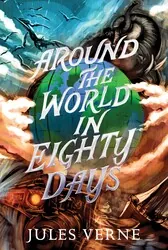
Around the World in Eighty Days by Jules Verne (1872) is the essential companion about the race: the fictional voyage around the globe. It shares the journey, with the fiction at the center.
The Great Railway Bazaar by Paul Theroux (1975) is the essential companion about the modern journey: the train journey across Asia. It shares the route, with the twentieth century at the center.
A Walk in the Woods by Bill Bryson (1998) is the essential companion about the laughter: the account of the Appalachian Trail. It shares the journey, with the comedy at the center.
For the fuller shelves, our best medieval history list gathers the earlier journeys, and our historical fiction reading notes extends the shelf into the journeys told in fiction.
A Reading Plan for Book Clubs
The Travels of Ibn Battuta generates conversation on every level: the journey, the world, the question of what the account actually tells us. The most fertile questions are the ones the book refuses to settle: How much of the account is true? What does the book ask the reader to make of the traveler’s silences? Can a medieval journey of 75,000 miles really have happened?
The book also generates the harder kind of discussion: the question of what the account leaves out - the women, the enslaved, the peoples passed over - and what the medieval world looks like when seen from the other shore. Clubs should expect the conversation to range from Tangier to China, which is exactly the range Ibn Battuta intended.
A Note on the Book’s Structure and Editions
The Travels of Ibn Battuta is structured as the journey itself - the stages in order, the cities and the courts - and readers should know that the account was dictated to the scribe Ibn Juzayy years after the travel, which explains both its richness and its gaps. The full text runs to many volumes in the scholarly edition; the abridged editions are the best place for the general reader, and the illustrated editions for younger readers. The book rewards the reader who lets the journey accumulate into the whole.
What Ibn Battuta’s Books Teach Together
Read together, The Travels of Ibn Battuta and The Adventures of Ibn Battuta by Ross Dunn form a conversation about the journey: the medieval account gives the traveler’s own record, and the modern reconstruction places it in the world he crossed. Both are built on the same conviction - that the journey is the way to know the world - and each one widens the claim: the record and the reconstruction. That is why the books belong together on the same shelf, and why readers who finish one should not stop there.
The Record Behind the Traveler
Readers who want the fullest experience should know the record behind the traveler: the account was dictated to the scribe Ibn Juzayy at the court of the Sultan of Morocco, years after the journeys ended, and it is the collaboration of the traveler’s memory and the scribe’s craft. The modern scholarship has spent generations testing the account - identifying the places, the people and the routes - and the consensus is that Ibn Battuta made the journeys he claimed, with the account’s gaps and embellishments being the normal texture of the medieval memoir. The reader who follows the scholarship will find the journey confirmed and enriched.
Why Ibn Battuta Still Matters to New Readers
Ibn Battuta matters because he is the witness the medieval world cannot do without: the traveler who saw the fourteenth century from the inside, from Morocco to China, and left the record. His account is the answer to a question every reader of history asks: what was the world actually like? The answer is the cities, the courts, the scholars and the customs - and the sense of a world more connected than the textbooks often suggest. New readers who come to the travels with the abridged editions will find the journey astonishing, and they will understand why Ibn Battuta is called the greatest traveler of the medieval world.
Where to Begin and What to Read Next
For readers new to Ibn Battuta, the abridged editions of The Travels are the essential starting point - the full scholarly text is vast, and the abridgments keep the journey without the apparatus. Readers who want the scholarship should follow with The Adventures of Ibn Battuta by Ross Dunn; readers who want the younger version should read the illustrated retelling by Shahrukh Husain; and readers who want the comparison should move to The Travels of Marco Polo. And because Ibn Battuta is best read beside the other great travel writers, the natural next shelf pairs him with the voyage of Verne, the adventure of Stevenson, the comedy of Bryson and the observation of Theroux - the caravan, the voyage, the island, the walk and the train, together forming the full picture of what the literature of travel and discovery can do.
Conclusion: The Road Still Open
Ibn Battuta’s contribution to the literature of travel and discovery is a single achievement, and it has entered the language of readers everywhere: the journey as the life. He wrote it into the 75,000 miles and the thirty years, and it has outlasted every attempt to make the medieval world a distant country. His world is the unity; his journey is the calling; his craft is the record. Read him, and let the road show you what discovery was really made of. For more reading paths, explore the Worlds section of our site, or continue with our medieval history reading notes.