Books Like The Westing Game
Introduction: What Readers Mean by “Books Like The Westing Game”
When readers ask for books like The Westing Game, they are rarely asking for just any mystery. They are asking for something more specific: a puzzle or game at the center, an ensemble of suspects or heirs, and a twist that changes the reader’s understanding of everything. The Westing Game (1978) has all three: sixteen heirs who gather to hear the will of the millionaire Samuel Westing; the game that pairs them and gives them clues; and the novel’s central claim - that the game is not what it seems, and neither is the dead man. The books that come closest are the ones that find their own way to the same combination.
This guide gathers the strongest readalikes, old and new, with honest content notes and a clear sense of what each book shares with Raskin’s novel and where it departs from it.
The Puzzle Mysteries
The books that come closest to The Westing Game’s heart are the ones about the puzzle at the center.
The Mysterious Benedict Society by Trenton Lee Stewart (2007) is the essential companion: four gifted children recruited for a secret mission at an institute where something is very wrong. It shares The Westing Game’s puzzles and its ensemble, with the will replaced by the mission. Content note: a middle-grade novel with mild peril; for readers from around age ten upward.
Escape from Mr. Lemoncello’s Library by Chris Grabenstein (2013) is the essential companion about the game: twelve children must escape a fantastical library designed by a game maker, in the novel of the puzzles and the books. It shares The Westing Game’s game and its cleverness, with the heirs replaced by the contestants. Content note: a middle-grade novel; for readers from around age nine upward.
The Inheritance Games by Jennifer Lynn Barnes (2020) is the essential companion in young adult register: Avery, a teenager who inherits a fortune from a stranger, in the novel of the puzzles and the family of heirs. It shares The Westing Game’s inheritance, its puzzles and its twist, with the register sharpened. Content note: a young adult mystery; for readers from around age fourteen upward.
The Ensembles and the Suspects
A second branch of the family is the novel about the ensemble - the suspects and the heirs.
The Westing Game also belongs to the family of mysteries about the closed group of suspects, and the closest of those in the classic canon is Murder on the Orient Express by Agatha Christie (1934): Hercule Poirot must solve a murder aboard a train where everyone is a suspect. It shares The Westing Game’s closed ensemble and its twist, with the register classic. Content note: a classic mystery; for readers from around age fourteen upward.
The 7½ Deaths of Evelyn Hardcastle by Stuart Turton (2018) is the essential companion in puzzle register: a man who must solve a murder by living the day of the murder eight times in eight different bodies. It shares The Westing Game’s puzzle and its twist, with the register sharpened. Content note: a mystery with some violence; for readers from around age sixteen upward.
And Then There Were None by Agatha Christie (1939) is the essential companion in darker register: ten strangers invited to an island, in the novel of the deaths that follow the nursery rhyme. It shares The Westing Game’s closed group, with the register darkened. Content note: a classic mystery dealing with death; for readers from around age fourteen upward.
The Cleverness and the Kindness
A third branch is the novel about the cleverness and the kindness - the puzzle solved by the ones who understand people.
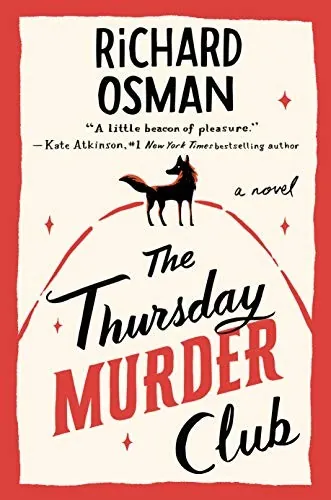
The Thursday Murder Club by Richard Osman (2020) is the essential companion: four retirees in a luxury village who meet to solve cold cases, in the novel of the murder that arrives in their own village. It shares The Westing Game’s ensemble and its cleverness, with the heirs replaced by the seniors. Content note: a cozy mystery with no graphic content; for readers from around age fourteen upward.
The Name of This Book Is Secret by Pseudonymous Bosch (2007) is the essential companion about the secret: two children who discover a mystery involving a magician and a secret. It shares The Westing Game’s secrets and its puzzles, with the register playful. Content note: a middle-grade novel; for readers from around age nine upward.
The Girl Who Drank the Moon by Kelly Barnhill (2016) is the essential companion about the solving: Luna, a girl raised by a witch who accidentally gave her moonlight, in the novel of the magic and the quest. It shares The Westing Game’s solving, with the puzzle replaced by the magic. Content note: a middle-grade fantasy; for readers from around age ten upward.
Themes and Values That Hold the Readalikes Together
Once you have read a few of these books side by side, the shared themes become clear, and they are worth naming because they are what make the category cohere.
The game as the truth runs through every one of them. The Westing Game’s central claim - that the game is not what it seems, and neither is the dead man - is the load-bearing structure of the whole family. The books are united by the conviction that the game is the truth, and that the truth is revealed by the playing.
The ensemble as the cast is the second shared shape. The family is united by the closed group - the sixteen heirs, the twelve contestants, the suspects on the train - and by the conviction that the ensemble is the cast. The books agree that everyone is a suspect and everyone is a key.
The twist as the meaning is the third shared theme. The family is united by the understanding revised - the dead man alive, the game revealed, the reader fooled and delighted - and by the conviction that the twist is the meaning. The books agree that the surprise is the point.
What to Read Next Depends on Why You Loved It
If you loved the puzzle, read The Mysterious Benedict Society and Escape from Mr. Lemoncello’s Library.
If you loved the inheritance, read The Inheritance Games.
If you loved the closed ensemble, read Murder on the Orient Express and And Then There Were None.
If you loved the twist, read The 7½ Deaths of Evelyn Hardcastle.
If you loved the cleverness, read The Thursday Murder Club.
Content Notes: What These Books Contain
The Westing Game is a middle-grade mystery with no graphic content, most naturally from around age ten upward. The Mysterious Benedict Society has mild peril. Escape from Mr. Lemoncello’s Library is a middle-grade novel. The Inheritance Games is a young adult mystery. Murder on the Orient Express is a classic mystery. The 7½ Deaths of Evelyn Hardcastle has some violence. And Then There Were None deals with death. The Thursday Murder Club is a cozy mystery. The Name of This Book Is Secret is a middle-grade novel. The Girl Who Drank the Moon is a middle-grade fantasy. None contain gratuitous content; the weight is clever and warm. Our family-friendly historical reading lists and our meaningful historical fiction for adults offer related reading paths for the craft and the traditions of the mystery.
Why These Books Work as a Set
Read together, these readalikes form a coherent shelf rather than a random pile, and the coherence is worth naming for anyone building a reading list. They are bound by the conviction that the game is the truth, that the ensemble is the cast, and that the twist is the meaning. They are also bound by structure: nearly every title here sets a closed group to solve a puzzle and revises the reader’s understanding at the end. That shared DNA means the shelf rewards reading in almost any order - the books talk to each other. The Mysterious Benedict Society echoes the puzzle across the mission; Murder on the Orient Express grounds the ensemble in the classic; The Inheritance Games sharpens the twist for the young adult shelf. For a reader working through the family, the pairings are as instructive as the individual titles, which is why the reading plan below suggests specific combinations rather than a single sequence.
A Reading Plan for Book Clubs
The Westing Game generates conversation on every level: the puzzle, the heirs, the question of what the game actually reveals. Some of the best discussion questions come from pairing it with a book that shares or challenges it: read it with The Mysterious Benedict Society, and compare the two puzzles and the two ensembles; read it with Murder on the Orient Express, and ask how the two twists differ; read it with The 7½ Deaths of Evelyn Hardcastle, and discuss the two games and the two registers.
Conclusion: The Game That Keeps Giving
The Westing Game endures because it is about something permanent: the conviction that the game is the truth, that the ensemble is the cast, and that the twist is the meaning. Every book on this list takes one piece of that - the puzzle, the heirs, the surprise - and builds its own account around it. The joy of reading them is the joy of watching the same playing practiced in different buildings, different trains, different registers. Start with whichever part of the heirs’ story you loved most, and let the comparison teach you what the game is really made of. For the full collection of reading paths, start at the Worlds section of our site.