Beyond the Arena: The Ultimate Survival Guide for Hunger Games Fans
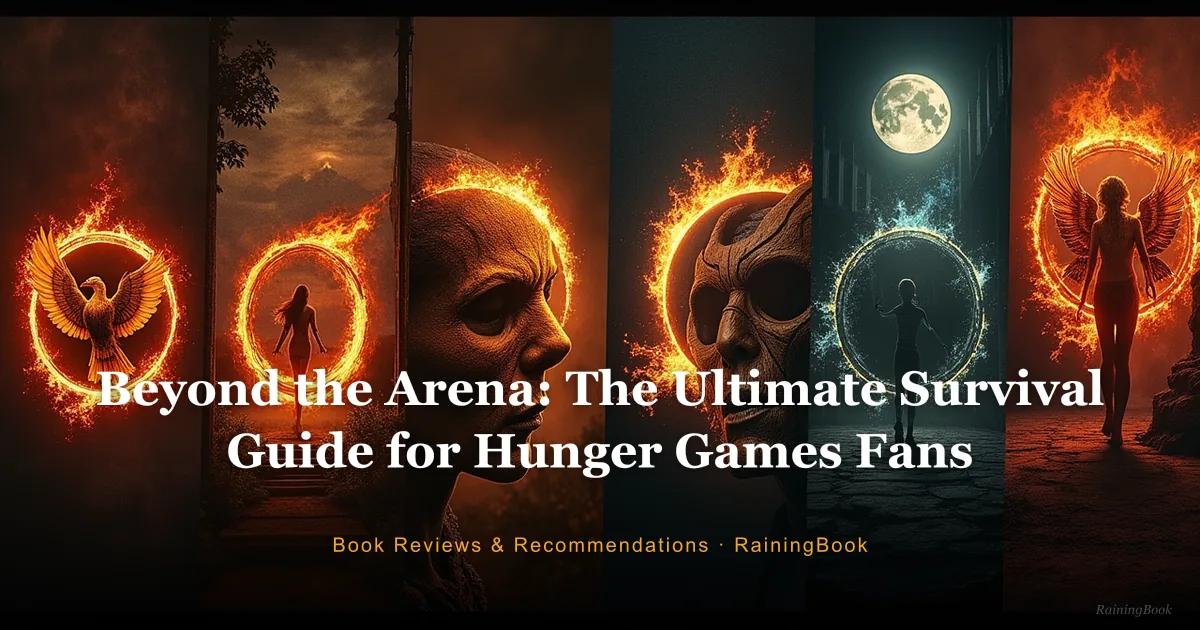
Remember the first time you read about the reaping? I was huddled under a blanket, my heart pounding as Prim’s name echoed through the pages. That moment hooked me and millions of others into a world that is more than just a story. Suzanne Collins’s Panem has become a cultural touchstone, a mirror held up to our own anxieties about authoritarianism, media spectacle, and the resilience of the human spirit. Since Katniss Everdeen first raised three fingers to the camera, readers have been hungry not only for more stories set in this world but for other books that capture the same blend of high-stakes survival, political intrigue, and emotional depth. This guide goes beyond a simple list. It examines why Katniss endures, unpacks the latest entry in the Panem saga, and curates ten must-read novels for anyone who still hears the mockingjay’s song.
Key Takeaways
- Katniss’s legacy is rooted in her refusal to be a pawn - a theme Collins deepens in Sunrise on the Reaping.
- The 50th Hunger Games reveals the origins of Haymitch’s defiance and the Capitol’s propaganda machinery.
- Ten contemporary dystopian novels expand the genre with fresh settings, from dragon‑ruled Rome to corporate‑prison arenas.
- A structured reading order lets you trace the evolution of dystopian themes from Panem to the newest voices.
The Girl on Fire: Why Katniss Everdeen Endures
Katniss Everdeen didn’t just survive the Hunger Games; she set the very concept of the Capitol ablaze. Her endurance as a protagonist stems from her role as an involuntary symbol of rebellion - a girl whose raw survival instincts and fierce protection of her sister, Prim, inadvertently dismantled a centuries-old authoritarian regime. Katniss remains the definitive icon of the dystopian genre because she refused to be a pawn, proving that a single act of defiance can ignite a revolution. Her legacy of resistance within the original trilogy creates the emotional scaffolding for Suzanne Collins’s latest exploration of Panem’s dark history. To truly understand the girl who shook the world, every fan must return to the source of the spark in The Hunger Games, the foundation for the high-stakes survival stories that follow.
Academics have noted that the appeal of dystopian YA fiction often lies in the tension between oppressive systems and the youthful protagonists who challenge them. As a study in the ALAN Journal explains, these narratives empower readers by modeling how critical thinking can expose the fractures in authoritarian control 1. Katniss embodies precisely that: she sees through the Capitol’s glittering facade and refuses to perform obedience.
A New Dawn of Rebellion: Sunrise on the Reaping
The world of Panem expanded exponentially with the 2025 release of Sunrise on the Reaping, which saw a staggering debut of over 1.5 million copies in its first week. Set 24 years before Katniss’s story, the prequel takes us into the 50th Hunger Games - the Second Quarter Quell - where the stakes were brutally doubled. This arena forced 48 tributes, including a 16-year-old Haymitch Abernathy and the courageous Maysilee Donner, into a “lethal garden” filled with poisonous hazards, golden carnivorous squirrels, and explosive sunflower necklaces.
Haymitch’s victory was not just a feat of survival but a direct confrontation with the Capitol’s media manipulation. Collins uses this era to dive deep into the mechanics of propaganda; we see this most chillingly when the Capitol replaces the deceased tribute Louella McCoy with a drugged body double to maintain the illusion of a perfect spectacle. Even in the midst of this horror, the seeds of future rebellion are visible, notably through characters like Plutarch Heavensbee, who appears as a Capitol cameraman subtly questioning the regime’s narrative through his lens. For a deeper dive into Haymitch’s trauma and other tales of rebellion, explore more books like Haymitch’s story.
For readers eager to explore the propaganda apparatus in more detail, The New York Public Library has curated a list of companion reads that examine how power shapes storytelling 2. Meanwhile, a detailed plot summary from Audible confirms that Sunrise on the Reaping deepens our understanding of Haymitch’s trauma and the cost of winning a rigged game 3.
Key Takeaways
- The Second Quarter Quell introduces a Haymitch we only glimpsed before - brilliant, angry, and already breaking.
- The Capitol’s use of a body double underscores its total control over narrative.
- Look for Plutarch Heavensbee’s early role as a subtle rebel within the system.
10 Essential Dystopian Reads for the Dystopian Soul
The following novels channel the same energy as The Hunger Games - survival contests, oppressive regimes, and protagonists who refuse to be owned. To help you navigate them, we’ve assembled a summary table followed by detailed breakdowns of each title.
| Book | Primary Survival Stakes | Political System | Emotional Core |
|---|---|---|---|
| Chain‑Gang All‑Stars | Televised gladiator combat for freedom | CAPE program monetizing prison‑industrial complex | Loretta Thurwar’s fight for humanity |
| The Sunbearer Trials | Five lethal challenges; loser is sacrificed | Rigid hierarchy between Gold and Jade semidioses | Teo’s fear of losing best friend |
| To Cage a Wild Bird | Inmates hunted for sport by wealthy elite | Zero‑tolerance law in Dividium | Raven Thorne’s protection of her brother |
| Elite Trials: Reactive | Three deadly trials for Title of Choice | Supreme Elite’s walled city with electrified barriers | Lune’s struggle with forgotten past |
| A Language of Dragons | Codebreaking at Bletchley Park to save family | Corrupt peace treaty between humans and dragons | Vivien’s fight against class oppression |
| Fireborne | Dragonriding competition to defend new meritocracy | Meritocracy replacing old aristocracy | Annie and Lee’s conflicting heritages |
| The Rage of Dragons | Swordsman training to avenge family | Omehi magic‑based caste system | Grief and rage driving revenge |
| Throne of Glass | Assassin competition to become King’s Champion | Oppressive king with outlawed magic | Celaena’s psychological scars from slavery |
| The Fireborne Blade | Dragon lair quest to reclaim a fabled blade | Knightly hierarchy marginalizing women | Sapphic love and defiance of assigned roles |
| Firebird | Survival in scorched landscape hunted by deathriders | Dragon‑ruled alternate Roman Empire | Heartbreak amid systemic slavery |
Chain-Gang All-Stars by Nana Kwame Adjei-Brenyah
- Survival Stakes: In a near-future America, prisoners can earn their freedom after three years, but only by surviving the “Chain-Gang,” a televised, gladiator-style combat sport where death is the only other exit, making it a gripping closed-setting survival thriller.
- The Political System: The CAPE program represents the ultimate commodification of the prison-industrial complex. Inmates are reduced to “Links” in a chain, their very lives monetized through “Bloodpoints” and corporate merchandising.
- Emotional Weight: Protagonist Loretta Thurwar must navigate a system designed to strip her of humanity, making impossible choices that will haunt her forever while she carries the burden of becoming the face of a violent spectacle.
The Sunbearer Trials by Aiden Thomas
- Survival Stakes: Ten teen “semidioses” compete in five lethal challenges to replenish the Sun’s power. While the winner brings light to the world, the loser is sacrificed to refuel the Sun Stones.
- The Political System: The Mexican-inspired world of Reino del Sol is governed by a rigid hierarchy between Gold semidioses and the marginalized “Jade” semidioses. Tension reaches a breaking point when, for the first time in a century, the Sun chooses two Jades - Teo and Xio - to compete.
- Emotional Weight: Seventeen-year-old Teo faces the gut-wrenching reality that the odds of survival are slim, and the risk of losing his best friend, Niya, to the sacrificial fires is a constant, suffocating pressure.
To Cage a Wild Bird by Brooke Fast
- Survival Stakes: In the brutal Endlock prison, inmates aren’t just serving time; they are being hunted for sport by the city’s wealthy elite in a deadly game of cat and mouse.
- The Political System: The city of Dividium operates under a zero-tolerance law where any crime results in a life sentence within the hunting grounds of Endlock.
- Emotional Weight: Raven Thorne, Dividium’s most notorious bounty hunter, finds herself in a cruel twist of fate: she is imprisoned alongside the very people she once condemned, forced to protect her brother Jed from the system she helped populate.
Elite Trials: Reactive by Becky Moynihan
- Survival Stakes: Candidates must survive deadly trials and elite training to earn a “Title of Choice,” the only legitimate way to secure freedom and escape a city under total lockdown.
- The Political System: The Supreme Elite rules a walled city protected by electrified barriers, keeping the population safe from “mutated beasts” while maintaining absolute authoritarian control.
- Emotional Weight: Lune Tatum, the adopted daughter of the ruler, must grapple with lost family and a past she’s desperate to forget, even as a boy from her childhood returns with secrets that threaten her survival.
A Language of Dragons by S.F. Williamson
- Survival Stakes: After a girl accidentally breaks a peace treaty between species, she is forced into the role of a codebreaker at Bletchley Park to save her family from execution.
- The Political System: Set in an alternate 1923 London, the world is governed by a corrupt peace treaty between humans and dragons that hides a darker rot within the social hierarchy.
- Emotional Weight: Vivien Featherswallow carries the heavy burden of class-based oppression, fighting to ensure her sister never has to grow up “Third Class” while her parents remain under arrest.
Fireborne by Rosaria Munda
- Survival Stakes: Orphans of a bloody revolution must compete for the top positions in a dragonriding fleet to protect their new world from the vengeful remnants of the old regime.
- The Political System: A new meritocracy has replaced the old aristocratic hierarchy, allowing lowborn citizens to test for power - yet the shadows of the former dragonriding class still loom.
- Emotional Weight: Friends turned rivals Annie and Lee face the psychological trauma of their heritage; Annie’s family was executed by the old regime’s dragonfire, while Lee is the hidden survivor of the very aristocracy the revolution destroyed.
The Rage of Dragons by Evan Winter
- Survival Stakes: In a world of perpetual war, a young man with no magical gifts dedicates himself to becoming the world’s most lethal swordsman to avenge the murder of his family.
- The Political System: The Omehi people are strictly stratified by magic; women who can call down dragons and men who can transform into killing machines rule, while everyone else is expendable fodder.
- Emotional Weight: The narrative is driven by visceral grief and a rage so profound the protagonist is willing to die a hundred thousand times over for one chance at revenge.
Throne of Glass by Sarah J. Maas
- Survival Stakes: A legendary assassin is brought from a lethal slave camp to compete in a competition against twenty-three other killers to become the King’s Champion.
- The Political System: An oppressive king rules from a glass throne in a world where magic has been outlawed, using fear and forced labor to maintain his iron grip.
- Emotional Weight: The protagonist is haunted by the psychological scars of her time in the Salt Mines of Endovier, her survival driven by a desperate, burning desire for the freedom she was robbed of as a child.
The Fireborne Blade by Charlotte Bond
- Survival Stakes: A knight must venture into a dragon’s lair to reclaim a fabled blade; failure means certain death and the permanent loss of her remaining honor.
- The Political System: The world is defined by a rigid knightly hierarchy that marginalizes women, full of scheming squires and political deceptions that favor the elite.
- Emotional Weight: The story explores a powerful sapphic love and the personal cost of refusing to accept the limited, subservient roles society assigns to women.
Firebird by Juliette Cross
- Survival Stakes: A Roman general and a prophesied witch must navigate a scorched landscape while being hunted by “deathriders” in a world where dragons are the ultimate weapons.
- The Political System: An alternate Roman Empire where dragons rule and human life - specifically that of the enslaved - is treated with legendary brutality.
- Emotional Weight: The connection between the characters is strained by the horrors of systemic slavery and the inevitable heartbreak that comes with loving someone in a world destined to burn.
What unites these titles is their shared interrogation of how systems turn lives into commodities.
Expert Analysis: Beyond the Arena - What These Worlds Share
While each of these books builds its own unique dystopia, they all rest on a common insight: oppressive regimes maintain power by turning violence into spectacle. In Chain-Gang All-Stars, Nana Kwame Adjei-Brenyah takes this idea to its logical extreme. Prisoners are branded as “Links,” their bodies owned by a corporate prison system that broadcasts their fights for profit. Viewers earn “Bloodpoints” by betting on outcomes, and the most successful Links become celebrities - much like the Careers in the Capitol. The parallel to Panem is unmistakable: both systems reduce human beings to entertainment, and both ask uncomfortable questions about the audience’s role. Are we, the readers, complicit in the spectacle we consume? Collins forces us to confront this through Katniss’s horror at the cheering crowds, while Adjei-Brenyah makes it explicit through the live-streamed violence. A critical analysis from St. John’s Scholar argues that the novel is provocative precisely because it forces readers to confront the economic logic behind prisons 4. Similarly, The Sunbearer Trials transforms a religious sacrifice into a televised competition, where the loser’s death is framed as a necessary ritual - a chilling echo of the Games’ annual bloodbath. These narratives share a core warning: when society turns suffering into entertainment, humanity is the first casualty.
Yet we must also acknowledge a limitation: the parallel between fictional dystopias and real-world injustices can sometimes create a sense of despair rather than empowerment. Not every reader leaves these books feeling ready to rebel; some may feel overwhelmed by the scale of corruption depicted. That reaction is valid, and it reminds us that fiction’s job is not always to offer solutions but to illuminate patterns we might otherwise miss.
Are You a Survivor? Testing Your Dystopian IQ
Do you have the strategic mind of a victor, or would you fall victim to the poisonous butterflies of the Quell? From the deathriders of a dragon-ruled Rome to the commodified “Links” of the modern arena, these dark worlds test the very limits of human courage. If you think you can navigate the political minefields and survival hazards of these regimes, it’s time to prove your worth.
Want to cement your knowledge? Our Dystopian Flashcards will help you remember key characters, regimes, and survival tactics from Panem and beyond.
The Master Reading Order: From Panem to the Wider World
This master reading order is one of more reading guides for competition-based series we offer. To truly appreciate the evolution of the genre, start with the foundational Panem lore. This allows you to see the blueprint of rebellion before moving into the “literary descendants” that expand on themes of commodification, meritocracy, and systemic survival.
- The Original Hunger Games Trilogy
- Sunrise on the Reaping
- Chain-Gang All-Stars
- The Sunbearer Trials
- To Cage a Wild Bird
- Elite Trials: Reactive
- A Language of Dragons
- Fireborne
- The Rage of Dragons
- Throne of Glass
- The Fireborne Blade
- Firebird
If you’re still feeling the void after finishing these, our post-series hangover survival guide offers targeted recommendations to fill the gap.
For a visual overview of how these books connect and diverge in themes, check our interactive Mind Map: The Hunger Games & Dystopian Literature. You can also download our slide deck and infographic to share with fellow fans.
The Resilience of the Human Spirit
The common thread through every arena, prison, and dragon-ruled city is the refusal to be “owned.” These stories serve as a vital reminder that while oppressive regimes use propaganda, surveillance, and violence to control the masses, they are never eternal. Resistance begins with the act of remembrance - clinging to the values, dignities, and truths of the past to recognize the cracks in the present. As long as there is a mind that refuses to blindly accept doctrine, the spirit of rebellion lives on.
3 Dystopian Truths
- The Power of Propaganda: Authoritarian regimes maintain control by transforming violence into a choreographed narrative, using media spectacle to distract the population from their own oppression.
- The Cost of Freedom: Liberation is never a straight line; it is a path built on sacrifice, the trauma of survival, and the persistent refusal to play the roles assigned by the state.
- The Importance of Critical Thinking: The primary tools of resistance are the remembrance of past values and the refusal to accept “distorted truths” as reality.
Footnotes
-
Scholes, J. “Understanding the Appeal of Dystopian Young Adult Fiction.” ALAN Journal 40.2 (2013). https://scholar.lib.vt.edu/ejournals/ALAN/v40n2/scholes.html ↩
-
The New York Public Library. “Waiting for ‘Sunrise on the Reaping’? Check Out These Reads for Fans of ‘The Hunger Games’.” https://www.nypl.org/blog/2025/03/12/reads-fans-hunger-games ↩
-
Audible. “Summary of Sunrise on the Reaping by Suzanne Collins.” https://www.audible.com/blog/summary-sunrise-on-the-reaping-by-suzanne-collins ↩
-
“Provocative and Problematic: The Complicated Legacy of Chain-Gang All-Stars.” St. John’s Scholar. https://scholar.stjohns.edu/cgi/viewcontent.cgi?article=1019&context=jcres ↩
View Infographic
Visual summary of this article
Download Resources
Free PDF reading guide and reference materials
Frequently Asked Questions
What is the reading order for the Hunger Games series?
What dystopian books are recommended for Hunger Games fans?
What makes Sunrise on the Reaping significant in the Panem saga?
Why does Katniss Everdeen remain the definitive dystopian protagonist?

Editorial Team
The Raining Book editorial team curates the best book recommendations and reading guides for every type of reader.
Related Posts
Beyond the Quarter Quell: 10 Must-Reads for Fans of Haymitch and Sunrise on the Reaping
Prepare for Haymitch's story with these 10 essential dystopian reads. From Battle Royale to The Giver, explore survival, rebellion, and the cost of defiance.

Genre-Bending and Reality-Ending: A Survival Guide to Books That Defy Categories
Discover the most genre-shattering books of 2025—from sentient blob boyfriends to fairy bargains. Includes T. Kingfisher intel, debut highlights, and a quiz to find your next read.
The Thinking Reader’s Guide to Speculative Fiction: Literary Depth and Genre Innovation
Discover the best literary speculative fiction of 2026, from R.F. Kuang’s Katabasis to E.J. Swift’s climate epic. Explore novels that blend heart and intellect, with reading paths and expert analysis.