A Thoughtful Guide to Character

Few words carry more weight and less precision than character. It is invoked at funerals and job interviews, in moral panics and commencement speeches, and it usually means something slightly different each time. This guide is an attempt to say clearly what character is, how it is built, and how to develop it deliberately - without the moralizing that makes the subject feel either sacred or exhausting.
What Character Is
Start with a working definition. Character is the set of moral qualities - honesty, integrity, courage, patience, responsibility, kindness - that you express through your habits and choices over time. It is not the same as personality. Personality is the collection of temperamental traits you are born with or develop early: whether you are introverted or outgoing, sensitive or thick-skinned, spontaneous or careful. Character is what you make of that raw material. It is the moral dimension of who you are, and unlike personality, it is something you build.
The distinction matters because it changes what you can do about yourself. If character were fixed, the only honest advice would be to accept yourself as you are. But the tradition from Aristotle onward insists the opposite: character is built by practice. We become just by doing just acts, honest by telling the truth, patient by waiting well. Each choice is a small deposit, and over years the deposits accumulate into something you can rely on - which is exactly what character is: the reliable version of yourself.
The Building Blocks of Character
Character is not one thing; it is a cluster of related capacities. Naming them helps you see what you are actually trying to build.
Integrity
Integrity is the alignment of your actions with your values - doing what you said you would do, living consistently with what you claim to believe. It is the load-bearing trait, because the others depend on it. A person of integrity is someone whose word means something, to themselves and to others. It is built in the small, unobserved choices: the report you do not pad, the promise you keep even when it is inconvenient, the standard you hold when no one would know if you lowered it.
Honesty
Honesty is truthfulness in word and action - and, harder, truthfulness with yourself. The first part is social: not lying, not exaggerating, not misleading. The second part is internal and more difficult: seeing your own motives clearly, admitting your mistakes, refusing the comfortable stories you tell yourself about why you did what you did. Internal honesty is the foundation of all growth, because you cannot fix what you will not admit.
Courage
Courage is the capacity to act rightly when it is costly - to speak the truth when silence is easier, to take the responsible action when the easy path is available, to admit fault when blame could be deflected. Courage is not the absence of fear; it is action in the presence of fear. It is the virtue that activates the others, because honesty and integrity usually require it at some point. Our thoughtful guide to courage explores this virtue in depth, because it is the hinge on which the others turn.
Patience, Responsibility and Kindness
Patience is the discipline of the timeline - the capacity to persist with things that take longer than you would like, and to respond calmly under provocation. Responsibility is the willingness to own your actions and their consequences, to be counted on. Kindness is the character trait that keeps the others from becoming cold - integrity without kindness can curdle into self-righteousness, and honesty without kindness into cruelty. A mature character holds all of them together.
How Character Is Built
Character is built by practice, and the practice has a recognizable shape. It begins with attention: noticing the moments when a virtue is available to you. The report that could be padded. The promise that could be quietly dropped. The sharp response that could be softened. Attention is followed by choice: actually doing the honest, patient, responsible thing. And choice is followed by repetition: doing it again next time, until the behavior becomes the default.
This is why habits matter so much to character. A habit is a choice that has become automatic, and the character virtues are best understood as moral habits - automatic dispositions to act rightly. The person of character is not someone who is constantly deciding to be honest; they are someone for whom honesty has become the path of least resistance. Building character, then, is largely the work of building the right habits, which is the same work the discipline books describe. If you want the mechanism, our thoughtful guide to self-discipline covers how reliable action is built in the first place.
The environment matters too. Character is easier to build in an environment that supports it - relationships that expect honesty, workplaces that reward integrity, communities that hold you accountable. This is not an excuse for the absence of character; it is an honest acknowledgment that character is built in context, and that choosing the right context is part of the work. The person who surrounds themselves with people who value honesty will find honesty easier, and the person who stays in a culture that rewards deception will find it harder. Both are making choices about their character.
The Role of Failure
No honest guide to character can skip the role of failure, because character is built as much from repair as from success. Everyone fails at the virtues - everyone lies sometimes, loses patience, breaks a promise. The question is not whether you will fail but what you do after. The person who hides the failure is building a different character from the person who owns it, apologizes and repairs.
Repair is a character skill in its own right. It requires honesty (admitting the fault), courage (facing the person you wronged), humility (accepting the cost) and perseverance (rebuilding trust over time). And it teaches something that flawless behavior cannot: that failure is repairable, that relationships are bigger than mistakes, and that character is not the absence of falling but the willingness to get up and stay honest about how you fell. This is why the people who have developed the deepest character are often the ones who have failed the most publicly and repaired the most thoroughly.
Character in Adulthood
Character development does not end with childhood; it changes shape. Children build the foundations - honesty, responsibility, the basic virtues - largely through family and school. Adults face the harder tests: character under pressure in work, under temptation in private life, under weariness in long relationships.
The adult version of character work is less dramatic and more deliberate. It is the parent who apologizes to their child and models repair. It is the professional who reports the mistake that no one would have discovered. It is the partner who stays honest when honesty is costly. And it is the person who, having built a career and a life, asks the question the character books keep returning to: what am I for? The answer to that question - and the willingness to rearrange your life around it - is the deepest form of adult character. Our guide to meaningful character for adults explores this stage in depth.
Character and Responsibility
There is one more element that ties the character virtues together, and it is easy to overlook in a culture that treats character as a private project: responsibility. Character is not mainly about becoming a better person for yourself. It is about becoming someone others can rely on - the colleague who can be counted on, the friend who listens, the parent who keeps their word, the citizen who does their part. Responsibility is character aimed outward.
This is why character and duty are inseparable in every serious tradition. The Stoics made duty central. Aristotle tied virtue to the life of the community. And the practical version of this insight is simple: the character traits worth building are the ones that make you more useful to the people around you. Our guide to family-friendly responsibility explores how responsibility is taught and practiced in the closest community most of us have - the family.
Books That Support Character
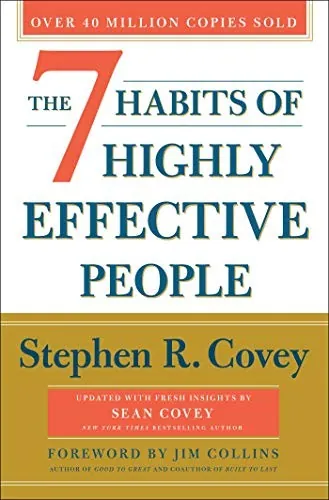
Reading accelerates character work by giving you the framework and the models. Aristotle’s Nicomachean Ethics is the foundation: we become what we repeatedly do. The 7 Habits of Highly Effective People by Stephen Covey connects character to daily effectiveness. The Road to Character by David Brooks contrasts resume virtues with eulogy virtues. To Kill a Mockingbird demonstrates integrity in story. And the Stoic tradition - Meditations by Marcus Aurelius, The Daily Stoic by Ryan Holiday - provides the daily practice.
The rule for reading character books is the same as for any practice book: read one, extract one principle, and test it for a month. The books supply the map; the testing is the territory. And because character and courage are so closely linked, our courage reading list is the natural companion - the virtue that activates the others deserves its own study.
Character in the Digital Age
No guide to character written in this century can ignore the environment that most adults now live in, because the digital world is a character testing ground unlike any before it. The screen gives you constant opportunities for the small dishonesties that character is made of - the exaggerated online persona, the anonymous cruelty, the outrage performed for an audience, the hours stolen from the people in the room. It also gives you new forms of the old virtues: the courage to be honest online, the patience to verify before sharing, the integrity to be the same person in public and in private.
The key insight is the one that runs through all character work: environment shapes character. The person who spends their days in environments that reward deception - or that make dishonesty frictionless - is building a different character from the person who designs their digital life to reward honesty, patience and care. The design choices are character choices: the apps you allow to interrupt, the accounts you follow, the way you use the hour before bed.
This is not a moral panic about technology; it is an honest acknowledgment that character is built in context, and the digital context is now a large part of every adult’s life. The question is the same as it has always been: what kind of person are you becoming, one choice at a time? The only difference is that the choices now include the ones you make with a device in your hand.
A Practice for Building Character
If this guide has a practical core, it is this. First, choose one virtue to work on - honesty, patience, responsibility or courage - and write down why it matters to you. The reason is the fuel; without it, the practice will not survive a hard week. Second, identify the specific situations in your daily life where that virtue is tested: the report you file, the conversation you avoid, the promise you are tempted to drop. The situations are where the practice happens; the virtue is built in them, not in the abstract. Third, look for the small version of the right action and take it deliberately - the honest sentence, the patient response, the kept promise. Small done beats large planned. Fourth, keep a simple log of the attempts: what you did, what happened, what you will do differently. The log is the feedback loop that turns intention into character, because what gets reviewed tends to improve. Finally, repair when you fail - and you will fail. The apology, the amends, the fresh start: repair is not the exception to character work; it is a core part of it, and the family that practices it teaches the deepest lesson of all.
Conclusion
Character is not a mysterious gift given to the few. It is a set of moral qualities - integrity, honesty, courage, patience, responsibility, kindness - built by practice, in the unobserved moments of ordinary life. It is built by attention, choice and repetition; supported by environment; deepened by failure and repair; and aimed outward through responsibility.
Start with one virtue. Look for the small daily moments where it is available - the honest answer, the kept promise, the patient response - and practice it until it becomes the default. Add the books that give you the framework, and the relationships that hold you accountable. And remember that character is not a destination but a direction: you are always becoming, and the becoming is the point. The person you are practicing to be is built one choice at a time, and the next choice is always available.
Frequently Asked Questions
What exactly is character?
Is character fixed or can it change?
What is the first step to building character?
How long does it take to develop character?
What is the difference between integrity and honesty?
Can you build character alone?
Featured Recommendations




Raining Book Editorial Team
The Raining Book editorial team curates the best book recommendations and reading guides for every type of reader.