Best Books About Resilience by Angela Duckworth

There is a researcher who gave the world a word for the quality that predicts success better than talent, and the word is grit. Angela Duckworth’s book Grit - the fruit of her research into the psychology of achievement - argues that passion and perseverance, sustained over years, matter more than raw ability, and that the capacity can be grown. It is one of the most influential resilience books of its generation.
This guide collects the books that belong on the Duckworth shelf: the essential title by Duckworth herself, the books that share her scientific approach to perseverance, and the deeper works that extend her ideas into patience and forgiveness. Whether you are new to her thinking or returning to it, the reading path below will take you from the research to the capacity.
What Duckworth Is Really Teaching
Before the recommendations, it is worth being precise about what Duckworth actually argues, because the popular version of grit can flatten it. Duckworth’s central finding is that the people who achieve extraordinary things are not necessarily the most talented; they are the ones with grit - the combination of passion and perseverance, the sustained interest in a long-term goal and the determination to keep working toward it through setbacks. Her research across West Point cadets, spelling bee finalists and other high achievers showed the same pattern: grit predicted success where talent did not.
That is why the book has lasted. Duckworth is not selling hustle; she is reporting a finding, and the finding is liberating: talent is not the ceiling it appears to be, and the capacity to persist is more within our control. The reader finishes the book with both the evidence and the method - and the method, the deliberate cultivation of passion and perseverance, is the resilience in its most practical form.
The Essential Angela Duckworth
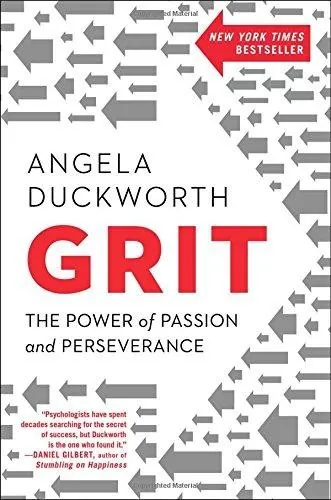
Grit by Angela Duckworth
This is the book that made Duckworth’s name, and it remains the essential title on this shelf. Grit presents the research on passion and perseverance - the studies of cadets, athletes, competitors and artists - and the practical account of how grit is grown: through the four assets of interest, practice, purpose and hope. It is the definitive account of the quality, written for a general audience.
The book’s greatest strength is its combination of rigor and warmth. Duckworth writes as both a researcher and a mother, and the reader finishes with both the evidence and the encouragement. It is the rare research book that reads like a conversation with someone who wants you to succeed.
Content notes: A research-based book, accessible and encouraging, suitable for a wide range of readers.
Duckworth’s Idea of the Hard Thing Rule
One of the most practical - and most quoted - parts of Grit is the hard thing rule, and it is worth dwelling on because it is the daily form of the whole theory. The rule, which Duckworth practices in her own family, has three parts: everyone must choose a hard thing - something that requires deliberate practice; no one can quit mid-season or mid-semester - the commitment must be honored; and the child (or the adult) chooses the hard thing themselves, so that the passion is their own. The rule is the grit training in miniature: the sustained commitment, chosen freely, honored through the difficult middle.
That is why the rule travels so well beyond families. The adult version is the same structure: choose a hard thing that matters to you, commit to it for a defined period, and do not let the quitting happen at the low point. The rule converts the abstract quality - grit - into a concrete practice, and the practice is the training. The reader who applies even the structure of the rule finds that the perseverance is built by the keeping of the commitment, exactly as the research predicts.
The Books That Share Her Approach
Mindset by Carol S. Dweck
For readers who want the belief system underneath the behavior, Mindset is the essential book. Dweck’s research on the growth mindset - the belief that abilities can be developed - is the foundation that grit stands on: the person who believes they can grow is the person who keeps going. Duckworth herself credits Dweck’s work as central to her own.
The two books read beautifully together. Dweck explains why some people persist; Duckworth explains what persistence looks like over time. Readers who want both the belief and the behavior will find the pair indispensable.
Content notes: A research-based psychology book, accessible and suitable for a wide range of readers.
The Obstacle Is the Way by Ryan Holiday
For readers who want the resilience in its philosophical form, The Obstacle Is the Way is the essential book. Holiday’s modern restatement of Stoicism - the discipline of turning obstacles into advantages - is the ancient version of grit, and it is the book for readers who want the quality with a philosophical foundation.
The book complements Duckworth perfectly: Duckworth gives you the science of persistence; Holiday gives you the discipline of meeting the obstacle. Together they cover the research and the practice.
Content notes: Accessible philosophy with vivid historical examples, suitable for a wide range of readers.
Atomic Habits by James Clear
For readers who want the machinery of persistence, Atomic Habits is the essential book. Clear’s argument - that small changes compound, and that the system matters more than the goal - is the practical mechanism that grit runs on: the daily acts, sustained, are the perseverance. It is the book for readers who want to know how the keeping is actually done.
The two books work beautifully together. Duckworth tells you why to persist; Clear tells you how. Together they cover the motivation and the machinery.
Content notes: Practical and accessible, suitable for a wide range of readers.
The Deeper Shelf: Grit and Patience
There is a point where the grit books meet the patience shelf, and Duckworth is the hinge. Grit is, at its core, patience with a purpose - the capacity to sustain the effort through the long middle, through the plateaus and the setbacks, when the results do not show. The books below explore that connection.
Grit and the Long Middle
One of the most important things Duckworth teaches is that grit is not about the sprint but about the long middle - the years between the beginning and the payoff, when the effort seems to produce nothing and the quitting is most tempting. Her research shows that this is exactly where most people quit, and that the ones who do not quit are the ones who reach the outcomes that talent alone cannot produce. The plateau is the test, and the test is the training: every day kept through the plateau is a day of grit built.
That is why the grit and the patience are inseparable. The perseverance is the courage; the sustaining through the plateau is the patience; and the two together are the capacity that her whole shelf describes. The reader who wants to build the grit will find the building in the long middle - the commitment kept, the practice continued, the quitting refused. The grit is the long result of the patient keeping, and the patient keeping is the practice.
The Four Assets of Grit
One of the most practical parts of Grit - and the part that makes it a manual rather than merely a study - is Duckworth’s account of the four assets that grit is built from, and it is worth naming them because they give the reader a map of the territory. The first is interest: the passion must be real, discovered and developed rather than imposed. The second is practice: the deliberate, focused repetition that turns the interest into skill - the hard practice, done with full attention, aimed at the edge of ability. The third is purpose: the conviction that the work matters, that it connects to something beyond the self. And the fourth is hope: the expectation that the effort will pay - the belief, sustained through the setbacks, that the future can be better and that your actions can make it so.
That is why the four assets matter: they tell the reader where the grit is weak and what to build. The person who has the interest but not the purpose will quit when the work feels meaningless; the person with the purpose but not the practice will never develop the skill; the person with everything but the hope will give up at the first setback. The assets are not separate qualities but the components of one capacity, and the strengthening of any one of them strengthens the whole.
There is also a specific encouragement in this framework. The four assets are not fixed; they can be developed - the interest deepened, the practice sharpened, the purpose clarified, the hope cultivated. Duckworth’s whole argument is that grit is not a gift but a growth, and the four assets are the places where the growth happens. The reader who identifies their weak asset and works on it is practicing the growth that the whole book describes, and the growth is the resilience.
How to Build Your Reading Path
There is no wrong order on this shelf, but there is a sensible one. Start with Grit for the research. Add Mindset for the belief system, and The Obstacle Is the Way for the philosophy. Add Atomic Habits when you want the machinery of the daily acts. End with the patience shelf that the long middle requires.
The path moves from the research to the practice, and that is the right direction. Our thoughtful guide to patience gathers the wider shelf these titles belong to, and it is the natural next stop after you have worked through this one.
The Forgiveness Shelf
There is a quiet but important connection between the resilience shelf and the forgiveness shelf, and it runs through the hardest part of the long middle: the failure that must be released. Duckworth’s research shows that the gritty are not the ones who never fail; they are the ones who fail and return - and the returning requires the capacity to let the failure be past, to forgive the self the setback, and to resume the work without the weight of the mistake. The forgiveness is not the opposite of the grit; it is the condition of it. The person who cannot release the failure cannot persist through it, and the person who can is the person the whole shelf is about.
The Forgiveness Shelf
There is a quiet but important connection between the resilience shelf and the forgiveness shelf, and it is worth making explicit. The perseverance that grit describes is sustained through failures, setbacks and disappointments - and the capacity to keep going after a failure requires the capacity to release the failure: to forgive yourself, to let the setback be past, to return to the work without the weight of the mistake. The resilience that keeps going and the forgiveness that lets go are the same capacity, exercised on different objects. The person who can persist is the person who has learned to forgive the past its hold.
Our thoughtful guide to forgiveness collects the titles that explore that territory most deeply. Read them alongside the Duckworth shelf and you get the complete picture: the grit to keep going, and the forgiveness that makes the going possible. Together they form part of the growth section of our library, where the whole shelf of perseverance and release is gathered.
Conclusion
Angela Duckworth’s contribution to resilience is a finding and a word: grit - the passion and perseverance that predict achievement more reliably than talent, and that can be grown. Her books have helped millions of readers understand that the capacity to persist is within their control, and they have given them the method to build it. The books on this shelf take you from the research to the capacity, and from the grit to the patience and forgiveness it requires.
Start with Grit, work outward through the belief systems and the machinery, and end with the patience and forgiveness that the long middle requires. The passion is the direction; the perseverance is the engine; and the grit, as Duckworth has shown, is the difference.
Frequently Asked Questions
What is the best book by Angela Duckworth for resilience?
What is the main idea of Grit?
What is grit made of?
Is grit something you are born with?
What other books are like Grit?
Is Grit based on research?
Featured Recommendations


Raining Book Editorial Team
The Raining Book editorial team curates the best book recommendations and reading guides for every type of reader.