Best Patience to Read
Patience has a public relations problem. In a culture built on speed - same-day delivery, instant messaging, endless feeds - patience sounds like a passive virtue, something for the slow and the resigned. Nothing could be further from the truth. Patience is not passivity; it is active endurance. It is the capacity to wait well, to persist when results are slow, and to keep your response under control when everything in you wants to react. It is one of the most demanding skills there is, and it is trainable.
This guide collects the best patience books to read: the philosophical foundations, the modern psychology, and the practical manuals that actually build the capacity to wait, persist and respond calmly.
What Patience Actually Is
Start with a definition that survives contact with real life. Patience is the capacity to wait, persist and respond calmly when things take longer than you would like - or when they go differently than you planned. Three elements matter. First, there is a gap between expectation and reality: the project takes longer, the child is slower, the healing takes more time. Second, there is discomfort - the gap feels bad, and the impulse is to escape it, speed it up or blame someone. Third, there is a choice: to endure the gap with your response under control, or to react.
This definition separates patience from its counterfeits. Patience is not passivity - the passive person has given up; the patient person is actively holding the course. Patience is not suppression - the patient person has not buried their frustration; they have chosen a response to it. And patience is not slowness for its own sake - it is the right pace for the thing being done, which is often faster than the impatient alternative, because the impatient version usually has to be redone.
Modern psychology supports this view. Research on self-regulation and delayed gratification consistently finds that the capacity to wait and persist predicts better outcomes across life - in health, relationships, work and education. The famous marshmallow studies showed that children who could wait did better later on a range of measures, and the follow-up research showed that the capacity to wait is itself trainable. Patience is not a fixed trait; it is a skill, and skills can be built.
The Philosophical Foundations
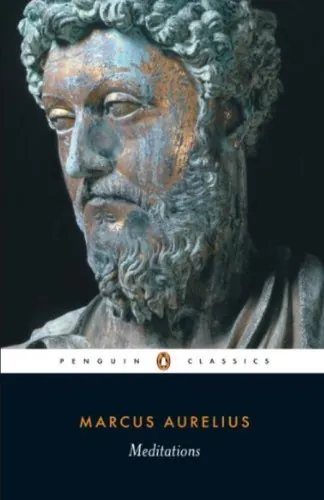
Meditations by Marcus Aurelius
Written as a private notebook by a Roman emperor, Meditations is the most direct book on patience ever written - not because Marcus theorizes about it, but because the book is a record of a man practicing it daily. He writes about enduring difficulty, about responding rather than reacting, about the gap between what happens and how he responds - and about closing that gap.
The Stoic framework is simple and rigorous: you control your judgments and responses, not the world. Patience is the discipline of the response - the willingness to let the world be what it is while keeping your own conduct right. The book has no system, which is its power; it is the daily practice of a person strengthening his own patience.
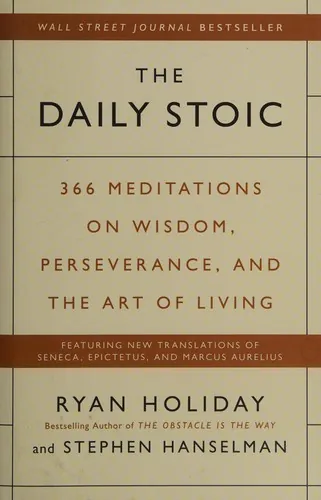
The Daily Stoic by Ryan Holiday and Stephen Hanselman
For readers who want the Stoic tradition in a structured form, The Daily Stoic offers 366 readings - one for each day of the year - drawn from Marcus Aurelius, Seneca and Epictetus, with brief modern commentary. The readings on patience are among the best in the book, and the daily format makes it a patience practice in itself: you are building the habit of daily reflection, which is patience on the small scale.
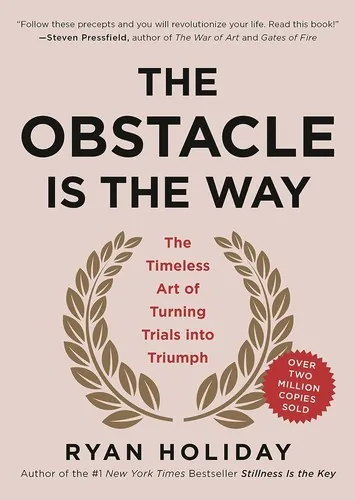
Holiday’s other books apply the same tradition to modern life. The Obstacle Is the Way is about turning difficulty into opportunity; Stillness Is the Key is about the inner calm that patience depends on. For the Stoic view of patience specifically, these are the most accessible entry points.
The Modern Science
The Marshmallow Test by Walter Mischel
Mischel ran the famous studies in which children chose between one marshmallow now or two later, and he spent decades tracking what self-control predicts. The book is not what you might expect: it is not a celebration of willpower but an investigation of how self-control works and how it can be taught - through distraction, reframing and the strategies that make waiting possible.
Its most useful lesson for adults is that patience is strategic, not heroic. The children who resisted were not stronger; they were better at not looking at the marshmallow. The adult translation is environmental: if you want to be more patient, change what you look at, what you expect, and how you frame the wait. Patience is built with architecture, not grit.
Grit by Angela Duckworth
Duckworth’s research on grit - passion and perseverance for long-term goals - is patience on the longest timeline. Her finding, replicated across contexts, is that sustained effort predicts achievement at least as well as talent. Grit is the patience to keep going when the finish line is far and the reward is delayed.
The book explains how grit develops - through interest, practice, purpose and hope - which makes it a practical manual for the slow, unglamorous patience of long-term projects. It pairs with the Stoic books the way the science pairs with the philosophy: the Stoics describe the attitude; Duckworth shows the research.
Patience in Practice
The Power of Patience by M. J. Ryan
A practical, readable guide specifically on patience, this book treats patience as a learnable skill and offers concrete practices for building it - managing expectations, reframing waits, choosing responses, and understanding the emotional triggers that make patience hard. It is not deep philosophy; it is the practical manual, and it is honest about how difficult the practice is.
The book is especially useful for the everyday patience tests: the slow checkout line, the delayed train, the child who will not hurry, the colleague who misses the deadline. It takes the abstract virtue and makes it concrete, which is exactly what most readers need.
The Power of Now by Eckhart Tolle
Tolle’s book is about presence - the capacity to be fully in the current moment rather than projected into the future or trapped in the past. Its relevance to patience is direct: most impatience is a flight from the present - the mind refusing to accept that the wait is happening now, and the discomfort of that refusal.
The book is polarizing - some readers find it transformative, others find its style repetitive - but its central practice, returning attention to the present moment, is exactly the practice that patience requires. Impatience dissolves when you stop fighting the present and attend to it. For readers who connect with its approach, it is the deepest patience manual there is.
Choosing Where to Start
The best patience book for you depends on where you are. If you want the daily practice: The Daily Stoic. If you want the philosophical foundation: Meditations. If you want the science of self-control: The Marshmallow Test. If you want patience on the longest timeline: Grit. If you want the practical manual: The Power of Patience. If you want the inner work of presence: The Power of Now.
There is no wrong starting point, but there is a wrong way to read these books: as theory to agree with rather than practice to attempt. Patience is built by practice - by choosing calm responses, managing expectations and building the habits that reduce urgency. Read one, extract one practice, and test it in your life for a month. Our thoughtful guide to patience walks through how the practice works in daily life.
The Connection to Gratitude and Parenting
Patience does not exist in isolation, and the reading lists around it reveal its connections. Patience and gratitude are closely linked: the grateful person is more patient because they are attending to what is already good rather than what is missing. Our gratitude reading list collects the strongest titles on that virtue, and the two belong together - gratitude is the attitude that makes patience feel less like endurance and more like appreciation.
Patience is also the central virtue of parenting, which is why the parents-and-children books belong on the same shelf. Raising children is a decade-long exercise in patience: the toddler who will not hurry, the teenager who will not talk, the growth that takes years to appear. The parent who reads about patience is not studying theory; they are studying the job description. Our parents-and-children reading list explores how this virtue plays out in the closest relationships of your life.
A Realistic Reading Plan
Patience is built, not absorbed, and a realistic plan respects that. Choose one book from this list and read it slowly - the Stoics especially reward daily doses rather than weekend marathons. Extract one patience practice from each chapter: the pause before responding, the expectation adjusted, the reframe of the wait.
Then find the small patience tests in your own life - the slow line, the delayed project, the difficult conversation - and practice the pause deliberately. Keep a simple log: what tested my patience, how I responded, what I would do differently. The log is the feedback loop that turns reading into patience. And expect the process to be gradual: patience compounds the way habits do, and the person who practices small acts of calm for years is the person who is calm when it counts.
Common Mistakes When Reading Patience Books
A list of the best books should also include a warning about the ways readers routinely misuse them, because the patience genre has a specific hazard: it is easy to read about calm and feel calm, without becoming calmer. The first mistake is reading for agreement instead of practice. You finish the chapter on the pause and agree with every word - and then nothing changes, because agreement is not practice. The fix is to extract one practice from each chapter and test it in your life for a week before moving on.
The second mistake is treating patience as suppression. Some readers conclude that being patient means never showing frustration, and they respond by burying their feelings - which does not build patience; it builds pressure, and the pressure eventually leaks out sideways. The correction is that patience is not the absence of frustration; it is the chosen response to it. The patient person notices the frustration and decides how to act, rather than being driven by it.
The third mistake is confusing patience with passivity. This misreading tells you that being patient means accepting everything, never pushing, never setting a boundary - which is not patience but resignation. Patience is active: you work on the right timeline while keeping your response under control. The patient person is not doing nothing; they are doing the right thing at the right pace.
The fourth mistake is reading the patience books as a replacement for the discipline books. Patience and self-discipline are the same capacity seen from different angles - the capacity to act rightly when it is hard - and the reader who skips one side is reading about one muscle while neglecting the rest of the body.
The Patience and Self-Discipline Connection
It is worth noting one more connection, because it changes how you read the whole genre: patience and self-discipline are the same capacity seen from different angles. Self-discipline is the capacity to act rightly when it is hard; patience is that capacity stretched over time - the willingness to persist when the reward is delayed, to endure the long middle, to keep the response under control while the world takes its time. The reader who studies patience and discipline together gets a complete picture of the capacity, and the practice of one strengthens the other. The disciplined person is patient with the process; the patient person is disciplined about the pace. The two reading lists belong together, and the best readers alternate between them.
Conclusion
The best patience books to read are the ones that treat patience as what it is: a demanding, trainable skill - the capacity to wait, persist and respond calmly when things take longer than you would like. Marcus Aurelius supplies the daily practice. The Daily Stoic makes it accessible. The Marshmallow Test supplies the science. Grit supplies the long-term view. The Power of Patience supplies the manual. The Power of Now supplies the inner work.
Read them slowly, extract one practice at a time, and test it in your life. Patience is not passivity and not suppression; it is active endurance with the response under control, and it is available to everyone - one pause, one calm response, one well-held wait at a time.
Frequently Asked Questions
What is the best book on patience for beginners?
What is patience, exactly?
Can patience be learned?
What is the difference between patience and passivity?
Do patience books overlap with mindfulness books?
Why does patience matter for relationships?
Featured Recommendations

Raining Book Editorial Team
The Raining Book editorial team curates the best book recommendations and reading guides for every type of reader.