Best Self-Discipline to Read

Self-discipline has a public relations problem. In one corner, it is sold as a kind of superpower - the ability to do what needs doing, coldly and forever, possessed by a fortunate few. In the other corner, it is dismissed as a myth, with research cited to prove that willpower is a limited resource that runs out by evening. Both pictures are wrong, and the books worth reading occupy the messy middle: self-discipline is a skill, built with the right mechanisms, that most people dramatically underestimate their ability to develop.
This guide collects the best self-discipline books to read - practical systems, psychological research and Stoic philosophy - and notes honestly which approach fits which reader.
What Self-Discipline Actually Is
Before the books, the definition. Self-discipline is the ability to act in line with your intentions when you do not feel like it. It is not the absence of desire or difficulty; it is the presence of a reliable response to them. A disciplined person is not someone who never wants to quit; they are someone who has built systems and habits that carry them through the wanting-to-quit moments.
The research supports a surprisingly practical view. Psychologists studying self-regulation find that people with high self-control are not constantly resisting temptation - they are better at avoiding it, arranging their environments and building habits so that less self-control is needed in the moment. The disciplined life is less about heroic willpower and more about good architecture. The best books on discipline all converge on this insight, which is why they are more useful than the motivational genre they are often shelved with.
The Practical Systems
Atomic Habits by James Clear
If you read one book on self-discipline, make it this one. Clear’s argument is that you do not rise to the level of your goals; you fall to the level of your systems. His four laws of behavior change - make it obvious, attractive, easy and satisfying - are a complete toolkit for building the habits that discipline is made of.
The book is especially good at the unglamorous mechanics: habit stacking, environment design, the two-minute rule, and the crucial insight that you should never miss twice. Missing once is an accident; missing twice is the start of a new habit. For anyone who has ever started strong and faded, this single chapter is worth the price of the book.
The Power of Habit by Charles Duhigg
Where Clear gives you the system, Duhigg gives you the science and the stories. His habit loop - cue, routine, reward - explains why habits exist and how they can be rewired, through reporting on everything from a man rebuilding his life after brain injury to how companies change their cultures.
The two books are best read as a pair: Duhigg for the why, Clear for the how. If you are a reader who needs to understand something before doing it, start with Duhigg. If you are a doer who needs instructions, start with Clear.
The Research Behind Discipline
The Marshmallow Test by Walter Mischel
Mischel ran the famous studies in which children chose between one marshmallow now or two later, and he spent decades tracking what self-control predicts. The book is not what you expect: it is not a celebration of willpower but an investigation of how self-control works and how it can be taught - through distraction, reframing and executive function training.
Its most useful lesson for adults is that self-control is strategic, not heroic. The children who resisted were not stronger; they were better at not looking at the marshmallow. The adult translation is environmental: if you want to control a behavior, change what you look at, where you sit, and what is within reach. Our guide to self-discipline develops this practical side in more depth.
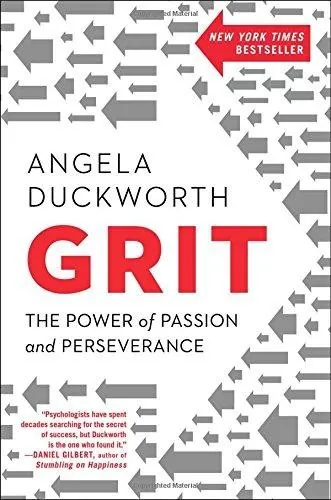
Grit by Angela Duckworth
Duckworth, a psychologist, argues that passion and perseverance - grit - predict achievement at least as well as talent. Her research on West Point cadets, spelling bee champions and teachers shows that sustained effort toward long-term goals matters more than raw ability.
Grit is often misread as a call to grind, but Duckworth’s actual message is more nuanced: grit grows through interest, practice, purpose and hope, and it is built from the bottom up. It is the research companion to the discipline books, explaining why some people keep going when others quit, and how that keep-going is itself trainable.
The Stoic Tradition
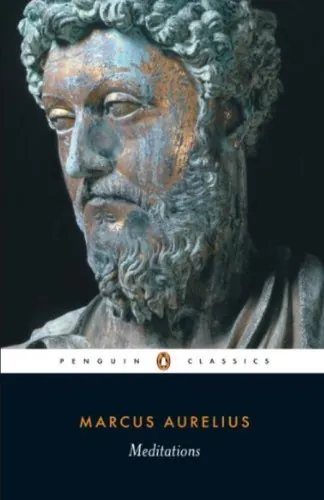
Meditations by Marcus Aurelius
Written as a private notebook by a Roman emperor, Meditations is the most direct book on self-command ever written. Marcus is not performing wisdom; he is talking to himself about the gap between his intentions and his conduct - about anger, duty, the opinions of others and the discipline of the inner life.
The book has no system, which is part of its power. It is a record of a person actively practicing self-discipline, and reading it feels like watching the practice rather than the advertisement. For readers who find modern self-help too polished, Marcus is a bracing alternative: no promises, no jargon, just a man reminding himself to be better today.
The Daily Stoic by Ryan Holiday and Stephen Hanselman
For readers who want the Stoic tradition in a more structured form, The Daily Stoic offers 366 readings - one for each day of the year - drawn from Marcus Aurelius, Seneca and Epictetus, each with a brief modern commentary. It is designed to be read in small doses, which makes it one of the few discipline books that is itself a daily practice.
The Stoic core is simple and rigorous: you control your judgments and actions, not the world; discipline is the alignment of action with judgment; and the obstacle is often the way. Holiday’s other books, especially The Obstacle Is the Way, translate these ideas into modern life with concrete examples.
Books to Be Wary Of
A list of the best books should also include a warning about the genre’s weaker offerings, because the discipline shelf is full of books that look like they belong here and do not. Be wary of books that promise discipline without mechanism - titles that spend three hundred pages on motivation and never tell you what to do on Tuesday. If a book cannot produce a single concrete practice you could start tomorrow, it is entertainment wearing the costume of advice.
Be wary also of books built on shame. Some discipline books operate by convincing you that you are weak, lazy and undisciplined, and then sell you the fix. The problem is not that their diagnosis is always wrong; it is that shame is a poor long-term motivator, and a book that makes you feel bad about yourself while reading it is training you to associate growth with self-punishment. The research and the Stoic tradition agree on the opposite: durable discipline comes from clarity, routine and self-respect.
Be wary of the absolutists - the ones who insist there is one true method, one schedule, one definition of success. Discipline is a skill with many valid architectures, and the method that works for a morning person with a home office will not fit a night owl who commutes. A book that allows no adaptation is a book that will be abandoned.
Finally, be wary of reading lists that never end. The point of these books is application, not accumulation. If you have read five discipline books and changed nothing, the problem is not the books; it is the reading itself. The genre’s most honest advice is the least commercial: read fewer of these books, and apply more of what you read.
Choosing Your Starting Point
The best self-discipline book for you depends on how you learn and where you are stuck.
If you want a complete, practical system you can start using tonight: Atomic Habits. If you need to understand the science before you trust the method: The Power of Habit or The Marshmallow Test. If you want to understand why some people persist for decades: Grit. If you are tired of modern self-help and want the original source: Meditations. If you want the original source made daily and accessible: The Daily Stoic.
There is no wrong starting point among these, but there is a wrong way to use them: reading about discipline while doing nothing. Every one of these books contains a mechanism you can test this week. The test is what teaches you, not the reading. For a structured walk through building reliable self-control, our thoughtful guide to self-discipline is the practical companion.
The Character Connection
There is a deeper reason to read about discipline, and it is easy to miss when the books are shelved under productivity. Self-discipline is a character trait, not just a performance tool. The Stoics knew this; so do the researchers. When you keep a commitment to yourself, you are not just completing a task - you are becoming the kind of person who keeps commitments. That identity compounds, and it is the foundation of integrity and moral character more broadly. That is why the best character books and the best discipline books turn out to be about the same thing from different angles. And discipline also raises the deeper questions - what to do with a life you can now control, which is where moral reflection begins. Our list of the best moral dilemmas books picks up that thread.
A Realistic Reading Plan
Discipline is built, not read about. A realistic plan uses these books as inputs to a practice: choose one book, read one chapter a day, extract one idea, and test it for thirty days while keeping a weekly review. Then choose the next book and repeat.
Expect the timeline to be longer than the marketing suggests. Meaningful change in a single habit takes about two to three months of consistent practice, and character change takes longer still. The books are not a shortcut; they are a map. The walking is yours, and it happens on ordinary days, in the moments when you would rather not.
A Combined Reading Order
Because the books approach discipline from different angles, a combined reading order is more effective than picking at random. Start with Atomic Habits, because it gives you the system - the four laws of behavior change, habit stacking, environment design - that you can begin testing the same day. Read it slowly, one chapter at a time, and apply each law before moving on. This is the book that makes the others useful, because it gives you the mechanism to test whatever you learn.
Second, read The Power of Habit or The Marshmallow Test for the science. You do not need both back to back; choose based on appetite for research. Duhigg tells stories around the research; Mischel is closer to the studies themselves. The purpose of this second book is not more tools but more trust - understanding why the tools work makes you more likely to keep using them when motivation fades.
Third, add Grit for the long view. Duckworth explains why some people persist for years while others burn out in weeks, and her distinction between effort and talent reframes how you interpret your own setbacks. Read this one when you are mid-project and wondering whether to continue; it is the book that answers “why keep going?”
Fourth, move to the Stoics. Meditations is best read slowly and repeatedly - a page or two a day, the way it was written - rather than in one sitting. The Daily Stoic is the structured alternative if you want a daily practice built in. The Stoic layer adds the philosophical foundation: discipline as a way of life rather than a technique, connected to character and to the distinction between what you control and what you do not.
Finally, return to Atomic Habits. The best readers reread the system book annually, because it reads differently at different stages. The first read teaches you to build habits; the second read teaches you to keep them; the third read shows you how the system has quietly become who you are. A reading plan like this - one book at a time, each applied before the next - is itself a discipline practice, and it models exactly what the books teach.
Conclusion
The best self-discipline books to read are the ones that replace inspiration with mechanism. Atomic Habits gives you the system; The Power of Habit and The Marshmallow Test give you the science; Grit explains persistence; Meditations and The Daily Stoic give you the philosophical foundation that makes discipline a way of life rather than a technique.
Read one at a time. Apply one idea for a month. Keep a weekly review. And remember the insight that runs through all of them: discipline is less about fighting yourself and more about arranging your life so the right choice is the easy choice. The books will show you how. The rest is practice, and practice is exactly what self-discipline is.
Frequently Asked Questions
What is the best self-discipline book for beginners?
Do self-discipline books actually work?
What is the difference between habits and self-discipline?
Which Stoic book is best for discipline?
Can self-discipline be learned as an adult?
How long does it take to build self-discipline?
Featured Recommendations

Raining Book Editorial Team
The Raining Book editorial team curates the best book recommendations and reading guides for every type of reader.