Self-Discipline: Themes, Values and Reading Notes

Read enough books about self-discipline and a strange thing happens: the same ideas keep surfacing under different titles. The covers promise novelty, but underneath, the genre is remarkably consistent. It has a small set of core themes, a stable set of values, and a handful of mechanisms that the research keeps confirming. Naming those patterns is not an academic exercise. It is the difference between collecting discipline books and building discipline.
This guide maps the themes and values that run through the best self-discipline books, and offers reading notes on how to turn them into behavior rather than intention.
The Core Themes of Self-Discipline Books
1. Habit Architecture
The dominant theme in modern discipline books is that self-discipline is built from habits - automatic behaviors cued by context, carried by routines, sustained by environment. The claim is not that willpower is useless; it is that willpower is expensive and habits are cheap. The disciplined life is one where the important behaviors have been automated so that they do not depend on mood, motivation or moral fiber.
Atomic Habits by James Clear is the fullest expression: make it obvious, attractive, easy, satisfying - and invert the laws to break bad habits. The Power of Habit by Charles Duhigg supplies the underlying science of the habit loop. What both books share is a quiet revolution in how discipline is understood: not as inner strength but as outer architecture.
2. Environment Design
A close cousin of habit architecture, environment design is the theme that says: stop fighting your environment and start using it. The research is consistent - people with high self-control are not better at resisting temptation; they are better at avoiding it. The phone in another room, the book on the pillow, the gym bag by the door: these are discipline moves, and they cost no willpower at all.
This theme is the most underrated in the genre because it is the least dramatic. No one writes a memoir about putting the cookies in the back of the cupboard. But environment design is where the research and the practice converge most strongly, and it is the first place to look when discipline fails.
3. Identity Change
The identity theme argues that the deepest discipline is not behavioral but existential: you keep habits because you are the kind of person who keeps them. James Clear’s formulation - every action is a vote for the kind of person you wish to become - captures it. The identity shift is not a technique layered on top of habits; it is the mechanism by which habits become permanent.
This theme explains why streaks and resolutions fail. A resolution is a promise to a future self; an identity is a claim about who you already are. The disciplined person is not someone who is always resisting; they are someone for whom the disciplined action is simply what they do.
4. Willpower Management
The willpower theme treats self-control as a finite resource to be managed rather than a muscle to be flexed. It appears in its strongest form in research-based books like The Marshmallow Test by Walter Mischel, which shows that self-control is strategic - the children who resisted were better at distraction and reframing, not stronger.
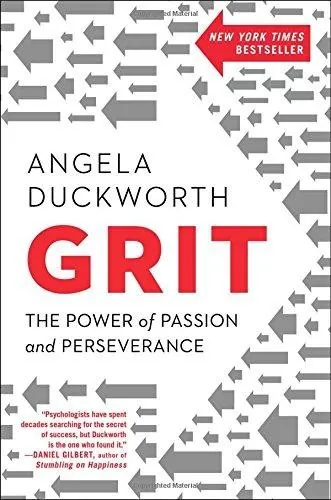
The practical translation for adults: do the hard things when your resources are full, protect your sleep, reduce decisions, and stop negotiating with yourself at the moment of temptation. Willpower management is the theme that keeps the other themes honest - it is why environment design matters, why habits matter, why discipline cannot be sheer grit.
5. Discipline and Character
The oldest theme, and the one the modern genre keeps rediscovering. Discipline is not just a productivity tool; it is the workshop where character is built. The Stoics made this the center of their philosophy - Marcus Aurelius’s Meditations is a notebook of a man auditing his own self-command. The 7 Habits of Highly Effective People by Stephen Covey modernized it: effectiveness grows outward from inner integrity.
This theme connects discipline to the virtues - honesty, patience, courage, reliability - and explains why the best character books and the best discipline books keep converging on the same ground. Discipline is not what you do to get more done; it is what you become.
The Values at the Heart of Discipline
Strip the themes down and a stable set of values remains. Responsibility is the first: the claim, shared by the Stoics and the modern researchers, that you are responsible for your responses even when you are not responsible for your circumstances. It is the philosophical foundation of every discipline book.
Reliability follows - the value of being someone whose word means something, to themselves and to others. Perseverance is the value that carries discipline through the long middle, where motivation has faded and results have not yet arrived. Honesty is the discipline of accurate self-perception: seeing your patterns, admitting your limits, refusing the comfortable lie. And patience is the discipline of the timeline - accepting that change takes months and years, not weekends.
These values explain why discipline books are read by people seeking more than productivity. The surface promise is efficiency; the deeper offer is trustworthiness. A person who can rely on themselves is a different kind of person - which is why the best self-discipline reading lists and the best character reading lists keep overlapping.
Reading Notes: How to Read Discipline Books
The discipline genre has a special hazard: reading about discipline feels like progress, but it is not. The following reading notes system is designed to convert reading into practice.
First, read one chapter at a time and extract one mechanism. Not the inspiring story, not the clever quote - the mechanism. The if-then plan. The two-minute rule. The habit stack. Write it as a command to yourself: “After I pour my coffee, I write one paragraph.”
Second, test it immediately. A mechanism you have not tested is a souvenir. Choose the smallest version of the test that counts - one day, one repetition, one environment change. The test teaches you more than the chapter did.
Third, keep a discipline log. One line per day: what you committed to, whether you did it, what you noticed. The log is the feedback loop that turns repetition into growth. It also has a second effect: it makes you honest with yourself, which is the value underneath all the mechanisms.
Fourth, review monthly and reread annually. Discipline books reward rereading because they are read differently at different stages. The book that was about getting started is, a year later, about not stopping. Our reading notes on character themes use the same method for the virtues, because the two genres are really one conversation.
Choosing Books by Theme
Knowing the themes makes book selection deliberate. If you are always starting and never finishing, you need habit architecture - start with Atomic Habits. If you know the habits but cannot keep them, you need environment design - re-read the environment chapters and actually move the phone. If you keep your habits but feel hollow, you need the character theme - start with Meditations. If you are burned out from gritting through, you need willpower management - start with The Marshmallow Test.
The best self-discipline reading list collects the strongest titles on these themes so you can go deep in one direction. And because the themes interconnect - environment supports habits, habits build identity, identity grows into character - you will find yourself returning to themes you thought you had finished. That is not repetition; it is the spiral of actual growth.
The Positive Dimension
There is one more theme worth naming, because it is easy to miss in a genre that spends so much time on resistance: discipline is not only about saying no. It is also about saying yes - to the work, the relationship, the practice that matters. The disciplined person is not the one who has eliminated all pleasure; they are the one whose yeses are real because their noes are reliable.
This is the positive message at the heart of the discipline genre: self-command is not self-denial but self-direction. The energy saved by not negotiating with yourself is energy available for the things you love. Our reading notes on positive messages explore this dimension - the discipline that serves joy rather than suppressing it.
How the Themes Connect: A Worked Example
It is one thing to list the themes and another to see them working together, so consider a concrete case: an adult who wants to stop doomscrolling at night. Every theme has a role, and the order matters.
Habit architecture is the starting point. The scroll is a habit with a cue (the phone on the pillow), a routine (the infinite feed) and a reward (novelty, distraction from the day’s worries). The habit book’s answer is to invert the laws: make the cue invisible (phone charging in the kitchen), make the routine unattractive (grayscale screen, blocker installed), make the alternative easy (a book on the pillow).
Environment design carries this further. The phone is not in the room, so the willpower contest never happens. This is the same move repeated across the discipline literature: the person who succeeds is not stronger; they are better positioned. The environment does the work the willpower could not.
Identity change is what makes it stick. The behavior change is the beginning, but the person who keeps it becomes someone who does not scroll at night - and that identity, once formed, protects the habit from the days when the environment is imperfect. Traveling, staying at a relative’s house, the phone unavoidably in the room: the identity carries the behavior when the architecture cannot.
Willpower management explains why the plan has to be designed this way at all. If the person tried to rely on sheer resistance - “I just will not scroll tonight” - they would lose on the tired nights, because willpower is at its lowest exactly when the scroll is most tempting. The plan is built to require no willpower, which is the point.
And the character theme supplies the why. The person is not doing this to be more productive; they are doing it to be more present with their family, more rested, more in command of their own attention. The discipline is in service of a value - presence, integrity, self-respect - which is what makes it durable. A plan built on pure productivity would have collapsed by week three; a plan built on character survives.
One worked example shows the whole architecture: habits carry the behavior, environment removes the fight, identity makes it permanent, willpower management explains why it was designed that way, and character supplies the meaning that keeps it going.
A Sample Reading Note
To make the method concrete, here is what a reading note on Atomic Habits might look like after a chapter on environment design. The note has three parts: the mechanism, the application, and the log entry.
Mechanism: “Environment is the invisible hand that shapes behavior. People with high self-control are not better at resisting temptation; they are better at avoiding it. Redesign the space so the default choice is the right choice.” Application: “My problem is the evening scroll. Concrete move: phone charges in the kitchen, not the bedroom; book goes on the pillow; the reading lamp stays on. If I want to scroll, I have to walk to the kitchen and bring the phone back - the friction is the point.” Log: “Day 1: phone in kitchen, read 12 pages. Day 2: same. Day 3: brought phone to bed out of habit, caught myself, returned it - noticed the pull is strongest when tired.”
The value of writing it this way is visible in the log. The mechanism is abstract until it is applied; the application is generic until it is logged; and the log is where the honest self-knowledge appears - in this case, the discovery that tiredness is the trigger. That single observation, written down, becomes the input for the next round of design: schedule reading earlier, or make the phone’s location depend on something that happens before fatigue sets in.
This is the whole method in miniature: extract the mechanism, apply it to your specific life, log the results, and let the log inform the next iteration. A month of notes like this is worth more than a year of reading without them. The books supply the map; the notes are the territory you are actually walking.
Conclusion
The self-discipline genre, for all its variety, keeps returning to a handful of themes - habit architecture, environment design, identity change, willpower management, and the connection between discipline and character - and to a stable set of values: responsibility, reliability, perseverance, honesty and patience.
The reading notes that matter are the ones that turn these into behavior: one mechanism per chapter, tested immediately, logged daily, reviewed monthly. The books are the map, but the discipline is built in the testing. And the deepest insight of the whole genre is that discipline is not what you do to get more done. It is what you become - a person who can rely on themselves, which is the foundation of every other value this genre, and the character genre beside it, is trying to build.
Frequently Asked Questions
What are the main themes in self-discipline books?
What values do self-discipline books promote?
How do I take notes on a discipline book?
What is the single biggest idea in discipline books?
Why do discipline and character appear together so often?
Which discipline theme should I start with?
Featured Recommendations


Raining Book Editorial Team
The Raining Book editorial team curates the best book recommendations and reading guides for every type of reader.