Best Books About Civilizations by Will Durant

Introduction: The Story of Civilization Itself
Will Durant was the great popularizer of world history - the American philosopher and historian who, with his wife Ariel, wrote The Story of Civilization, the eleven-volume history that remains one of the great achievements of popular scholarship. His essential work is that series, begun in 1935 with Our Oriental Heritage and completed in 1975 with The Age of Napoleon. This guide maps Durant’s books on civilization, the themes that make his writing cohere, and the companions for when you want more.
The Durant Books in Reading Order
Our Oriental Heritage (1935) is the essential Durant on civilization, and the volume where the story begins. It covers the civilizations of the Near East and Asia - Sumer, Egypt, Babylonia, Assyria, Judea, Persia, India, China and Japan - and it sets the pattern for the whole series: the history of a civilization told whole, with its politics, its religion, its art, its philosophy and its daily life. It is the key to everything else he has written.
The Life of Greece (1939) is the essential companion about the classical world: Durant’s history of Greek civilization from its origins to the Roman conquest. It shares the method, with the polis at the center.
Caesar and Christ (1944) is the essential companion about Rome: the history of Roman civilization from the republic to the coming of Christianity. It shares the method, with the empire at the center.
The Renaissance (1953) and The Reformation (1957) are the essential companions about the rebirth: Durant’s histories of the age that remade Europe. They share the method, with the rebirth at the center.
The Age of Reason Begins (1961) through The Age of Napoleon (1975) complete the story into the modern age, the volumes written with Ariel Durant.
Content Notes for Each Book
The Story of Civilization as a whole deals with war, cruelty and the full range of human history - treated with Durant’s philosophical even-handedness rather than sensationalism. The volumes are best for readers from around age sixteen upward.
Our Oriental Heritage deals with the ancient civilizations and their wars and sacrifices; it is best for readers from around age sixteen upward.
The Age of Napoleon deals with the revolutionary wars; it is best for readers from around age sixteen upward.
The Civilization Themes in Durant’s Work
Three themes give Durant’s writing on civilization its distinctive shape.
The whole as the subject is his signature claim. Durant refused the narrow specialism: each of his volumes tells a civilization whole - politics, religion, art, philosophy, daily life - and his conviction is that a civilization cannot be known from one of its parts. The books agree that the whole is the truth.
The story as the method is the second theme. Durant believed that history should be told as a story - readable, vivid, human - and his conviction is that the story is not a compromise with scholarship but its highest form. The books agree that the telling is the keeping.
The lesson as the purpose is the third theme. Durant wrote history to be learned from - his volumes are full of judgments and reflections - and his conviction is that the study of civilization is the school of wisdom. The books agree that the past teaches.
Why Durant’s Civilizations Endure
The Story of Civilization sold millions of copies across its eleven volumes and won the Pulitzer Prize for The Story of Civilization’s tenth volume, Rousseau and Revolution, in 1968 - and its endurance rests on a simple achievement: Durant made the whole of human history readable, a single story told with erudition and love. The series became the shared doorway into world history for generations of readers.
His influence extends beyond the books: the series shaped how popular history is written, and the Durants’ collaboration became a model of the writing partnership. But the books endure because of their conviction: that civilization must be told whole, and that the story is the way to the wisdom.
Companion Books for Every Durant Reader
When you have finished Durant’s own books, these titles extend the same territory.
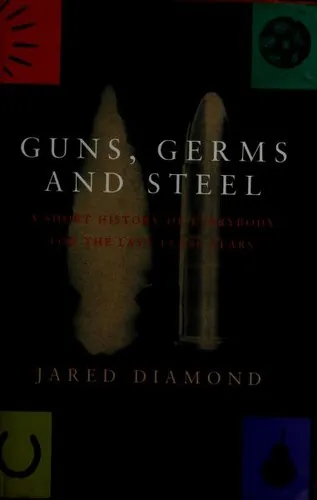
Guns, Germs, and Steel by Jared Diamond (1997) is the essential companion about the causes: the study of why some civilizations rose and others fell. It shares the sweep, with the explanation at the center.
Sapiens: A Brief History of Humankind by Yuval Noah Harari (2011) is the essential companion about the species: the modern big history of humankind. It shares the canvas, with the ideas at the center.
The Lessons of History by Will and Ariel Durant (1968) is the essential companion within their own work: the short distillation of the series’ wisdom, written in a single volume. It is the perfect entry point for readers daunted by the eleven.
For the fuller shelves, our best civilizations and culture list gathers the big-picture books, and our meaningful civilizations list extends the shelf into the deeper readings.
A Reading Plan for Book Clubs
The Story of Civilization generates conversation on every level: the sweep, the judgment, the question of what the whole story actually teaches. The most fertile questions are the ones the series refuses to settle: Can any single story do justice to a civilization? What does Durant’s optimism - his belief in progress - mean for readers who have lived through the twentieth century’s horrors? Is the lesson of history really the lesson Durant drew?
The book also generates the hardest kind of discussion: the question of whether popular history is real history - whether the story is a compromise with the scholarship - and what we owe the past that the story leaves out. Clubs should expect the conversation to range from Sumer to Napoleon, which is exactly the range the Durants intended.
A Note on the Book’s Structure and Editions
The Story of Civilization is eleven volumes long, and readers should know that each volume follows the same pattern - the civilization’s geography and origins, its politics, its religion, its art, its philosophy and its daily life, ending with a judgment. Durant’s method is the tour: the reader is walked through the civilization as a visitor. The series can be read in any order, but the patient reader who begins with Our Oriental Heritage will see the whole arc.
The Partnership Behind the Story
The Story of Civilization was not written by Will Durant alone: from The Age of Faith onward, it was written with his wife Ariel, and the collaboration is one of the great stories of the writing life. They worked side by side for decades, reading, debating and writing together, and Ariel’s contribution grew until she was named co-author. Their partnership was also the subject of their book Dual Autobiography, and it stands as a model of the intellectual marriage. The reader who wants the fullest experience should know that the eleven volumes are the work of two minds - and that the marriage of the authors is part of the story the series tells about civilization itself, which is built on cooperation.
How to Read the Eleven Volumes
The Story of Civilization is daunting in scale, and readers should know that it does not have to be read in order. Each volume is complete in itself - The Life of Greece can be read without Our Oriental Heritage, and Caesar and Christ without The Life of Greece - and the reader can enter at any point that interests them. For readers who want the essence before the whole, The Lessons of History distills the series’ wisdom into a single short volume, and it is the perfect gateway. The patient reader who does begin at the beginning will be rewarded with the longest view of civilization in popular literature - a story told whole, from Sumer to Napoleon, by two people who loved it.
What Durant’s Books Teach Together
Read together, The Story of Civilization and The Lessons of History form a conversation about the purpose: the eleven volumes tell the whole story, and the short book distills what the story teaches. Both are built on the same conviction - that civilization must be told whole and learned from - and each one widens the claim: the story and the lesson. That is why the books belong together on the same shelf, and why readers who finish one should not stop there.
Where to Begin and What to Read Next
The eleven volumes of The Story of Civilization can be entered at any point, but readers who want the fullest experience should know the shape of the whole: the ancient world in Our Oriental Heritage, The Life of Greece and Caesar and Christ; the medieval world in The Age of Faith; the rebirth in The Renaissance and The Reformation; and the modern age in the volumes from The Age of Reason Begins to The Age of Napoleon. For the reader daunted by the scale, The Lessons of History is the perfect gateway - the wisdom of the eleven volumes distilled into a single afternoon’s reading. And because Durant is best read beside the other big historians, the natural next shelf pairs him with the causes of Diamond, the structures of Braudel and the questions of Harari - the story, the environment, the deep time and the ideas, together forming the fullest picture of civilization ever attempted.
Conclusion: The Story Still Told
Will Durant’s contribution to the literature of civilization is a single achievement, and it has entered the language of readers everywhere: the story of civilization. He wrote it into the eleven volumes and the four decades, and it has outlasted every attempt to reduce the past to the specialist’s footnote. His civilization is the whole; his method is the story; his craft is the erudition worn lightly. Read him, and let the story show you what civilization was really made of. For more reading paths, explore the Worlds section of our site, or continue with our meaningful cultural heritage list.