Best Books About Travel and Discovery by Robert Louis Stevenson

Introduction: The Writer of Journeys
Robert Louis Stevenson is one of the most beloved writers in the English language - the Scottish author of Treasure Island, Kidnapped and Dr. Jekyll and Mr. Hyde, and a traveler whose journeys took him from the canals of Europe to the islands of the South Pacific. His essential book on travel and discovery is Treasure Island (1883), the novel that invented the modern pirate story. This guide maps Stevenson’s books on travel and discovery, the themes that make his writing cohere, and the companions for when you want more.
The Stevenson Books in Reading Order
Treasure Island (1883) is the essential Stevenson, and the book that defines the subject. It is the novel of Jim Hawkins, the innkeeper’s boy who finds the map of the treasure island and sails with the squire and the doctor on the Hispaniola, only to discover that the ship’s cook, Long John Silver, is the pirates’ leader. The novel invented the pirate story as we know it - the map, the parrot, the one-legged sea cook, the black spot - and it is told with a craft that has never been equaled. It is the key to everything else he has written.
Kidnapped (1886) is the essential companion about the journey on land: the novel of David Balfour, kidnapped and cast ashore in the Scottish Highlands, crossing the country with the Jacobite Alan Breck. It shares the journey, with Scotland at the center.
Travels with a Donkey in the Cévennes (1879) is the essential companion about the real journey: Stevenson’s account of his walking tour through the mountains of south-central France with his donkey Modestine. It shares the travel, with the observation at the center.
An Inland Voyage (1878) is the essential companion about the river: Stevenson’s account of his canoe journey through Belgium and France. It shares the travel, with the river at the center.
In the South Seas (1896) is the essential companion about the islands: Stevenson’s account of his years in the Pacific, where he settled in Samoa. It shares the discovery, with the islands at the center.
Content Notes for Each Book
Treasure Island deals with pirates, violence and the danger of the sea - treated with the book’s boyish energy rather than graphic relish. It is suitable for readers from around age ten upward.
Kidnapped deals with kidnapping, murder and the rough politics of the Highlands; it is suitable for readers from around age twelve upward.
Dr. Jekyll and Mr. Hyde deals with the darker themes of the divided self; it is best for readers from around age fifteen upward.
The Travel and Discovery Themes in Stevenson’s Work
Three themes give Stevenson’s writing on travel and discovery its distinctive shape.
The journey as the transformation is his signature vision. Stevenson’s heroes are transformed by their journeys - the boy becomes the man, the invalid becomes the voyager - and his conviction was that the journey is the great teacher. The books agree that the travel changes the traveler.
The map as the mystery is the second theme. The map in Treasure Island is the emblem of Stevenson’s conviction that discovery begins with the unknown - the blank space that calls to be filled - and his books are full of the maps, the routes and the horizons. The books agree that the mystery is the engine.
The world as the home is the third theme. Stevenson was an invalid who became a voyager, and his conviction was that the world is the home of the brave - that the journey is not the escape but the return. The books agree that the wanderer is the finder.
Why Stevenson’s Travel Writing Endures
Treasure Island has never been out of print and has been adapted countless times, and its endurance rests on a simple achievement: Stevenson invented the pirate story as we know it - the map, the parrot, the one-legged sea cook - and he told it with a craft that generations of writers have studied. The novel became the shared doorway into the adventure of the sea.
His influence extends beyond the novels: the travel writing shaped the genre, and the South Seas books carried the discovery to the Pacific. But the books endure because of their conviction: that the journey transforms the traveler, and that the map is the beginning of the mystery.
Companion Books for Every Stevenson Reader
When you have finished Stevenson’s own books, these titles extend the same territory.
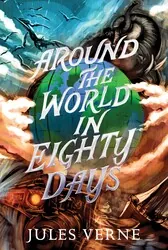
Around the World in Eighty Days by Jules Verne (1872) is the essential companion about the race: the voyage around the globe. It shares the journey, with the geography at the center.
The Travels of Ibn Battuta (fourteenth century) is the essential companion about the real voyage: the account of the medieval traveler who crossed the known world. It shares the discovery, with the history at the center.
The Adventures of Huckleberry Finn by Mark Twain (1884) is the essential companion about the river: the great American journey down the Mississippi. It shares the voyage, with the river at the center.
For the fuller shelves, our best medieval history list gathers the earlier voyages, and our guide to historical fiction extends the shelf into the journeys told in fiction.
A Reading Plan for Book Clubs
Treasure Island generates conversation on every level: the adventure, the characters, the question of what the treasure actually means. The most fertile questions are the ones the book refuses to settle: Is Long John Silver a villain or a hero? What does the book ask the reader to make of Jim’s moral journey? Is the treasure the gold or the voyage itself?
The book also generates the harder kind of discussion: the question of what the adventure stories owe the real histories of piracy and empire - and what the map leaves out. Clubs should expect the conversation to range from the Hispaniola to the island, which is exactly the range Stevenson intended.
A Note on the Book’s Structure and Editions
Treasure Island is structured as the boy’s memoir - Jim Hawkins telling the story years later - and readers should know that the novel’s engine is the journey: the inn, the ship, the island, the stockade, the hunt. Stevenson’s method is the accumulating adventure, each chapter raising the stakes, and the famous map that opens the book is part of the story. The novel can be read in a few sittings, and it rewards the reader who surrenders to the adventure.
What Stevenson’s Books Teach Together
Read together, Treasure Island and Kidnapped form a conversation about the journey: the first novel crosses the sea to the island, and the second crosses the Highlands with the outlaw. Both are built on the same conviction - that the journey transforms the traveler and that the discovery is the point - and each one widens the claim: the sea and the land. That is why the books belong together on the same shelf, and why readers who finish one should not stop there.
The Invalid Who Became a Voyager
Readers who love the journeys may want to know the traveler behind them: Stevenson was a lifelong invalid - he suffered from lung disease and spent much of his youth in bed - and the journeys were his defiance of the illness. He traveled through Europe with a donkey, crossed America in an emigrant train, and finally sailed the South Pacific and settled in Samoa, where he died and is buried. His conviction was that the journey is the great teacher and the great healer - the invalid who became a voyager - and the reader who knows the biography will see the courage in every journey he wrote.
Why Stevenson Still Matters to New Readers
Treasure Island has been read for a century and a half and remains the doorway through which generations first fall in love with the adventure of the sea. It matters because it answers a question every young reader asks: what is on the other side of the horizon? Stevenson’s answer is the map and the island and the hunt - and his conviction is that the discovery is the point of the journey. New readers will find the novel as fresh as the day it was written, and they will understand why it is called the greatest adventure story in English.
Where to Begin and What to Read Next
For readers new to Stevenson, Treasure Island is the essential starting point - it is the masterpiece and the perfect introduction to his craft. Readers who want the land should follow with Kidnapped; readers who want the real journey should read Travels with a Donkey in the Cévennes; readers who want the river should move to An Inland Voyage; and readers who want the islands should read In the South Seas. And because Stevenson is best read beside the other great travel writers, the natural next shelf pairs him with the wonder of Verne, the comedy of Bryson, the observation of Theroux and the medieval road of Ibn Battuta - the island, the voyage, the walk and the caravan, together forming the full picture of what the literature of travel and discovery can do.
Conclusion: The Journey Still Calling
Robert Louis Stevenson’s contribution to the literature of travel and discovery is a single achievement, and it has entered the language of readers everywhere: the map and the treasure. He wrote it into the island of Jim Hawkins and the road of Modestine, and it has outlasted every attempt to make the world a settled place. His journey is the transformation; his map is the mystery; his craft is the adventure. Read him, and let the voyage show you what discovery was really made of. For more reading paths, explore the Worlds section of our site, or continue with our guide to medieval history.