Books Like All the Light We Cannot See

Introduction: What Readers Mean by “Books Like All the Light We Cannot See”
When readers ask for books like All the Light We Cannot See, they are rarely asking for just another WWII novel. They are asking for something more specific: two young narrators whose paths converge in the war, prose that is luminous rather than loud, and a story that carries the war’s weight with beauty rather than noise. All the Light We Cannot See (2014) has all three: Marie-Laure, a blind French girl, and Werner, a German radio operator, whose paths converge in occupied Saint-Malo; the radio waves and the light that connect them; and the Pulitzer Prize-winning prose that made the darkness bearable. The books that come closest are the ones that find their own way to the same combination.
This guide gathers the strongest readalikes, old and new, with honest content notes and a clear sense of what each book shares with Doerr’s novel and where it departs from it.
The Two Strands That Converge
The books that come closest to All the Light We Cannot See’s architecture are the ones that build their own converging structures.
The Nightingale by Kristin Hannah (2015) is the essential companion: Vianne and Isabelle, two sisters in occupied France - one who endures, one who fights - in the novel of the two women whose paths diverge and converge through the war. It shares All the Light’s occupied France, its two centers and its conviction that the women are the war’s untold story. Content note: an adult novel that includes wartime violence, including sexual violence; for mature readers.
The Alice Network by Kate Quinn (2017) is the essential companion about the two timelines: Eve, a female spy in the real Alice Network of WWI France, and Charlie, a young American woman after WWII searching for her vanished cousin. It shares All the Light’s structure - two strands that converge on the truth - and its women at the center. Content note: an adult novel with wartime violence, including sexual violence; for mature readers.
Salt to the Sea by Ruta Sepetys (2016) is the essential companion about the four narrators: four young people from different nations flee toward the Wilhelm Gustloff, the ship whose sinking killed more people than the Titanic. It shares All the Light’s converging fates and history’s shadow, with the structure multiplied. Content note: a young adult novel dealing with war, loss and the sinking; for readers from around age fourteen upward.
The Beauty and the Weight
A second branch of the family is the novel that carries the war’s weight with luminous prose - the craft that makes the darkness bearable.
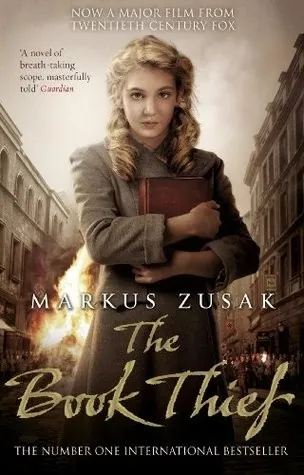
The Book Thief by Markus Zusak (2005) is the essential companion: Liesel, a girl in Nazi Germany who steals books, in the novel narrated by Death and full of love. It shares All the Light’s young narrators, its German child and its insistence that beauty is how the darkness becomes bearable. Content note: a young adult novel dealing directly with the Holocaust; for readers from around age thirteen or fourteen, with discussion.
The Island of Missing Trees by Elif Shafak (2021) is the essential companion about the two lovers and the tree: two teenagers from opposite sides of the Cyprus conflict, in the novel narrated partly by a fig tree that witnessed their love. It shares All the Light’s sensory world, its luminous telling and its conviction that the natural world carries what the people cannot. Content note: an adult novel dealing with conflict and its aftermath; for mature readers.
The Glass Hotel by Emily St. John Mandel (2020) is the essential companion about the missing woman: Vincent, who vanishes from a ship at sea, in the novel that circles her absence and the fraud that touched her life. It shares All the Light’s precise, luminous prose and its structure of converging strands. Content note: an adult literary novel; for mature readers.
The Children and the Machines
A third branch is the novel about the young people caught between the war and its machines - the radio, the codes, the inventions.
The Code Book: The Science of Secrecy from Ancient Egypt to Quantum Cryptography by Simon Singh (1999) is the essential nonfiction companion about the codes: the history of cryptography from the ancients to the quantum age, including the Enigma machine that Werner’s radio work echoes. It shares All the Light’s fascination with the hidden signals. Content note: accessible nonfiction; for readers from around age fourteen upward.
The Enigma Game by Elizabeth Wein (2020) is the essential companion about the code in fiction: three young people in wartime Scotland - a pilot, a driver, a codebreaker - drawn together by an Enigma machine and the need to keep its secret. It shares All the Light’s young people, its machines and its wartime Scotland-adjacent setting. Content note: a young adult novel dealing with the war; for readers from around age fourteen upward.
The Orphan Master’s Son by Adam Johnson (2012) is the essential companion in darker register: a young man in North Korea navigating a totalitarian state, in the novel of the identity he must become to survive. It shares All the Light’s question of what a person becomes under a regime, with the beauty replaced by a harsher prose. Content note: an adult novel with violence; for mature readers.
Themes and Values That Hold the Readalikes Together
Once you have read a few of these books side by side, the shared themes become clear, and they are worth naming because they are what make the category cohere.
The convergence as the structure runs through every one of them. All the Light’s central architecture - two lives that circle each other through the war and meet in a single moment - is the load-bearing structure of the whole family. The books are united by the conviction that the war is best told as the meeting of separate lives, and that the convergence is the meaning.
The beauty that carries the weight is the second shared shape. The family is united by prose that is luminous rather than loud, and by the conviction that beauty is not an escape from the darkness but the way the darkness becomes bearable. The books agree that the telling matters as much as the tale.
The small connection that survives is the third shared theme. The family is united by the radio wave, the fig tree, the book, the code - the small things that connect people across the war - and by the conviction that the small connections are what the war cannot take. The books agree that the light is in the details.
What to Read Next Depends on Why You Loved It
If you loved the two-strand structure, read The Nightingale and The Alice Network.
If you loved the luminous prose, read The Book Thief and The Island of Missing Trees.
If you loved the radio and the codes, read The Enigma Game and The Code Book.
If you loved the young people in the war, read Salt to the Sea and The Book Thief.
If you loved the literary craft, read The Glass Hotel and The Island of Missing Trees.
Content Notes: What These Books Contain
All the Light We Cannot See is an adult novel dealing with the war, usually recommended for readers from around age fifteen upward. The Nightingale and The Alice Network are adult novels with wartime violence, including sexual violence. Salt to the Sea deals with war and loss. The Book Thief deals directly with the Holocaust. The Island of Missing Trees deals with conflict and its aftermath. The Glass Hotel is a literary novel. The Enigma Game deals with the war. The Code Book is accessible nonfiction. The Orphan Master’s Son is an adult novel with violence. None contain gratuitous content; the weight is historical and emotional. Our meaningful historical fiction for adults and our thoughtful guide to biography books offer related reading paths for the questions of courage and connection these books raise.
Why These Books Work as a Set
Read together, these readalikes form a coherent shelf rather than a random pile, and the coherence is worth naming for anyone building a reading list. They are bound by the conviction that the war story is best told as the convergence of separate lives - the blind girl and the radio operator, the two sisters, the spy and the searcher - and that the meeting is the meaning. They are also bound by craft: nearly every title here carries the war’s weight with luminous prose, letting the reader hold the darkness because the telling is beautiful. That shared DNA means the shelf rewards reading in almost any order - the books talk to each other. The Nightingale deepens The Alice Network; The Book Thief reframes Salt to the Sea; The Island of Missing Trees echoes All the Light’s sensory world back at it. For a reader working through the family, the pairings are as instructive as the individual titles, which is why the reading plan below suggests specific combinations rather than a single sequence.
A Reading Plan for Book Clubs
All the Light We Cannot See generates conversation on every level: the structure, the prose, the question of what connects people across a war. Some of the best discussion questions come from pairing it with a book that shares or challenges it: read it with The Nightingale, and compare the two occupied Frances and the two pairs of women; read it with The Book Thief, and ask how the two beauties carry the same weight; read it with The Alice Network, and discuss the two converging structures and the two truths.
Conclusion: The Light That Keeps Giving
All the Light We Cannot See endures because it is about something permanent: the conviction that the war is best told as the meeting of separate lives, that beauty is how the darkness becomes bearable, and that the small connections are what the war cannot take. Every book on this list takes one piece of that - the structure, the prose, the connection - and builds its own account around it. The joy of reading them is the joy of watching the same craft practiced in different countries, different wars, different registers. Start with whichever part of Marie-Laure and Werner’s story you loved most, and let the comparison teach you what the light is really made of. For the full collection of reading paths, start at the Worlds section of our site.