Integrity Books: The Wholeness of a Life Lived True
Guides and author deep-dives about integrity - the wholeness of a life lived in accord with its own principles.
6 items in this category
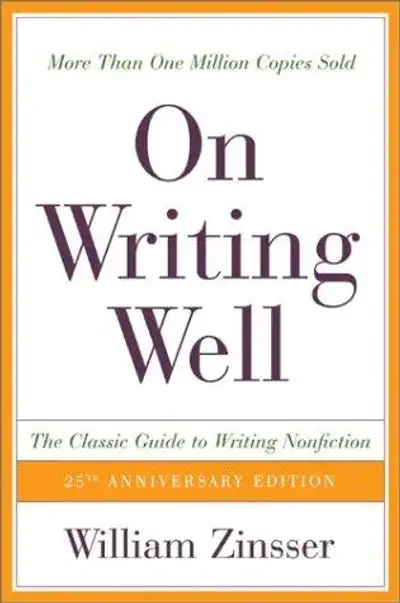
On Writing Well

The Abolition of Man

The Code Breaker
The fifth book of the Nicomachean ethics of Aristotle
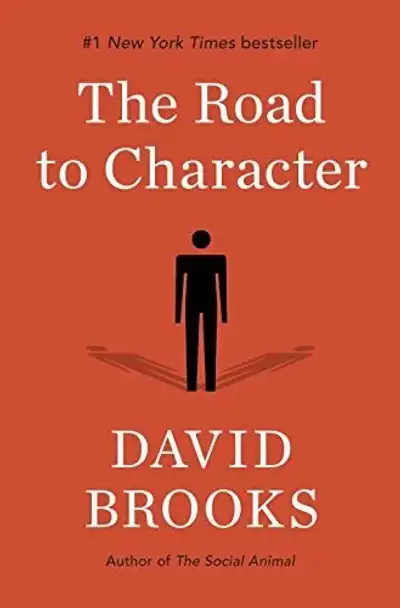
The Road to Character
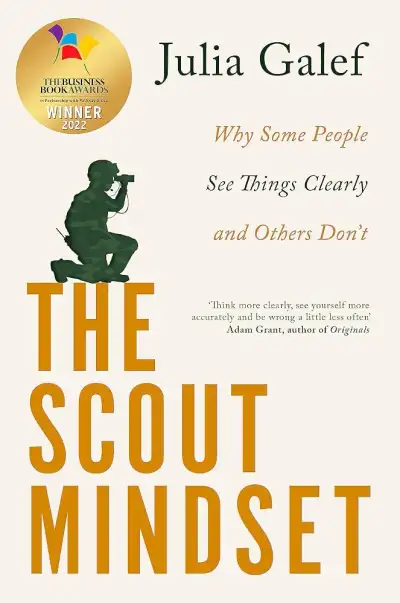
The Scout Mindset
The Wholeness of a Life
The word integrity comes from the same root as integer - whole, undivided. This is the crucial thing to understand about the virtue: integrity is not the same as honesty, though it includes honesty; it is not the same as morality, though it presupposes it. Integrity is wholeness - the state of a life that is not divided against itself. The person of integrity is the same in public and in private, in small things and in large, under observation and alone. They are not two selves but one, and that unity is the source of the peculiar power we sense in them: the power of a thing that is all of a piece.
We built this category because integrity is the least flashy and most load-bearing of the virtues - the wholeness of a life lived in accord with its own principles, in public and in private. The guides and deep-dives gathered here sit with the thinkers who have understood it best: Covey, Marcus Aurelius, James Allen, Emerson and George Orwell, each of whom knew that the test of integrity is what you do when no one is watching. This page is the index to their wisdom. It is built around the five foundational guides and the five author deep-dives into the thinkers who have written most powerfully about the wholeness of character - from the Stoic emperor keeping his private journal to the journalist who insisted on saying what he meant even when it cost him.
The Guide Shelf: Understanding Wholeness
The five guides form the framework of the category. Best Integrity to Read is the curated starting point, ranking the essential titles and explaining why each earns its place. A Thoughtful Guide to Integrity builds the deeper picture: what integrity is, why it is so rare, and how it can be cultivated.
Meaningful Integrity for Adults takes the subject to the stage of life where it is most tested - the years of career and family when the pressure to compromise is constant and the costs of integrity are concrete. Family-Friendly Integrity gathers the clean, wholesome books that teach children the oldest lesson in moral education: be the same person in the dark that you are in the light. And Integrity: Themes, Values and Reading Notes is the reader’s companion, unpacking the themes that run through the shelf.
The Ideas section asks the same question under its own name - truth and integrity - and its five guides join the shelf here, widening the frame from the private virtue to the public one. A Thoughtful Guide to Truth and Integrity supplies the framework with truth and integrity treated as a pair, Best Truth and Integrity to Read is the Ideas shelf’s curated starting point, Meaningful Truth and Integrity for Adults takes the theme at full depth, Family-Friendly Truth and Integrity brings it to younger readers, and Truth and Integrity: Themes, Values and Reading Notes is that shelf’s companion. The two sets of guides are the same virtue at two scales: the Growth shelf builds the wholeness of a life, the Ideas shelf defends the truth that the wholeness is built on.
The Author Deep-Dives: Five Minds on Wholeness
The author articles in this category bring together five very different voices, which is exactly right for a virtue that must be understood from many angles. Stephen R. Covey supplies the modern framework - his insistence that character precedes technique, and that integrity is the foundation of trust, which is the foundation of effectiveness. Marcus Aurelius supplies the ancient practice - the emperor’s private journal is the record of a man auditing his own integrity daily, refusing to let power corrupt the person he was. James Allen supplies the inner dimension - his As a Man Thinketh argues that integrity begins in thought, and that the outer life is the mirror of the inner. Ralph Waldo Emerson supplies the philosophical fire - Self-Reliance is the great American hymn to the integrity of the individual against the crowd. And George Orwell supplies the political witness - the journalist who wrote that “in a time of universal deceit, telling the truth is a revolutionary act,” and who lived the sentence he wrote.
The Ideas section adds its own deep-dives on the theme under the name of truth, and two of them bring voices the Growth shelf does not have. George Orwell and Ralph Waldo Emerson appear again, seen now from the side of truth-telling rather than wholeness; James Allen repeats his claim that the outer life mirrors the inner; and the two new voices extend the shelf - Harper Lee, the novelist of the conscience that will not be bought, and Jane Austen, the quiet anatomist of the divided self, whose characters are forever choosing between the truth and the comfortable lie. Read the two sets of studies together - five from each section - and integrity emerges as both the private wholeness and the public truth, the virtue that holds a life together and the one that tells the truth when the truth costs.
Integrity as the Foundation of Trust
The most practical argument for integrity is that it is the foundation of trust, and trust is the currency of every human undertaking. Covey’s deep-dive makes the argument in business terms: trust is not a soft virtue but a hard economic factor, and integrity is its root. A person known for integrity does not have to prove themselves each time; their word is their bond, and the efficiency this creates is enormous. A person without integrity must spend their life proving, re-proving and defending - and the people around them spend theirs in vigilance. The economics of integrity are so lopsided that it is hard to understand why anyone chooses otherwise - until you remember that the short-term rewards of compromise are immediate and the costs are deferred.
This is why the category’s books are so insistent that integrity is tested in small things. The research and the testimony agree: the person who fudges the small report will fudge the large one; the person who tells the small lie will tell the large one. Integrity is not a switch that can be flipped on for big decisions; it is a habit that is either practiced daily or not at all. Marcus Aurelius understood this - his journal is full of small audits. Orwell understood it - his integrity cost him friendships, health and eventually his life, and he never once described it as a sacrifice, only as a necessity.
Integrity and the Inner Life
The deepest treatment of integrity in the category is the one that locates it inward. James Allen and Emerson both insist that the outer life is the expression of the inner: you cannot be whole in public if you are divided in private, because the private self is the source from which the public self flows. This is why integrity is not primarily a social virtue but a self-relation - the relation of the person to their own standards. The person of integrity is not mainly concerned with what others think; they are concerned with what they think of themselves, and they have arranged their life so that the two judgments can never be in conflict.
This inner dimension is also what makes integrity so difficult to counterfeit. You can fake honesty for a while, and you can perform principle for an audience - but the self that knows the truth of your own compromises is not fooled, and the strain of the division shows. The books in this category are, in effect, manuals for removing the division: A Thoughtful Guide to Integrity for the framework, the authors for the practice, and the reading notes for the daily audit.
Integrity in Practice: What It Looks Like
It helps to be concrete about what integrity looks like in an ordinary life, because the virtue is easier to admire than to recognize. The person of integrity is recognizable by a few consistent marks. They keep their word - not perfectly, because no one does, but reliably, and when they cannot keep it they say so in time for the other person to plan around it. They are the same in the meeting and in the hallway, with the powerful and with the powerless, under observation and alone. They do not have a public self and a private self, or a work self and a home self - or rather, they have them, but the selves are continuous, cut from the same cloth. They take responsibility: when things go wrong, they do not cast about for someone to blame; they say what they did and what they will do about it. And they are willing to pay the price of principle - the missed promotion, the awkward conversation, the friendship that could not survive the truth.
These marks are why integrity is so often described as the virtue that makes trust possible, and trust as the currency of every human undertaking. Stephen R. Covey built an entire career on this insight: effectiveness, in every domain, runs on trust, and trust runs on character. The person of integrity does not have to prove themselves each time; their reputation does the work, and the efficiency this creates is enormous. This is also why the small compromises matter so much: every fudged report, every silent assent to the lie, every broken promise quietly forgotten is a withdrawal from the account, and the account is harder to refill than to drain.
Integrity as a Daily Practice
The most practical teaching in the category is that integrity is maintained by small daily audits, not by occasional heroic stands. Marcus Aurelius practiced this in the most literal way - his private journal is a record of nightly self-examination, the emperor asking himself whether he had been the same man in the palace that he was in his own thoughts. George Orwell practiced it in the most public way - refusing, at the cost of his health and ultimately his life, to say what he did not believe. The daily audit does not need to be dramatic. It can be the question at the end of the day: did I say what I meant? Did I do what I said? Did I hold the line in the small thing, so that the large thing will not find me unprepared?
The authors in this category are unanimous that the small thing is the training ground. The person who is honest about the small error will be honest about the large one; the person who is honest only when it is convenient has no integrity to draw on when it costs. This is why A Thoughtful Guide to Integrity treats the virtue as a practice rather than a trait: integrity is not something you have, once and for all, but something you do, daily, in circumstances that are usually small and unobserved. And it is why the reading-notes article, Integrity: Themes, Values and Reading Notes, is designed to be kept open as a checklist - the daily audit, made visible.
How to Use This Category
The guides build the framework; the authors supply the five angles - business, practice, inner life, philosophy and political witness; and the Growth section, the pillar behind this category, holds the full library of personal-growth reading.
Why Integrity Matters More Than Talent
The category makes a claim that runs against the grain of modern success culture: integrity matters more than talent. The claim has two parts. The first is that talent without integrity is unreliable - the brilliant person who cannot be trusted eventually finds that their brilliance is not enough, because no one will stake anything on them. The second is that integrity without talent is still enormously effective - the honest, dependable person accumulates trust, and trust accumulates opportunity, and over a lifetime the compound interest of trust outperforms the compound interest of talent. Covey built the modern statement of this case; Orwell lived the ancient version of it - a man of modest means and enormous moral authority, whose integrity outlived his enemies and his era.
This is also why the category warns against the modern confusion of integrity with image. A reputation for integrity is not integrity; it is its shadow, and it evaporates at the first test. The person who has invested in image rather than character has built on sand, and the books in this category are full of that exact architecture - the admired man exposed, the trusted woman betrayed by her own pretense. The real investment, the authors insist, is in the unobserved acts, because those are the ones that survive observation. That is the whole teaching of the category in one sentence: build the wholeness, and the reputation will take care of itself.
The Same Person When No One Is Watching
Every virtue has a test, and the test of integrity is simple to state and hard to pass: are you the same person when no one is watching? The books in this category are full of that test - the character who is offered the easy path and refuses it, the character who is tempted to become the thing they despise and does not, the character whose private self and public self are finally the same. The test is not dramatic in the way of the adventure story; it is quieter, and harder, because it is administered daily, in small choices that no one else will ever know about.
The category treats that test with the seriousness it deserves. The read-alikes show the test being passed and failed, and the failures are as instructive as the successes - the books are honest that integrity is not won once but defended continually. The author studies show the writers who built their lives around the defense. The family-friendly shelf brings the theme to children, who are learning, in the small choices of childhood, whether honesty is a value or a convenience. And the meaningful shelf for adults goes deepest, because the stakes rise with age: the compromises accumulate, the rationalizations get smoother, and the decision to stay whole gets harder. The books are there for the decision.
Where This Category Lives
The Growth section is the pillar behind this category - every article gathered here lives in it, and it holds the full library of the site’s writing on personal growth and the virtues. Browse the section here. From there the same themes continue into the other sections - integrity under ordeal in Stories, integrity in relationship in Relationships, integrity as craft in Guides - and the category pages of the site gather those shelves by subject.
Be the Same Person After This Page
Integrity is built in unobserved moments, and reading is one of them: no one will know whether you skipped this category, and no one will check whether you read the books. That is exactly the point. The books on this page are the daily audit made visible - the wholeness of a life lived in accord with its own principles.
So take the audit. The guide will show you what wholeness requires; the Covey study will show you why it is the foundation of everything else; the reading notes will keep you honest. Read one this week, and then do the small thing the book asks of you - the thing no one is watching.
The shelf will not check on you. That is what makes it a test worth passing.