Personal Growth Books: The Lifelong Work of Becoming
The original RainingBook category - guides and author deep-dives on the lifelong work of becoming more of who you are.
18 items in this category
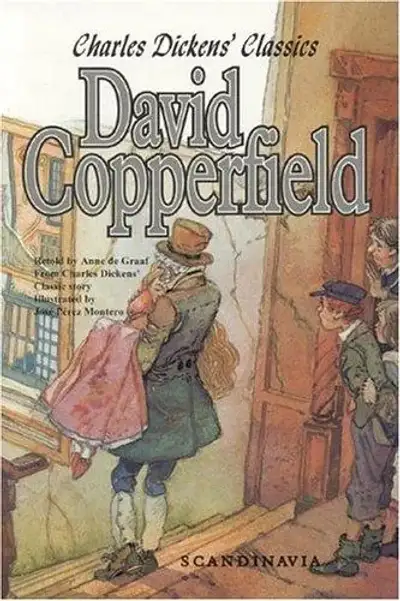
David Copperfield
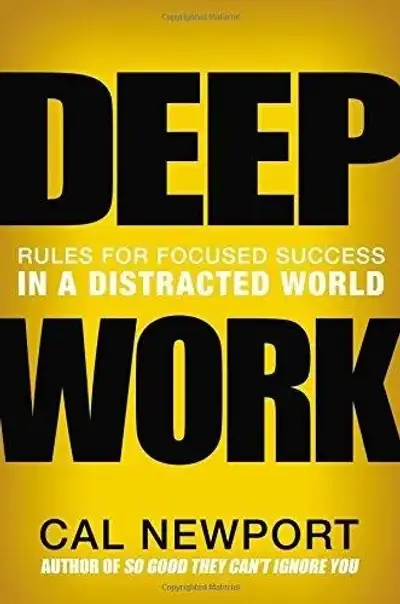
Deep Work
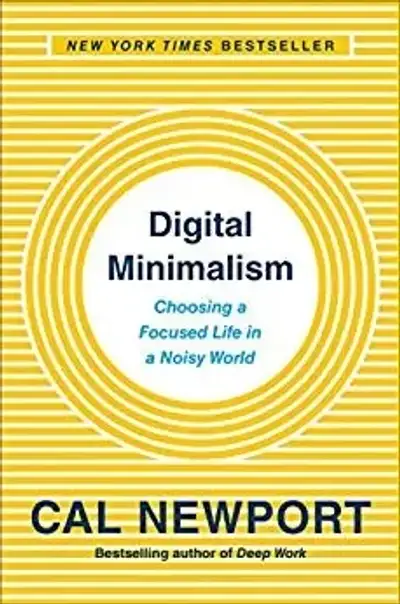
Digital Minimalism

How to Win Friends and Influence People
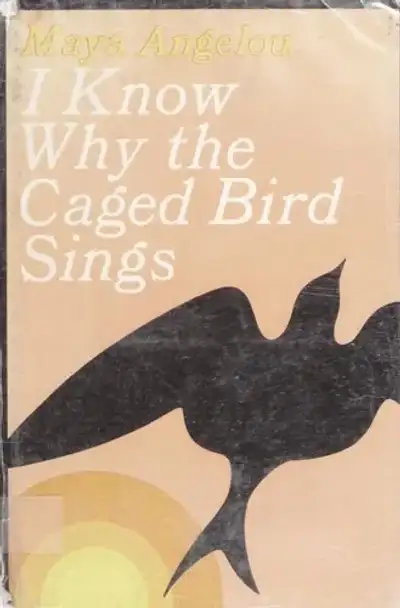
I Know Why the Caged Bird Sings
Mindset
Practising the Power of Now

So Good They Can't Ignore You

The Autobiography of Benjamin Franklin

The Autobiography of Malcolm X
The daily stoic
The Gifts of Imperfection
The Work of Becoming
Personal growth is the category that names the whole project. Every other category in the Growth section - Character, Courage, Resilience, Purpose, Self-Discipline, Patience, Gratitude, Integrity - is a channel of it: a specific virtue or capacity being developed. Personal Growth is the category of the project itself, the work of becoming more fully, more freely, more deliberately the person you are capable of being. It is the oldest subject in the self-help tradition and, for the last decade, the most scientific one.
We built this category as the original home of the site’s central conviction: that the work of becoming is the most important project a human being undertakes, and that it can be treated as a whole rather than a collection of tips. The foundational guides and deep-dives gathered here sit with the thinkers who have treated it that way - James Clear, Stephen Covey, Viktor Frankl, Carol Dweck and Gretchen Rubin - and this page is the index to the lifelong work of becoming more of who you are. It is built around two kinds of content: the five foundational guides that define what personal growth is and how it works, and the five author deep-dives into the thinkers who have most shaped the modern understanding of it. Together they form the spine of the Growth section - the place to start if you are new to the site, and the place to return to when you want the framework rather than the specific virtue.
The Guide Shelf: The Foundations
The five guides are the category’s front door. Best Personal Growth to Read is the curated starting point - the essential shelf of personal development, ranked and explained for readers who want the best of the tradition without the noise. A Thoughtful Guide to Personal Growth builds the framework: what personal growth is, why humans seem to need it, and how the great books have understood the process of becoming.
Meaningful Personal Growth for Adults takes the project to the stage of life where it is usually taken up in earnest - the years when the scaffolding of school and early career falls away and growth becomes a choice rather than an assignment. Family-Friendly Personal Growth brings the project down to the family, gathering the clean, wholesome books that help children develop the habits of self-examination and improvement. And Personal Growth: Themes, Values and Reading Notes is the reader’s companion, unpacking the themes that run through the shelf.
The Author Deep-Dives: Five Minds on Becoming
The author articles in this category are the heart of it, because they represent the five great streams of the modern personal-growth tradition. James Clear represents the scientific stream - the habit research that has made personal growth practical rather than aspirational. Stephen R. Covey represents the character stream - the insistence, in The 7 Habits, that effectiveness grows out of principles and character before techniques. Viktor E. Frankl represents the existential stream - the discovery that meaning is the engine of growth, and that we grow most when we are stretched by what life requires of us. Carol S. Dweck represents the cognitive stream - her work on the growth mindset showing that the belief that you can change is itself the first change. And Gretchen Rubin represents the experiential stream - the project of building a happier life through small, concrete experiments.
Five streams, one river. What unites them is a single conviction, which is also the conviction of the whole Growth section: that people can change, that the change is work, and that the work is worth doing.
The Growth Mindset: The Belief That Change Is Possible
If one idea deserves to be called the foundation of the modern personal-growth tradition, it is Carol Dweck’s distinction between the fixed mindset and the growth mindset. People with a fixed mindset believe that their abilities are largely set - that they are smart or not, talented or not, and that effort is mainly evidence of inadequacy. People with a growth mindset believe that abilities can be developed - that effort is the mechanism of improvement, and that failure is information rather than verdict. The research is robust: the same person, facing the same challenge, performs differently depending on which belief they hold.
This idea matters to the category because it is the gateway belief. You cannot undertake the work of personal growth if you believe the work is futile; you can only undertake it if you believe change is possible. Everything else in the category - the habits, the virtues, the disciplines, the search for meaning - rests on that foundation. This is why the Dweck deep-dive is one of the most important articles in the Growth section, and why A Thoughtful Guide to Personal Growth begins where it begins: with the question of whether you believe you can change.
The Five Streams in Practice
It is worth seeing how the five streams of the tradition actually differ in practice, because the differences tell you which books to reach for. The scientific stream - James Clear - asks what the evidence says: what actually changes behavior, what compounds, what fails. Its method is experiment and measurement, and its answer to the question “how do I grow?” is “one small system at a time.” The character stream - Stephen R. Covey - asks what kind of person you are becoming, and insists that effectiveness without character is a house on sand. Its method is reflection and principle, and its answer is “become the kind of person who does what needs doing.”
The existential stream - Viktor E. Frankl - asks what life is requiring of you, and locates growth in response: we grow most when stretched by what we did not choose. The cognitive stream - Carol S. Dweck - asks what you believe about your own changeability, and shows that the belief is the gate: the growth mindset is the prerequisite of all growth. And the experiential stream - Gretchen Rubin - asks what actually makes your life happier, and answers with small, concrete experiments rather than grand resolutions. Five questions, five methods, one project: the deliberate, lifelong work of becoming more fully yourself.
A Suggested Reading Path Through the Category
If you are new to personal growth, a good path runs from the gateway belief to the practical system to the foundation. Begin with the Dweck deep-dive - establish the growth mindset, the belief that change is possible, before anything else. Then take A Thoughtful Guide to Personal Growth for the framework, and Best Personal Growth to Read for the curated shelf. From there, choose your stream: the science with James Clear, the character tradition with Stephen Covey, the existential with Frankl, or the experiential with Gretchen Rubin.
Once you have the foundation, the category fans out into the specific virtues - Character, Courage, Resilience, Purpose, Self-Discipline, Patience, Gratitude, Integrity, Forgiveness, Hope - each with its own guides, read-alikes and authors. A common way to use the site is to read the personal-growth foundation once, then work through the virtues one at a time, using the foundation as the frame and the virtues as the curriculum. The reading-notes article, Personal Growth: Themes, Values and Reading Notes, is designed to be kept open beside whatever virtue you are currently working on.
Why Personal Growth Is a Lifelong Project
It is worth being honest about what the category is and is not offering. It is not offering a finish line: the books in this category are unanimous that personal growth is not a problem to be solved but a direction to be maintained. Covey’s seven habits are habits precisely because they must be practiced for a lifetime; Dweck’s growth mindset is a mindset because it must be chosen again and again; Frankl’s meaning is found moment to moment, not once and for all. The temptation to treat growth as a project with an end date - finish this book, complete this course, and be done - is exactly the temptation the best books resist.
What they offer instead is a more honest and more hopeful picture: growth as compounding. Just as habits compound daily, so does the whole project - each virtue practiced makes the next easier; each honest choice makes honesty more automatic; each small act of courage builds the muscle for a larger one. The Growth section is organized on exactly this logic: the Personal Growth category is the foundation, and the virtue categories are the curriculum. Read the foundation, then take the virtues one at a time - Character, Courage, Resilience, Purpose and Meaning, Self-Discipline and Habits, Patience, Gratitude, Integrity, Forgiveness and Redemption, Hope, Happiness and Joy - and return to the foundation whenever you need the frame.
How to Use This Category
If you are new to the site, start here: the guides give you the framework, and the authors give you the traditions. From this category, the Growth section fans out into the specific virtues - Character, Courage, Resilience, Purpose, Self-Discipline, Patience, Gratitude, Integrity, Forgiveness, Hope - each with its own guides, read-alikes and authors. This is the trunk; those are the branches.
The Slow Version Nobody Photographs
The personal-growth shelves of the world are full of promises, and most of them are variations on the same mistake: they sell growth as an event - the breakthrough, the transformation, the new self that arrives fully formed after a weekend seminar or a single book. The books in this category make the opposite case, and it is the case the research supports: growth is work. It is slow, unglamorous, and mostly invisible while it is happening. It is the small improvement made repeatedly, the habit kept past the point of motivation, the honest feedback taken when it stings. Nobody sees the work; everybody sees the result, years later, and mistakes it for talent.
That is why the category is built the way it is. The guides on this page are not about motivation; they are about mechanics - the practices, the systems, the daily choices that add up to a changed life. The read-alikes show the mechanics in story form, because fiction can do something the manuals cannot: it can compress the years, so that the reader watches a character change slowly over three hundred pages and feels the accumulation that the character themselves could not feel. The author studies show the writers who have thought hardest about the subject, and the family-friendly shelf brings the theme to younger readers at the age when the habits are forming.
The Role of the Novels
It is worth being specific about what the novels on this shelf contribute, because they are easy to underestimate. A reader who wants to grow does not obviously need fiction; they need methods, and the guides provide them. But the novels do something the methods cannot: they provide the interior experience of change. The read-alikes on this page are stories of people in the middle of becoming - leaving the old self, stumbling, failing, trying again. Reading them, the reader does not learn a technique; they learn what the process feels like from inside, which is the thing every technique assumes and almost nothing explains.
The novels also correct the fantasy version. Growth in the books is rarely linear; it is two steps forward and one back, and the characters who succeed are the ones who expected the backward step and planned for it. That honesty is the category’s quiet gift. It does not tell you that growth is easy; it tells you that growth is possible, and shows you what the possible version actually looks like. For a reader who has failed at growth before - who has started and stopped a dozen times - that honesty is more useful than any promise.
Growth in the Wider Library
The personal-growth shelf is the hub of a network on this site. It connects to self-discipline-and-habits, because habits are the machinery of growth - the subject of the practices without which the aspirations never become real. It connects to character, because growth is largely the formation of character, and the two categories look at the same process from different ends. It connects to resilience, because setbacks are part of the process, and to purpose-and-meaning, because the question of what you are growing toward is inseparable from the question of what you are for. The links on this page are the map: personal growth is not one shelf among many, it is the shelf that explains why all the others exist.
How to Start
The category is arranged so that you can start anywhere and still find your way. If you want the shape of the subject, begin with the guide. If you want the methods, the best-books list will take you to the core texts. If you want company, the read-alikes will give you stories of people in the middle of the work. And if you want the honest version of the whole thing, read the themes-and-reading-notes article, which names what the books share: that growth is work, that the work is worth it, and that the only person who can do it is you - with the shelves here to help.
Where the Process Begins
The family-friendly personal-growth shelf deserves its own note, because it is easy to misunderstand. It is not a watered-down version of the adult shelf for children who cannot handle the real thing; it is the childhood version of a process that actually begins in childhood. The books on that shelf meet young readers at the age when the foundational habits are forming - the attitude toward failure, the willingness to try hard things, the belief about whether effort changes anything. Those are the seeds of everything the adult shelf describes, and the family shelf is where they are planted. A child who meets the idea that growth is possible, early and in story form, has been given something no adult course can fully supply later. That is why the category pairs the shelves: the work of personal growth, like most important work, is easier if it starts early.
Where This Category Lives
The Growth section is the pillar behind this category - every article gathered here lives in it, and it holds the full library of the site’s writing on personal development. Browse the section here. The same themes continue into the other sections - growth in relationship in Relationships, growth under ordeal in Stories, growth as craft in Guides - and the category pages of the site gather those shelves by subject. The tree is the section; the branches are the virtues; the canopy is the whole library - and the roots are the books themselves, the ones gathered here and the ones they link to. Follow any link on this page and you stay inside the same project: the deliberate, lifelong work of becoming more fully yourself.
The Book That Starts the Work
Personal growth is not a genre to browse - it is a shelf to act on. The guides on this page rank the titles, the author studies follow the thinkers, but none of it counts until one book is read with the intention of being different afterward. That is the whole mechanism: reading plus intention.
So pick the book you have been meaning to read for months. The guide will tell you which one; the shelf will rank them. Read the first chapter tonight - not tomorrow, not on vacation, tonight - and let the work begin.
The books are tools, not trophies. A tool that is never used is just a thing on a shelf. Use one.