Ethical Leadership Books: Leading With a Conscience
Books about ethical leadership - what it means to lead with a conscience, the guides that define it, and the writers who studied it most closely.
6 items in this category
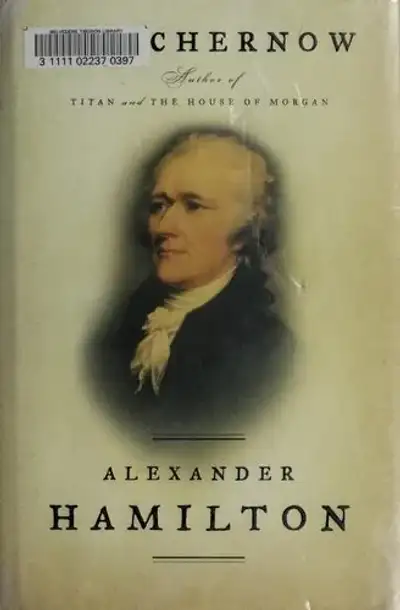
Alexander Hamilton

Steve Jobs
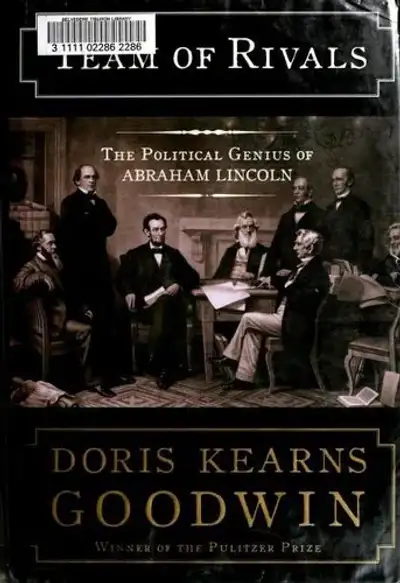
Team of Rivals

The Art of War
The culture code
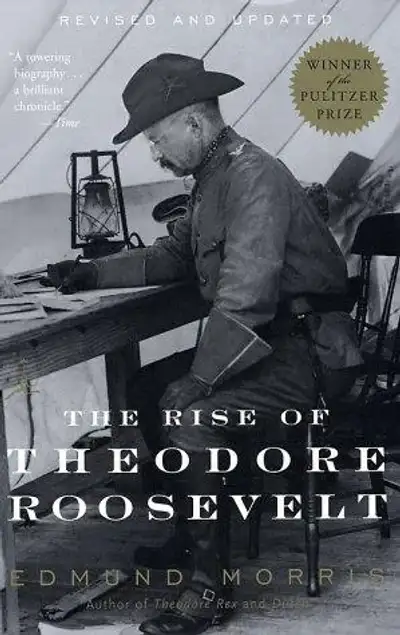
The rise of Theodore Roosevelt
Why We Built This Shelf
Leadership advice is everywhere, and most of it is about technique: how to set a vision, run a meeting, give feedback, scale a team. This category exists for a different question, the one the technique books quietly skip - what does it mean to lead well when no one is watching, when the easy choice and the right choice diverge, when the people counting on you cannot see what you decide? We built it for the readers who have noticed that the hardest part of leadership is never the strategy; it is the conscience. The books gathered here are the ones that take that difficulty seriously.
The articles come from the Ideas section, and they form a complete shelf on the theme. There are the starting points that define ethical leadership and separate it from the buzzword it has become. There are the deeper shelves for adult readers who want the full argument, and the family-friendly shelves that introduce the idea to young readers - because the ethical questions of leadership are the same at the dinner table as in the boardroom. And there are five author studies, following the theme through the writers who studied leadership most closely, from the self-help master to the presidential historian. Together they cover the theme from definition to practice.
Starting With the Essentials
The natural entry point is A Thoughtful Guide to Ethical Leadership, the article that does the definitional work: what ethical leadership is, how it differs from leadership by force or by charisma, why it matters, and which books explore it best. It is the guide we point every new reader toward, because it settles what the term actually means before the arguments begin. If you want the fastest route into the shelf, Best Ethical Leadership to Read is the curated starting point - the handful of books that carry the theme most completely, ranked and explained so you can begin immediately.
From there the theme opens into two reading depths. Meaningful Ethical Leadership for Adults is the shelf for the reader who wants the theme at full strength - the books that refuse to pretend the ethical leader always wins, that measure the cost of conscience as well as its rewards. Family-Friendly Ethical Leadership is its quieter sibling, built for reading aloud and discussing with young readers: the stories and the simple examples that let a child meet the idea of leading well before they ever hold a title. And Ethical Leadership: Themes, Values and Reading Notes ties the shelf together - the themes that recur across the books, the values they defend, and the reading notes that prepare you for the discussion.
The Five Writers Who Studied Leadership Closest
The author studies are the heart of the category, because each one follows the theme through a different tradition and arrives at a different portrait of the ethical leader.
Best Books About Ethical Leadership by Stephen R. Covey is where most readers should start. Covey built his entire career on the claim that character is the foundation of leadership - that the private victories come before the public ones, that trust is the fastest currency there is. His shelf is the study of leadership from the inside out, and it is the most complete single portrait of the theme in the category.
Best Books About Ethical Leadership by Doris Kearns Goodwin takes the historical view. Goodwin spent a career inside the lives of presidents, and her shelf shows ethical leadership as it actually happens under pressure - Lincoln holding a fractured cabinet together with patience and principle, the leaders who grew into their greatness precisely because they were tested. It is the study for the reader who wants the theme grounded in real decisions rather than abstractions.
Best Books About Ethical Leadership by Simon Sinek brings the theme into the present with a simple and radical claim: the leader’s job is to make people feel safe, and safety is the precondition of everything else. Best Books About Ethical Leadership by Nelson Mandela is the most moving study in the category - the leader who answered twenty-seven years of prison with an offer of reconciliation, proof that ethical leadership can survive the worst that power can do. And Best Books About Ethical Leadership by Peter Drucker closes the shelf with the discipline: the management thinker who insisted that effectiveness and ethics are the same subject, that a leader who does the right thing badly has still done wrong.
The Three Temptations the Theme Names
Every serious book on ethical leadership is, at bottom, a study of the same three temptations - and the category is built so the reader meets all three. The first is the temptation of the end. It is the oldest justification in the book: the results were good, the mission was served, the spreadsheet was green, so the corners that were cut do not matter. The writers gathered here dismantle this argument from every tradition - Covey by locating leadership in character before results, Drucker by insisting that effectiveness and ethics are the same subject, Goodwin by showing that the great leaders were great precisely because they refused the arithmetic. The category’s answer to the temptation of the end is consistent: the means are the end, because the leader is the culture, and the culture is built one decision at a time.
The second temptation is comfort. It is harder to name than the first because it looks innocent: the leader who avoids the hard conversation, postpones the bad news, lets the unfairness stand because correcting it would be awkward. The books on this shelf treat comfort as the ethical leader’s most dangerous enemy - the thing that erodes integrity not in one dramatic betrayal but in a thousand small accommodations. The Sinek study is the sharpest on this point, because it shows what happens when leaders choose their own comfort over the safety of the people they lead: the team stops speaking, the truth stops traveling, and the culture dies of politeness.
The third temptation is popularity. It is the one the theme treats most gently, because it is the most human - the wish to be liked, the reluctance to be the one who says no. But the books are also the most firm: ethical leadership is, by definition, the leadership that survives being unpopular, that makes the decision it can defend rather than the decision it can celebrate. The Mandela study is the category’s proof that the unpopular road can also be the magnificent one.
What the three temptations share is a single error: they all ask the leader to outsource the conscience. The books in this category exist to return the conscience to its owner. They do not offer a checklist - they offer the harder thing, a portrait of what leadership looks like when the answer to all three temptations is the same quiet refusal.
Why Every Article Matters
It would be easy to treat ethical leadership as a slogan and move on. The articles in this category exist to resist that. Each one was written because a reader, somewhere, was about to miss something: the young manager who thought leadership was confidence and needed to hear that it is actually trust, the parent who wanted to explain to a child why the popular choice is not always the right one, the reader who admired a leader’s results and needed to ask what they cost. The category catches those readers. It defines the terms before the arguments begin, it ranks the books so you can start somewhere and end somewhere, and it separates the adult shelves from the family shelves so every reader finds the depth they are ready for.
That is also why the links matter as much as the prose. Every article points onward - to Justice and Fairness, the theme ethical leadership depends on, to Responsibility and Duty, which asks what a leader owes, and to Integrity, which asks what a leader refuses. The format categories carry the same books further: Books Like for the read-alike shelves and Best Books About for the curated starting points.
How to Read This Shelf
Every reader arrives at ethical leadership from a different position, and the category is built to honor that. If you are new to the theme, the shortest path is the two-step entry: read A Thoughtful Guide to Ethical Leadership to settle the definitions, then Best Ethical Leadership to Read to get a ranked starting shelf you can begin tonight. Those two articles give you the vocabulary and the books; everything after that is depth.
If you are already leading - a manager, a parent, a teacher, a coach - the author studies are where the shelf becomes practical. Start with the Covey study, because it anchors the theme in character rather than technique, and it is the one readers report applying the same week. Then choose the tradition that matches your situation: Goodwin if you want leadership tested under real historical pressure, Sinek if you are building a team and want the modern framework, Mandela if you need the moral proof that the theme can survive the worst circumstances, Drucker if you want the discipline that keeps ethics from becoming a slogan.
If you are reading to introduce the idea to a young person, the category is built for you too. Family-Friendly Ethical Leadership is the shelf to start with - the stories and examples that let a child meet the idea of leading well before they ever hold a title - and the discussion prompts in Ethical Leadership: Themes, Values and Reading Notes work at the dinner table as well as in a classroom. The family shelf is not a watered-down version of the adult shelf; it is a different instrument for a different job.
And if you are a book club, the final article is your preparation kit. Ethical Leadership: Themes, Values and Reading Notes turns the shelf into discussion material - the values the books defend, the disagreements they leave open, the questions that will still be live when the evening ends. A club that reads the theme article before the novel arrives half-prepared and leaves with more to argue about, not less.
The one rule that applies to every reader is this: do not read the category linearly. It is a map, not a course. Enter through whichever door matches your current question - the definition, the starting shelf, the adult depth, the family shelf, the discussion notes, or one of the five writers - and let the links carry you from there. The mesh is designed so that every path crosses every other path eventually, and no matter where you enter, you will not miss the theme’s center.
The Question No Manual Can Answer
The category of ethical leadership exists because of a simple observation: leadership is not primarily a technical skill, it is a moral question. The techniques of management can be learned from a manual; the question of what a leader owes - to the people who follow, to the truth, to the future - cannot be answered by a manual at all. The books on this page are the collected attempts of serious people to answer that question, and they are gathered here because the question matters more than the techniques.
The guides give the subject its shape. The read-alikes lead to the accounts of leaders who faced the question under pressure - the executives who chose integrity when it cost them, the political leaders who told the truth when it was dangerous, the reformers who used power to enlarge others rather than themselves. The author studies show the writers who built the field: the management thinkers who insisted that ethics was not a department but the whole job, the biographers who showed the difference between power used well and power used badly.
What the Stories Show That the Theories Cannot
Leadership theory can state the principles; the stories on this shelf show what they cost. The biographies gathered here are full of the specific moments where the principle was tested - the decision that looked good in the short term and wrong in every other, the temptation that was resisted at real price, the leader who discovered that the easy path and the right path had diverged. Reading those moments, the reader does not learn a principle; they learn the shape of the decision, which is the thing the principles cannot teach.
The books are also honest about failure, and that honesty is part of their value. Some of the most instructive stories on the shelf are the ones about leaders who failed the test - who chose the easy path, rationalized the compromise, and discovered what the rationalization cost. The category does not present ethical leadership as a set of people who got it right; it presents it as a set of decisions, some made well and some made badly, with the consequences of both shown honestly. That is the mature version of the subject, and it is the version worth reading.
The Point Where the Virtues Meet
Ethical leadership connects to the whole site. It connects to justice-and-fairness, because the leader’s central question - what do I owe - is the fairness question seen from the top. It connects to responsibility-and-duty, because leadership is responsibility with a title, and the books on that shelf show the virtue without the title. It connects to integrity, because the ethical leader is the whole person, the one whose public and private selves match. And it connects to character, because leadership eventually reveals character, and the books on that shelf show what character is made of. Read the shelves together and the full picture emerges: ethical leadership is not a management topic, it is the point where most of the site’s virtues meet.
The Shelf for Anyone Who Leads Anything
Whether you lead a company, a classroom, a family or only yourself, the shelf is for you - the question of what you owe does not require a title. Start with the guides to understand the shape of the subject, follow the biographies to see it under pressure, and use the themes-and-reading-notes article to reflect on your own decisions. The category’s deepest argument is that leadership is a moral question asked daily, and that the books are the best preparation for the asking.
Where This Category Lives
The Ideas section is the pillar behind this category - the site’s home for the books that make you think. Browse the full section here. The theme continues across the site: Moral Dilemmas asks what the ethical leader does when every option is wrong, Knowledge and Education asks what a leader needs to know, and Character asks what a leader is when no one is looking. Wherever you land, the question is the one the best leadership books keep asking: can you lead well, and can you sleep afterward?
The category ends where the books do: with the reader rather than the leader. Every study on this shelf was written for the person who will not make the headline, who will never be praised for the decision that cost them sleep, who will simply be the one the team, the family or the classroom could count on when the easy choice was wrong. That is the ethical leader this category is really about, and it is the reason the shelf is worth keeping close: not to prepare for the public moment but to survive the private ones, where the conscience is decided and the reputation is quietly built. Read the guides, meet the writers, and the theme stops being a subject and starts being a standard - the standard you carry into the next meeting, the next conversation, the next moment when someone is counting on you and the easy choice is the wrong one.
Lead the Way You Would Defend
Ethical leadership is the theme for the reader who has noticed that the hardest part of leading is never the strategy - it is the conscience. The books on this page are the training for that part: the guides that define the practice and the author studies that follow it through the leaders who lived it.
So stop reading about leadership as technique. Start with the guide, take the shelf, and read one study this week with your own decisions in view - the ones no one is watching. That is where the theme actually lives.
The leader you are becoming is decided in the unobserved choices. The books are the rehearsal.