Manners Books: The Small Graces That Make Society Possible
Why we built the Respect and Manners category: the books about the small graces that make society possible - courtesy, consideration and the daily practice of respect.
3 items in this category

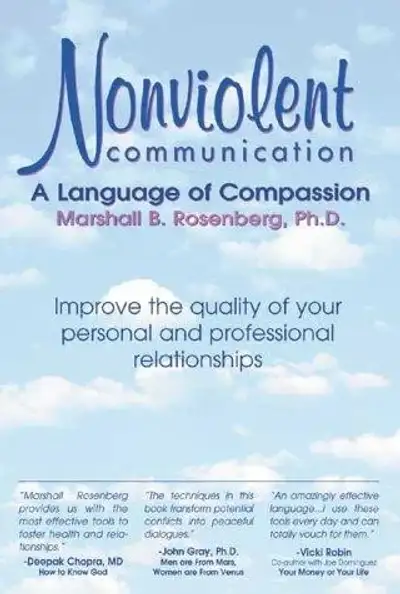
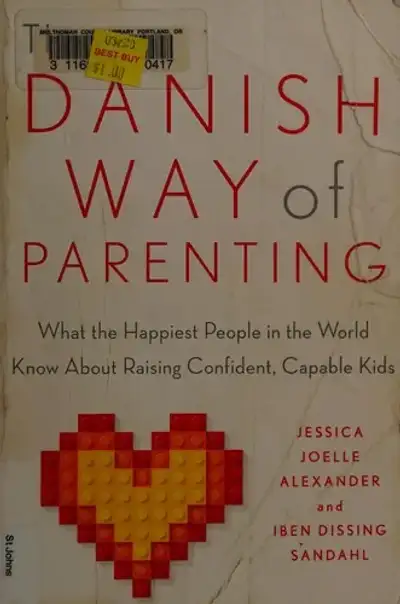
The Small Graces
Manners are the small graces that make society possible. They are not the trivialities they are sometimes dismissed as - the fork on the left, the hat removed in the elevator - but the daily grammar of consideration: the please and thank you, the held door, the listening without interruption, the respect shown to the person who cannot do anything for you. Manners are, in their deepest form, the practice of treating other people as real - as having feelings worth sparing, time worth honoring and dignity worth acknowledging. The person with good manners is not the person who knows which fork; they are the person who has learned, in a thousand small ways, to make the people around them feel safe, seen and respected.
We built this category because the small graces are dismissed so easily and matter so much. Every civilization has produced its manuals of courtesy, from Confucius to Erasmus to Emily Post, and we wanted the modern books that stand in that tradition to have a shelf of their own - arguing that the small graces are not obsolete but more necessary than ever. So we gathered the site’s articles on respect and manners into a single course: the five-article set the Relationships section builds for each of its central themes.
What This Category Holds, and Why Each Article Matters
Best Respect and Manners to Read is the curated starting point - the essential shelf, ranked and explained. A Thoughtful Guide to Respect and Manners builds the framework: what respect is, why manners matter, and how both can be practiced.
Meaningful Respect and Manners for Adults takes the subject to the settings where it is most tested - the workplace, the family, the public square - and argues that courtesy is not the opposite of honesty but its vehicle. Family-Friendly Respect and Manners is the children’s angle - the clean, wholesome books that teach the next generation the grammar of consideration. And Respect and Manners: Themes, Values and Reading Notes is the reader’s companion, unpacking the themes and equipping the discussion.
Respect as the Root of Manners
The category’s central distinction is between the form and the root. Manners are the form; respect is the root. A manner without respect is mere performance - the smile that means nothing, the courtesy that is only habit. Respect without manners is incomplete - the goodwill that never finds expression, the consideration that is never communicated. The books in the category insist on both: the root must be genuine, and the form must be practiced, because the form is how the root becomes visible to other people. The person who respects others but cannot express it is, to the world, indistinguishable from the person who does not respect them.
Respect itself, in the account the books give, has two directions. There is the respect shown to persons - the acknowledgment of their dignity, their feelings, their time and their point of view, regardless of their power, status or usefulness to us. And there is the respect shown to the social order - the institutions, rituals and conventions that let strangers cooperate. Both directions matter, and both are trained by the same practice: the daily habit of considering the other person first. This is why the category connects so naturally to the Growth virtues: respect is the relational form of humility, patience and kindness, and the Growth section explores those virtues in themselves.
Why Manners Matter More Than Ever
The category makes a case that sounds counterintuitive and is, in fact, urgent: manners matter more in a society that has lost its formal etiquette, not less. The old etiquette was a code everyone knew, and knowing it did much of the work - you did not have to decide how to behave because the code decided for you. The modern world has largely dismantled the code, and the result is not freedom but improvisation: every encounter requires us to decide, in real time, how to treat the person in front of us. That is exactly why the practice matters now: with the code gone, the root is all that remains, and the root must be cultivated deliberately. The person of genuine respect, expressed in spontaneously chosen courtesy, is the person who can be trusted in any setting, because they do not need the code to be kind.
This is also why the family-friendly angle matters so much. Manners are learned young or learned late, and the books in the category are emphatic that the childhood training - the please and thank you, the greeting, the table, the respect for the person who serves you - is the foundation of the adult practice. The family that teaches manners is not teaching trivia; it is teaching the grammar of consideration, which is the grammar of a life lived well with other people.
How to Use This Category
The five articles form a complete course: the best-of list to start, the guide for the framework, the adults angle for the settings where courtesy is tested, the family-friendly angle for the children, and the reading notes for the discussion. The Relationships section, the pillar behind this category, holds the full library of the site’s relationship reading.
Manners in the Workplace and the Public Square
Manners are most tested, and most valuable, in the settings where we cannot choose our company: the workplace and the public square. The workplace is the daily laboratory of courtesy, because it forces together people of different temperaments, backgrounds and power, and requires them to cooperate for years. The books in the category argue that the courteous colleague is not the soft colleague but the effective one: the person who listens without interrupting gathers more information; the person who acknowledges the contribution of others builds the alliances that make work possible; the person who disagrees with respect is heard, while the person who disagrees with contempt is not. The mannered workplace is not the polite fiction of endless agreement; it is the honest disagreement conducted with respect, which is the only form of disagreement that can actually change anyone’s mind.
The public square is the harder test, because there the company is entirely unchosen and the stakes are entirely social: the stranger in the queue, the person of a different political tribe, the service worker who cannot refuse you. The category’s counsel for the public square is the counsel of the root: treat the stranger as real, with feelings worth sparing and dignity worth acknowledging, regardless of what they believe or what they can do for you. This is the test that separates manners from performance - the courtesy extended to the powerless, the patient hearing of the person you will never need - and it is the practice the books most insist on. The person whose manners survive the public square is the person whose respect is genuine, because there is nothing to gain from it.
And the daily practice is available to everyone, in every setting: the held door, the patient hearing, the refused mockery. The small graces are small precisely so that they can be practiced constantly - and the constant practice is what turns them into second nature, the way the code once did. The forms have changed; the training has not.
A Short History of Courtesy
Every civilization has produced its manuals of courtesy, and the history is worth knowing because it shows what the practice has always been for. Confucius made ritual courtesy - the li - the backbone of the moral life: the daily forms that train the heart to consider others, so that goodness becomes habit rather than decision. The medieval chivalric codes extended the courtesy to the weak and the powerless, inventing the ideal of the protection of the vulnerable. The Renaissance courtesy books - Castiglione’s Book of the Courtier most famous among them - made ease and consideration the marks of the civilized person. And the modern manuals, from Emily Post onward, democratized the whole tradition: courtesy was no longer the mark of the court but the grammar of everyone, the small graces that let strangers cooperate in the city, the office and the queue.
The through-line of the history is constant: manners have always been the training of the root. Every civilization that produced a manual of courtesy was teaching the same lesson - that the consideration of others must be practiced until it is automatic, because the emergencies of social life do not wait for deliberation. The forms change with the times, and the books in this category are fully aware that the hat and the calling card are gone. But the root does not change, and neither does the method: the daily practice, begun in childhood, by which the consideration of the other person becomes second nature.
Why Politeness Is a Moral Subject
There is a temptation to treat manners as the surface of life - the polish on top, the etiquette that matters only at dinner parties. The books in this category argue the opposite: that the small decencies are the load-bearing structure of everyday life, the thing that makes it possible for strangers to share a city, colleagues to share a deadline, and families to share a kitchen. Politeness is how we tell other people, a hundred times a day, that we see them and that their comfort counts. Strip it away and the day becomes a series of small collisions; keep it and the same day runs smooth.
That is why the category treats manners as a moral subject rather than a social one. Respect is not a feeling you wait for; it is a practice you perform, and the practice is what teaches the feeling. The books on this shelf - the guides that name the practice, the read-alikes that show it in action, the deep dives into the writers who made it their theme - all point the same direction: courtesy is a form of attention, and attention is the rarest gift one person can give another in a distracted age.
What the Literature Adds That Etiquette Books Do Not
Etiquette manuals tell you which fork. The literature in this category tells you why anyone cares. When Anne Frank writes about keeping her spirits and her manners under conditions that would justify the worst of human behavior, she is making a claim about character: that how you treat people when no one is watching, and especially when everyone is watching through the wrong lens, is the truest test of who you are. When Maya Angelou describes the code of respect her grandmother enforced, she is showing manners as inheritance - something handed down precisely because it costs something to maintain.
The novels and memoirs on this shelf do something the manuals cannot: they show the cost of both failure and success. You see what a family loses when the small decencies disappear and every interaction becomes a negotiation. You also see what a person gains by keeping them - trust, ease, the ability to move through the world without leaving damage. Reading these books, the question stops being “what is polite?” and becomes “what kind of person do I want to be in the ordinary moments?” That is the question the whole category is built to ask.
How the Shelf Is Organized
The structure rewards readers who use it as a map. Start with the guide that defines the territory and the list of the best books to read first - they will orient you in a single sitting. From there, follow the read-alikes if you learn best from stories, or the author deep-dives if you want to understand the tradition these writers belong to. The family-friendly shelf exists because manners are among the first things we teach children, often without naming them; the meaningful shelf for adults exists because the subject deepens with age, and the decencies of middle age are not the same as the obediences of childhood. The themes-and-reading-notes article turns the whole shelf into discussion material, which is worth more than it sounds: manners are a subject families and teams talk about badly, and the notes give you a way to talk about them well.
The Quiet Argument of the Whole Category
The deepest claim in these books is unfashionable and worth hearing: that constraint is freedom. The person who knows the rules of the game - of conversation, of hospitality, of disagreement - is more at ease, not less, because they are not spending energy wondering what to do. The person who has practiced consideration does not have to decide, in the middle of a hard moment, whether to be kind; it is already the default. The shelves gathered here are an argument for building that default, one small decency at a time, until it becomes the person you are when no one is looking.
The Grammar No One Teaches Anymore
A useful way to think about the shelves here is to treat manners as a grammar. Grammar does not tell you what to say; it tells you how to say anything at all in a way other people can understand. Manners work the same way. They do not dictate your opinions or your feelings; they give you the forms through which any opinion can be offered and any feeling can be expressed without damaging the person receiving it. The person who knows the grammar can disagree fiercely and still be heard. The person who has abandoned it cannot even agree gracefully.
That is why the category treats the loss of manners as something more serious than nostalgia for a politer past. When the forms disappear, the disagreements do not disappear with them - they just get louder and less resolvable, because there is no longer a shape in which they can be conducted. The books on this shelf are full of scenes where a family or a community is disintegrating precisely because the forms have been dropped: nobody knows how to refuse an invitation, how to apologize, how to disagree, how to leave. The small decencies turn out to be the infrastructure of every larger decency.
The Payoff Nobody Advertises
There is a personal payoff to the practice that the books keep returning to, and it is worth naming because it is rarely the advertised one. The person who practices consideration does not do it for reward; they do it because it is who they are. But the practice pays them back anyway, in the coin of ease. A courteous person moves through the world with less friction, fewer unnecessary conflicts, more goodwill banked for the hard moments. The books make this case without sentimentality: courtesy is not self-sacrifice, it is a sensible investment in the only currency that reliably comes back - the willingness of other people to make your life run smoothly. Read the shelf with that in mind and the subject stops feeling like a list of rules and starts feeling like a way of living that pays for itself.
Where This Category Lives
The Relationships section is the pillar behind this category - every article gathered here lives in it, and it holds the full library of the site’s relationship reading. Browse the section here. From there the same themes continue into the other sections - courtesy under ordeal in Stories, the virtues behind respect in Growth, the manners as craft in Guides - and the category pages of the site gather those shelves by subject. The Healthy Relationships and Community and Belonging categories are the natural companions.
Read the Book That Restores the Old Decencies
Respect and manners are the quiet infrastructure of every relationship - and the books on this page are the case for taking them seriously again: the guides that define the practice and the shelves that show it in action. If you have noticed the old decencies wearing thin, this shelf is the repair kit.
Take the guide, then the shelf - and this week, practice one thing the books describe: the full attention, the courtesy that costs nothing, the respect given before it is earned. The books show the practice; the practice is yours.
Manners are not the small stuff. They are the whole relationship, repeated daily.