Justice and Fairness Books: The Fair World Shelf
Books about justice and fairness - what a fair world looks like, who pays for it, and the guides that show how literature keeps asking the question.
8 items in this category
Justice
Les Misérables
Long Walk to Freedom

The Count of Monte-Cristo [3/5]
The fifth book of the Nicomachean ethics of Aristotle
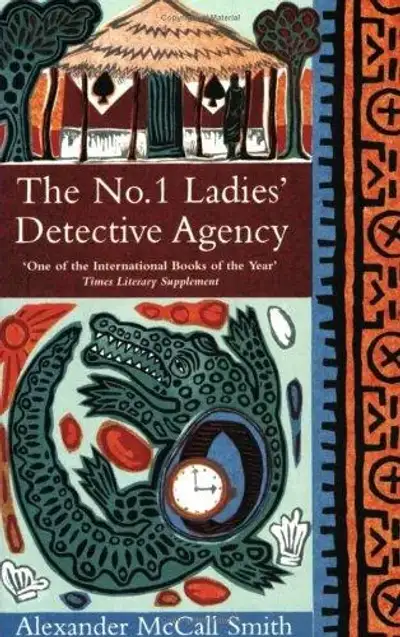
The No. 1 Ladies' Detective Agency

The Republic of Plato--Books I.-V.
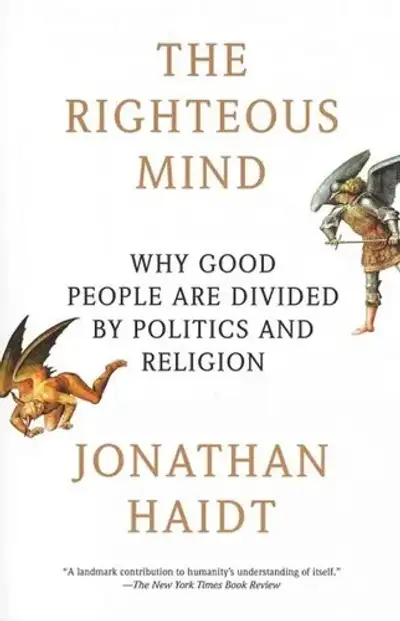
The Righteous Mind
Why We Built This Shelf
Every reader knows the feeling of finishing a book and putting it down with a question that will not settle: was that fair? Should it have been? Who paid the price, and should they have? We built this category for those readers - the ones who read for the story and stay for the argument. Justice and fairness are the themes literature returns to more than almost any other, not because writers are preachy but because stories are the best laboratory we have for testing what a fair world would actually look like. A novel can put one person’s fairness against another’s and let us watch the collision from the inside, which is something an essay can never quite do.
The articles gathered here come from the Ideas section, and they form a complete little curriculum on the theme. There are the starting points - the guides that define justice and fairness, separate the two, and map the books that explore them. There are the deeper shelves for adult readers who want the full argument, and the family-friendly shelves for reading aloud and discussing with children, because fairness is the first moral concept a child grasps and the last one any of us masters. And there are the author studies, five of them, which follow the theme through the writers who made it their own. Together they cover the theme from the definition to the masterpiece, and each article is worth reading on its own.
Starting With the Essentials
The place to begin is A Thoughtful Guide to Justice and Fairness, the article that does the definitional work: what justice and fairness are, how they differ, why they matter, and which books take them most seriously. It is the guide we point every new reader toward, because it settles the vocabulary before the arguments begin. If you want the fastest possible route into the theme, Best Justice and Fairness to Read is the curated starting shelf - the handful of books that carry the theme most completely, ranked and explained so you can begin tonight rather than after a month of browsing.
From there the theme splits into two reading depths, and both matter. Meaningful Justice and Fairness for Adults is the shelf for the reader who wants the theme at full strength - the novels that refuse to resolve the question and are the better for it, the books that ask what fairness costs the person who insists on it. It is the article for the reader who has already met the classics and wants to go deeper. Family-Friendly Justice and Fairness is its quieter sibling, built for reading aloud: the stories that let a child meet the concept through character rather than lecture, the books that open the dinner-table conversation about what is fair without ever feeling like homework. Finally, Justice and Fairness: Themes, Values and Reading Notes is the article that ties the shelf together - the themes that recur across the books, the values they defend, and the reading notes that prepare you for the discussion. It is the one to read last, or to return to after the others, because it shows the shape of the whole.
The Five Writers Who Made the Theme Their Own
The author studies are the heart of this category, because each one follows justice through a single writer’s shelf and arrives at a different answer. Read together, they are a complete map of the theme.
Best Books About Justice and Fairness by Harper Lee is the moral center of the shelf. Lee wrote one great novel about justice - but she wrote it so completely that the study of her shelf is the study of the theme at its most human: justice as the willingness to stand for the innocent when the town has already decided. This is the study to read first, because it gives the theme its face.
Best Books About Justice and Fairness by John Steinbeck moves the question into the land and the labor - justice as what the powerless deserve and the powerful deny, the Dust Bowl families and the migrant camps where fairness is measured in food and work. Steinbeck’s shelf is the study of justice from below, and it is the necessary corrective to any version of the theme that forgets who usually loses. Best Books About Justice and Fairness by Victor Hugo raises the stakes to the epic: the law as a machine that crushes the poor, grace as the only justice that can repair it. Hugo’s is the largest canvas in the category, and the study shows how he built it.
Best Books About Justice and Fairness by George Orwell takes the political turn - justice as what power says it is, language as the first instrument of the unfair. It is the study for the reader who suspects that the biggest injustices are the ones that have been renamed. And Best Books About Justice and Fairness by Charles Dickens closes the shelf with the novelist who made the courts a character in their own right - the fog, the paperwork, the orphans, the lawyer who owns everything. Dickens is the study of justice as institution, and the institution as obstacle.
What the Theme Asks of the Reader
Justice is the rare theme that does not let the reader stay comfortable, and the books in this category are honest about why. The first thing they ask is a question of position: whose side are you reading from? The same trial looks entirely different from the bench, the jury box, the witness chair and the cell, and the novels on this shelf keep switching the camera so the reader has to keep re-answering. That is not a trick; it is the theme’s central demand - justice cannot be assessed from a single position, and the reader who tries is the reader who will be caught by the story.
The second thing the theme asks is a question of cost. Fairness sounds free until someone has to pay for it, and every serious book on this shelf names the price: the lawyer who loses sleep, the witness who loses standing, the child who loses the illusion that the world is fair. The adult shelves in particular refuse the comforting version where justice arrives without invoice. What the books offer instead is the harder and more useful claim that the price is worth paying - that the cost of fairness, however real, is smaller than the cost of living with an unfairness you could have named.
The third thing the theme asks is a question of complicity. Almost every great injustice story contains a moment when an ordinary person could have spoken and did not - the neighbor who saw, the colleague who knew, the reader who kept turning pages while the town made its decision. The books on this shelf keep returning to that moment because it is the one the reader is most likely to face in real life. Justice in the epic novels is fought by heroes; justice in the everyday novels is maintained or betrayed by people very much like us.
None of this makes the category grim. The same books that refuse comfort also refuse despair: the theme’s deepest lesson, repeated across the author studies from Lee to Dickens, is that fairness is not granted but insisted upon - that the world does not become more just by itself, and that the insisting is ordinary, repeatable work. That is the note the category ends on, and it is the reason the shelf is worth keeping on the bedside table rather than the syllabus.
Why Every Article Matters
It would be easy to treat a theme like justice as a collection of angry books. The articles in this category exist to resist that reading. Each one was written because a reader, somewhere, was about to miss something: the reader who would have read To Kill a Mockingbird as a courtroom drama instead of a study of what fairness costs, the reader who would have put down Les Misérables for its length without noticing that it is the greatest argument for mercy ever written, the reader who wanted to discuss fairness with a child and had no idea where to start. The category catches those readers. It defines the terms before the arguments begin, it ranks the books so you can start somewhere and end somewhere, and it separates the adult shelves from the family shelves so that every reader finds the depth they are ready for.
That is also why the links matter as much as the prose. Every article points onward - to the sibling themes in Knowledge and Education and Moral Dilemmas, which ask neighboring questions, and to Integrity, where the theme turns inward toward the person who refuses to lie. The format categories carry the same books further: Books Like for the read-alike shelves that bridge from a beloved book to its kin, and Best Books About for the curated starting points.
How to Read This Shelf
Every reader arrives at justice differently, and the category is built to honor that. If you are new to the theme, the shortest path is the two-step entry: read A Thoughtful Guide to Justice and Fairness to settle the definitions, then Best Justice and Fairness to Read to get a ranked starting shelf you can begin tonight. Those two articles together give you the vocabulary and the books; everything after that is depth.
If you are a reader who already knows the classics and wants the full argument, skip the entry and go straight to Meaningful Justice and Fairness for Adults, then follow the author studies in the order that matches your curiosity. The studies are arranged so that each one can stand alone - the Lee study works perfectly as a single read - but they compound when read as a group: Lee gives the theme its face, Steinbeck its ground, Hugo its epic, Orwell its politics, Dickens its institution. Read all five and you have followed justice from the village to the empire.
If you are reading with a child, the category is built for you too. Family-Friendly Justice and Fairness is the shelf to start with, and the discussion prompts in Justice and Fairness: Themes, Values and Reading Notes are written to work at the dinner table as well as in a book club. The family shelf is not a watered-down version of the adult shelf; it is a different instrument, built for a different job - introducing the question rather than exhausting it.
And if you are a book club, the final article is your secret weapon. Justice and Fairness: Themes, Values and Reading Notes collects the themes that recur across the shelf and turns them into discussion material - the values the books defend, the disagreements they leave open, the questions that will still be live when the evening ends. A club that reads the theme article before the novel arrives at the meeting already half-prepared, and leaves with more to argue about, not less.
The one rule that applies to every reader is this: do not read the category linearly. It is a map, not a course. Enter through whichever door matches your current question - the definition, the starting shelf, the adult depth, the family shelf, the discussion notes, or one of the five writers - and let the links carry you from there. The mesh is designed so that every path crosses every other path eventually, and no matter where you enter, you will not miss the theme’s center.
The Oldest Question in Political Life
Every category on this site is built around a question, and the question at the center of this one is the oldest in political life: what does a fair world look like, and who is willing to pay for it? The books gathered here are the collected attempts of the most serious writers to answer that question - not in the abstract but in the specific, through characters who are poor, accused, invisible, powerful or guilty. The category exists because the question will not go away, and because the literature is where it has been asked best.
The guides on this page give the subject its shape. The read-alikes lead to the novels that carry the question in story form - the trials, the verdicts, the institutions, the people caught in them. The author studies show the writers who made justice their life’s subject: Lee and her single great novel about a trial that was really about everything, Steinbeck and his portrait of the people the system was designed to ignore, Hugo and his epic of the law’s cruelty, Orwell and his fables of power, Dickens and his courtrooms. Read the five studies together and you have followed justice from the village to the empire.
What the Novels Do That the Theory Cannot
Political theory can define justice; the novels on this shelf make it felt. A reader can know, abstractly, that institutions fail the poor - and then read a novel that puts them inside the failure, in a particular courtroom, with a particular defendant, and the knowledge becomes something else entirely. That is the category’s method: it does not argue that justice matters, it makes the reader feel why it matters, by the only means that reliably works - a story about a person.
The novels also complicate the subject, which is part of their value. The books on this shelf do not present justice as a simple matter of good people against bad institutions. They show the good people who are complicit, the institutions that are staffed by decent individuals and still produce injustice, the verdicts that are legally correct and morally wrong. That complexity is not a weakness of the category; it is the subject’s actual shape, and the books are honest about it.
The Meeting Point of Most of the Site
Justice connects to the whole architecture of the site. It connects to ethical-leadership, because the question of what a fair leader does is the question of this shelf seen from the top. It connects to responsibility-and-duty, because the question of what a fair person owes is the question seen from the bottom. It connects to moral-dilemmas, because the hardest justice questions are the ones where every option costs someone something. And it connects to integrity, because the person who stands for what is fair when it is costly is the person the whole site is about. The links on this page map that mesh, and they are worth following: justice is not a topic that stands alone, it is the meeting point of most of the other subjects on the site.
Following the Question Out of the Books
Start with the guide to get the shape of the subject, then follow the read-alikes into the novels - they are the heart of the category, and they are best read slowly, one at a time, with the questions left open. The family-friendly shelf brings the theme to young readers in its earliest form - the child’s question “is that fair?” is the seed of everything on this page. The meaningful shelf for adults goes deepest, because the fairness question sharpens with age: what you owe, what you will insist upon, what you are willing to pay. Read the shelf, and the question will follow you out of the books and into the world - which is exactly what it is for.
Where This Category Lives
The Ideas section is the pillar behind this category - the site’s home for the books that make you think, the shelves built around questions rather than genres. Browse the full section here. The theme continues across the site in the subject categories: Ethical Leadership asks what a fair leader does, Responsibility and Duty asks what a fair person owes, and Hope asks whether the fair world is actually coming. Wherever you land, the question is the same one the novels keep asking: what does a fair world look like, and who is willing to pay for it?
Read the Book That Asks What You Owe
Justice is the theme that will not let the reader stay comfortable - and that is exactly why the shelf exists. The books on this page ask the questions that matter: what does a fair world look like, who pays for it, and what are you willing to insist upon? The guides rank the books; the books do the asking.
So open the guide, take the shelf, and read one book this week - not to be entertained, but to have the question raised properly. The novels are the safe place to practice the answer.
Fairness is not granted; it is insisted upon. The books show you the insisting. Your turn comes after.